

Before harvest
As a kid, I remember my dad going to help with harvest in the Corbières region in the south of France, not far from where I am from. He would leave home for a couple of weeks every few years and have a really tiring time (from his reports in the moment) but would come back with a ton of interesting stories, a new depth of knowledge about wine, and bottles from the winery to add to his cellar, like books in a library. I always admired him for that.
It wasn’t until I started getting more serious about wine myself that I felt the same pull. What has always attracted me about wine is its connection to nature, its complexity, the patience it demands, and the working with your hands to create something tangible. That’s something I desperately missed after seventeen years working in technology, behind a screen most days.
I met Jim and Jenny from Fossil & Fawn in the spring of 2024 while I was studying for my WSET Level 2. I admired their work in the winery and on Instagram, so one day I sent them a direct message mentioning my curiosity about vineyard and winery work and offering my help. A few months later, during what I now know was a chaotic day full of unplanned things, they asked if I could come help that same afternoon. They had just received fourteen tons of Pinot Gris and needed urgent help to process it. I brought my dad with me. We had a great time. We went back a couple more times that season, and it was enough to make me want more.
Little did I know I was going to be doing harvest full time the following year. My original plan was to take a week off work and help for just that week. But when I lost my job in early June, I quickly realised I was going to be available for the whole thing and that it could be a truly remarkable experience to commit to it fully.
I was not wrong.
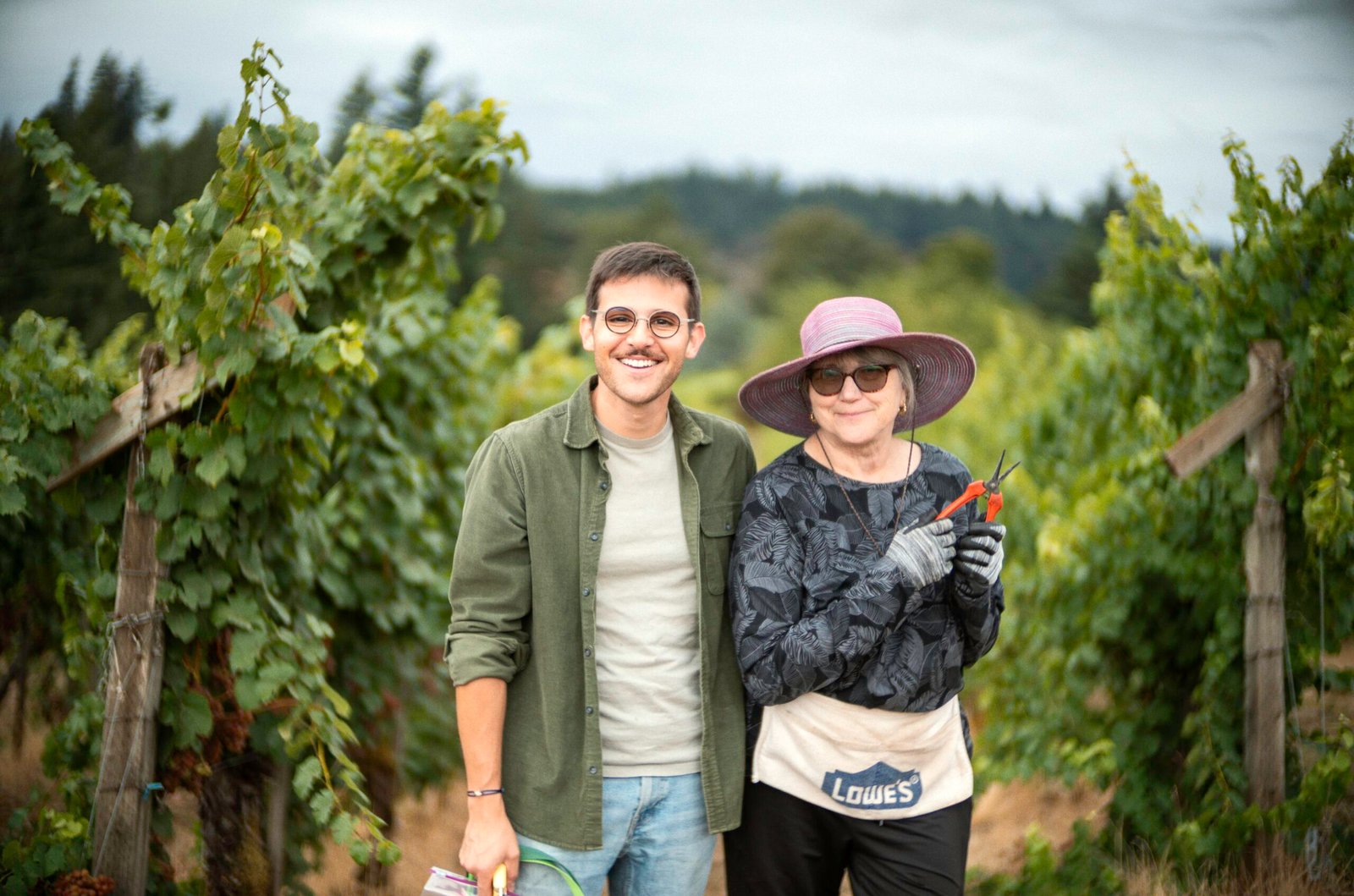
I kept daily (and messy) notes throughout the harvest and needed some time and distance before sitting down to write this journal properly. A lot of the photos in this post are from Jim from Fossil & Fawn.
Getting ready for the fruits to come (September 6 to 11)
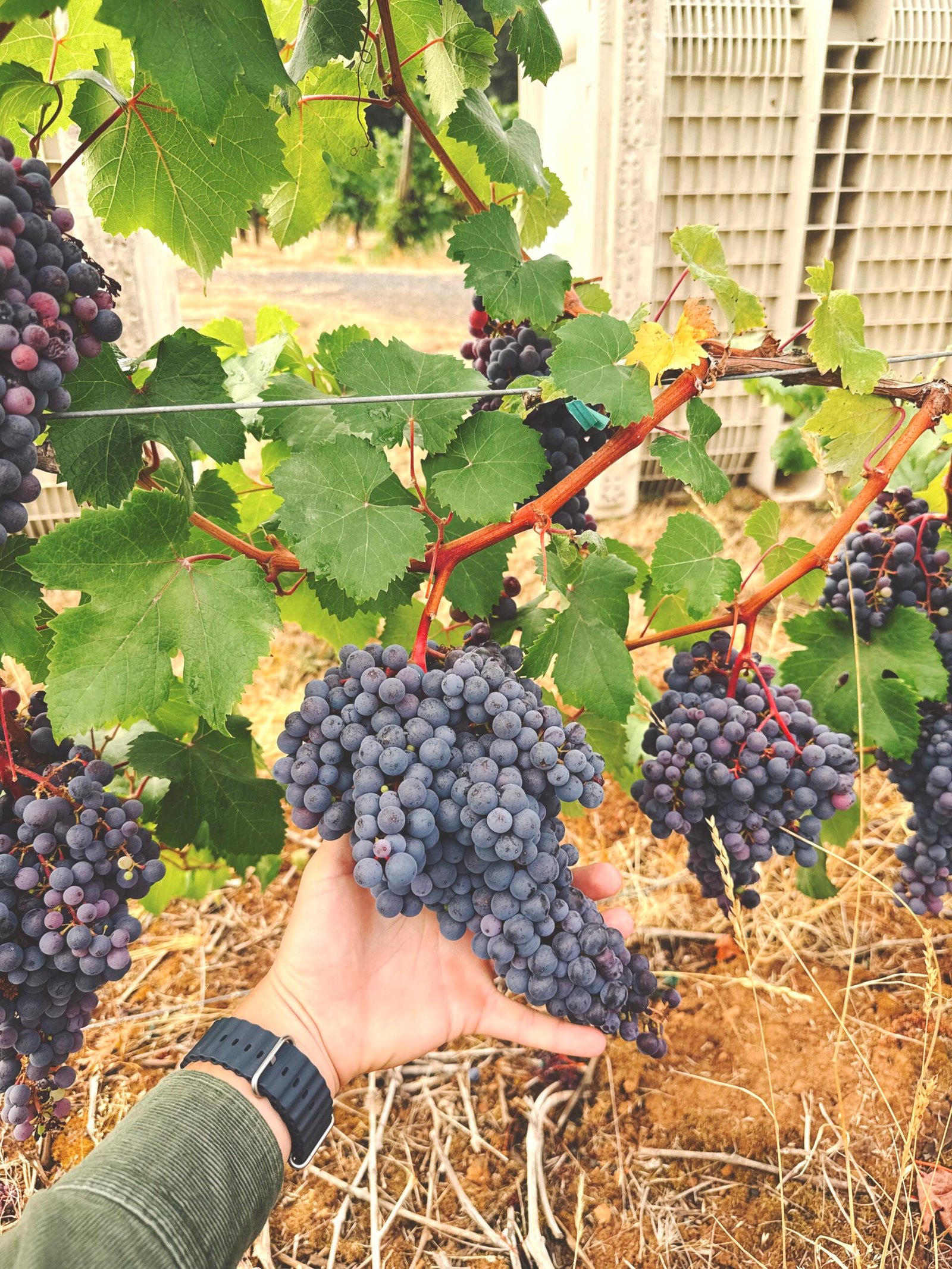
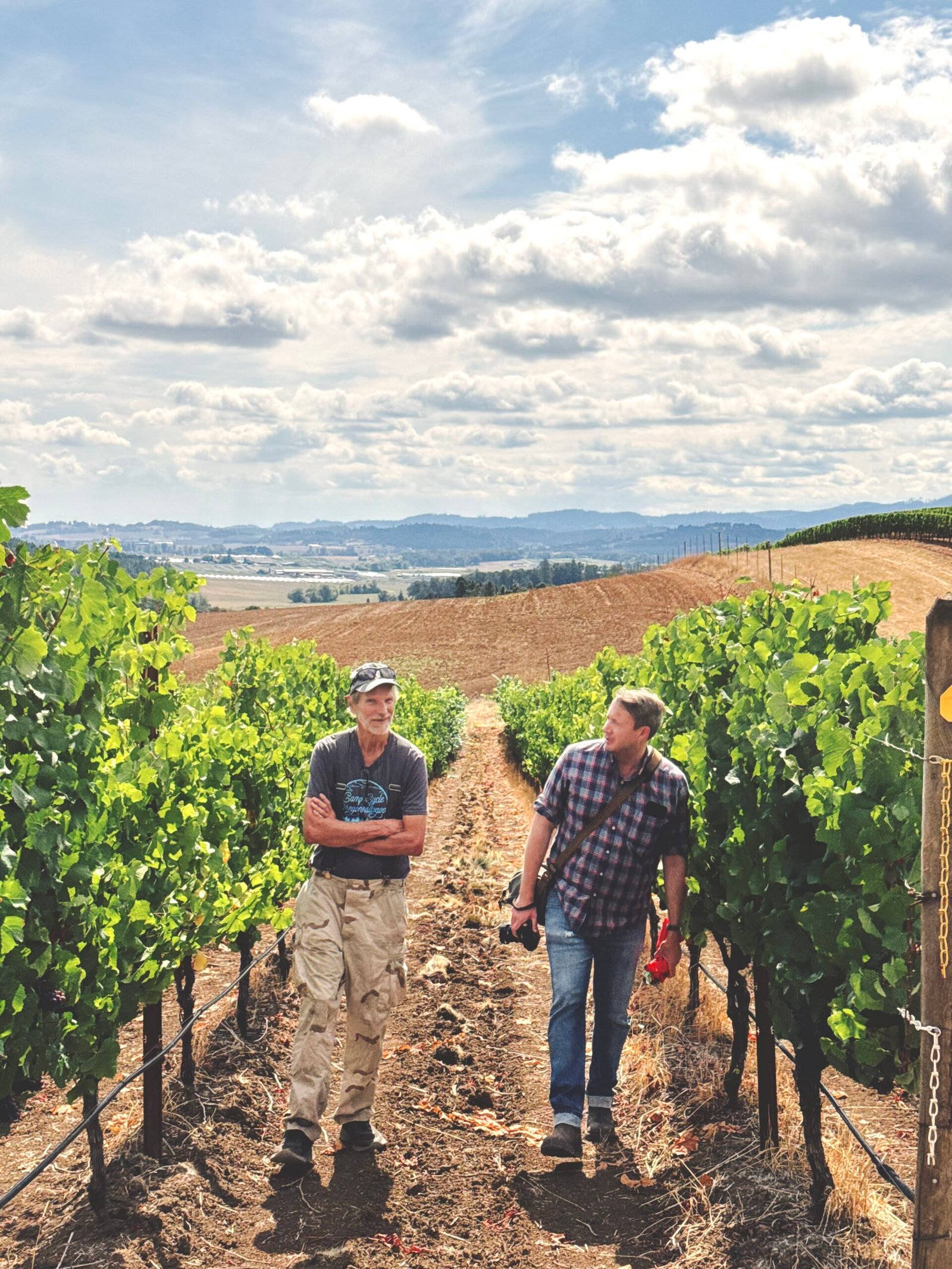
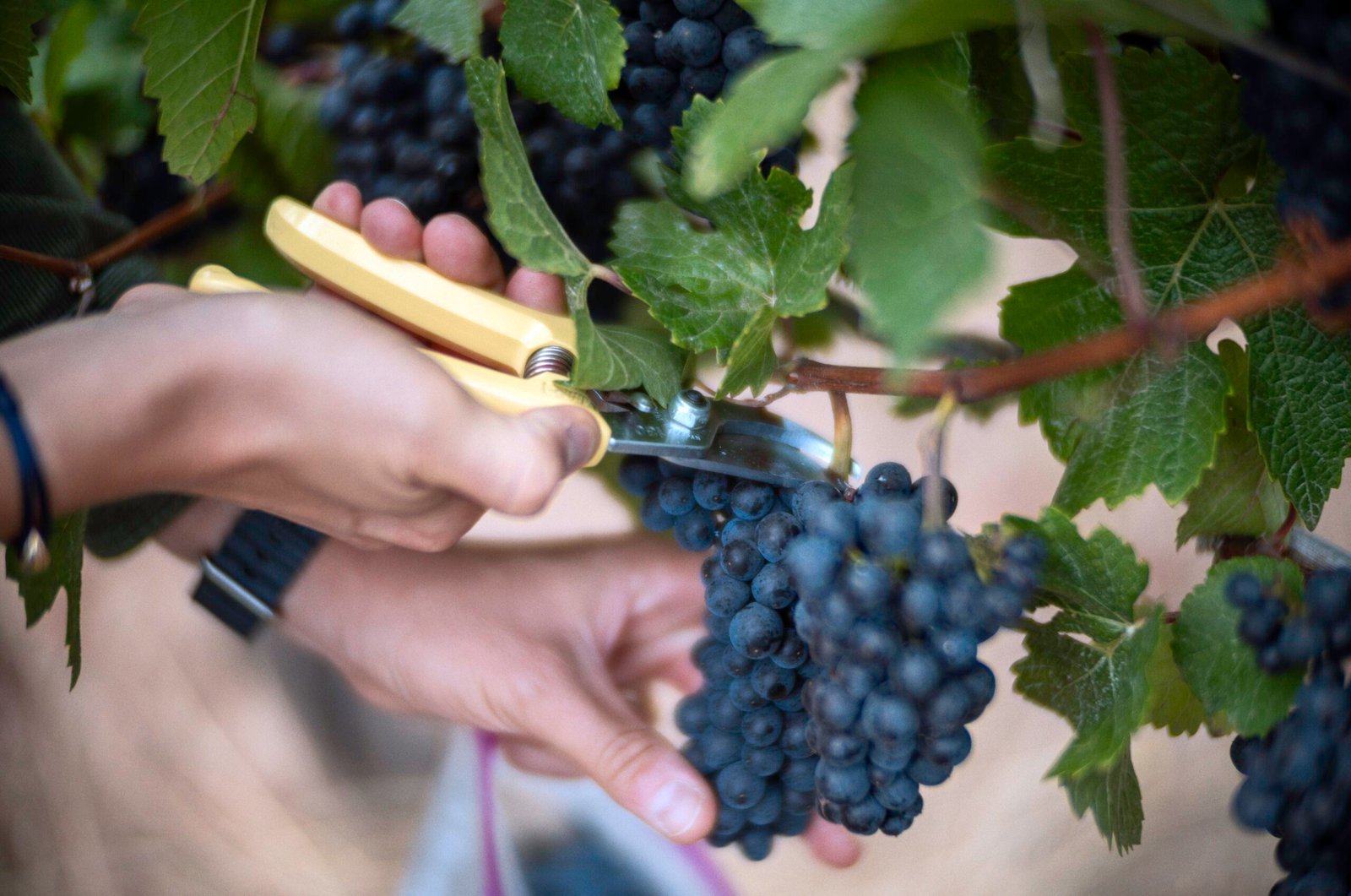
My first day was September 6th, which is earlier than usual, given the hot summer Oregon had that year. The first couple of days were not spent in the winery but on the road. We visited growers around and beyond the Willamette Valley to pull samples of fruits and check in on logistics. I got to meet the people behind Sunnyside Vineyard, Finnigan Hill, and Matteri. We tasted grapes, walked rows, and talked about timing and logistics to get the fruits to the winery.
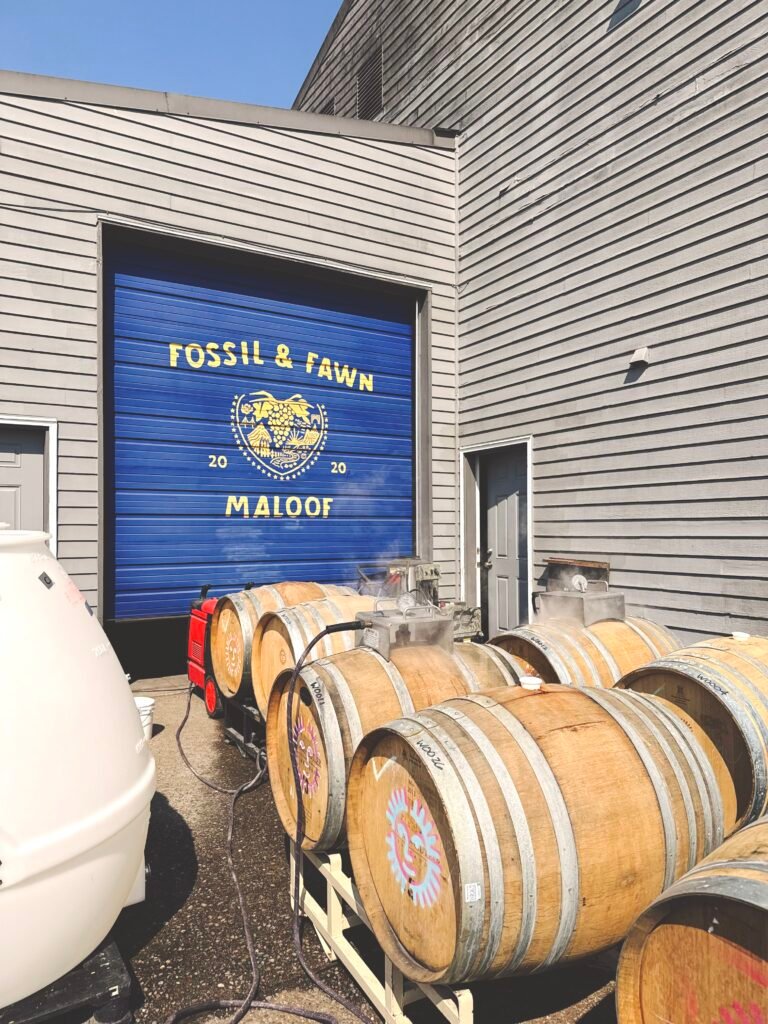
Back at the winery at the end of the day, we measured the sugar content (in Brix) and the pH of the juices to estimate when the fruit would be ready to be picked and start pencilling dates into the winery calendar. The winery itself is called No Clos Radio, in Forest Grove on the northern edge of the valley. It’s a shared space: Maloof, Monument, and Fossil & Fawn all work out of it, splitting the equipment and navigating the schedule together. That requires a particular kind of patience and flexibility that I came to understand quickly.
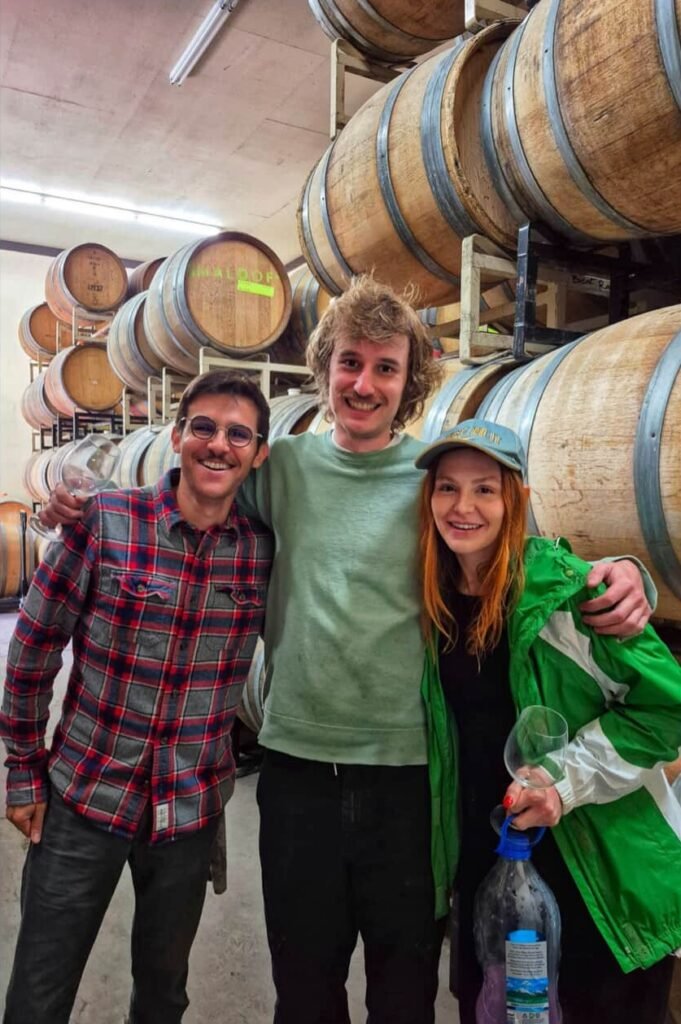
The first day at the winery I met Charles, the other harvest intern. Charles had just moved from the east coast to learn about wine production. After working in a wine store for a few years, he was eager to learn about the production side to one day become a winemaker himself. Most days we would take our lunch to a picnic table under this huge oak tree by the winery, contemplating the beautiful vineyard below us. We both talked about our wine dreams, and how this harvest experience will help us towards them.
Before the first fruit delivery, we spent several days learning the space, the equipment, the safety protocols, the cleaning chemicals and the order in which you use them. I also started my forklift certification.
And we cleaned. We cleaned polycubes and containers, barrels and presses, hoses and pumps and valves. It turned out that cleaning was not preparation for harvest: cleaning was harvest. It never stopped.
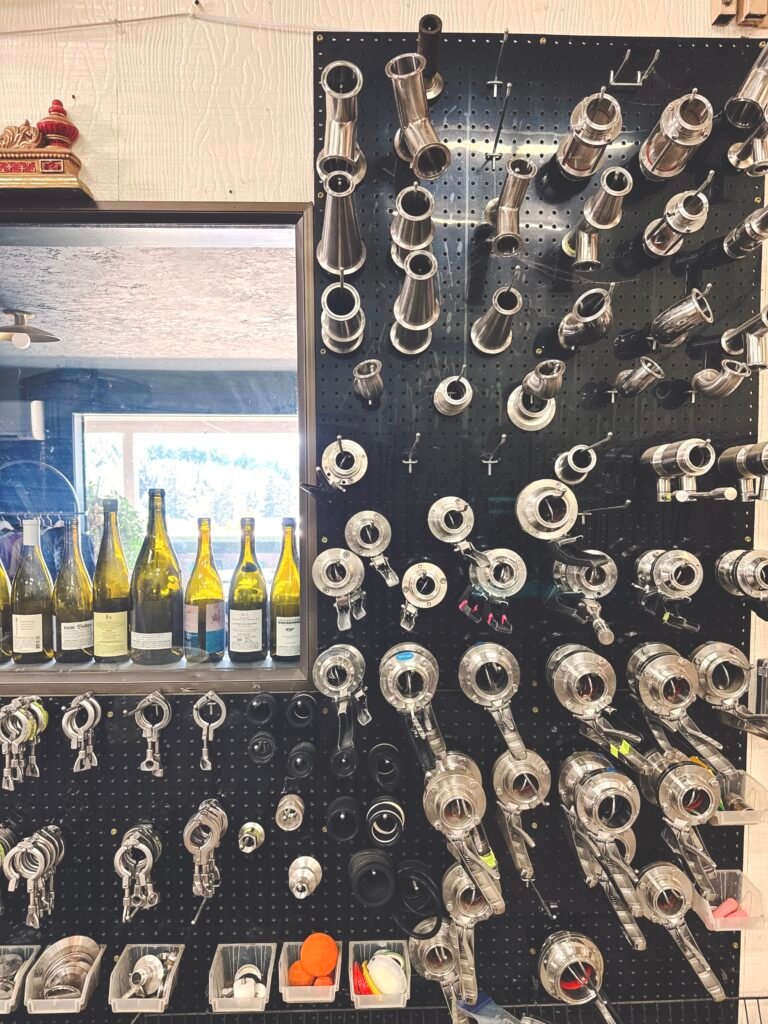
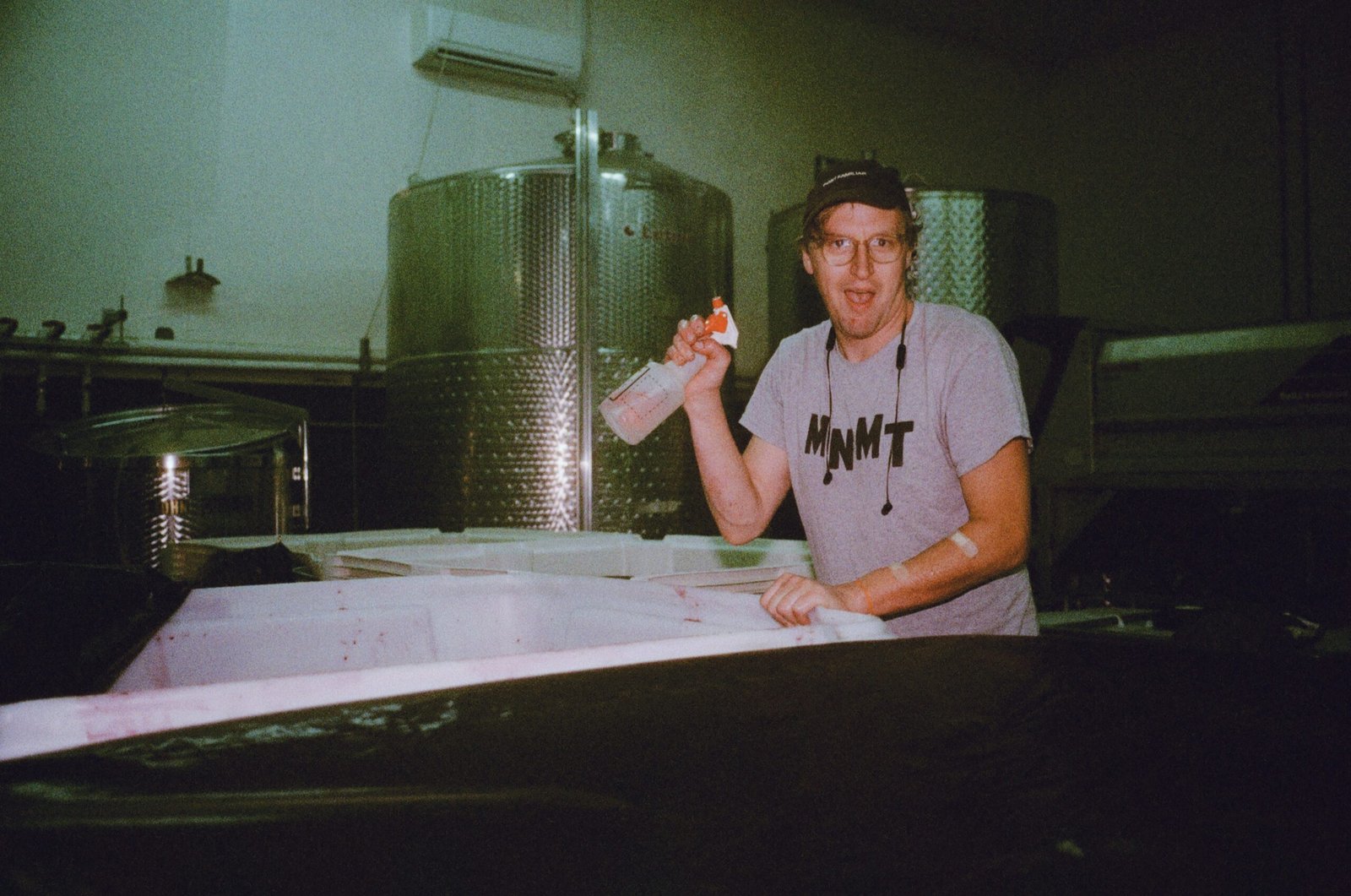
Every morning at the winery started the same way: Jim made a fresh pot of coffee, we made a fresh set of cleaning solutions. Peroxyhydrate Carbonate, Citric Acid, Peracetic acid (PAA), and fresh water for a final rinse. Then we’d pull together the list of equipment needed for the day. Hoses, valves, connectors, pumps and work through the cleaning process, the order and method varying depending on what type of pump we were dealing with, impeller or diaphragm. For the first few days I had to check my notes and ask constantly. Within a week it was second nature.
We also had something close to daily stand-ups: a morning conversation about the day ahead, the tasks to get through, and what we could do to get ahead if we found ourselves with extra time. (that rarely happened) It felt structured in a way that suited the environment. There was always more to do.
The winery felt weirdly quiet after the first couple days. Nobody had received fruits, but we all knew things were going to change very suddenly.

The first fruits (September 12 onwards)
We received our first fruit on September 12th. I was genuinely excited. This was the official start of it all.
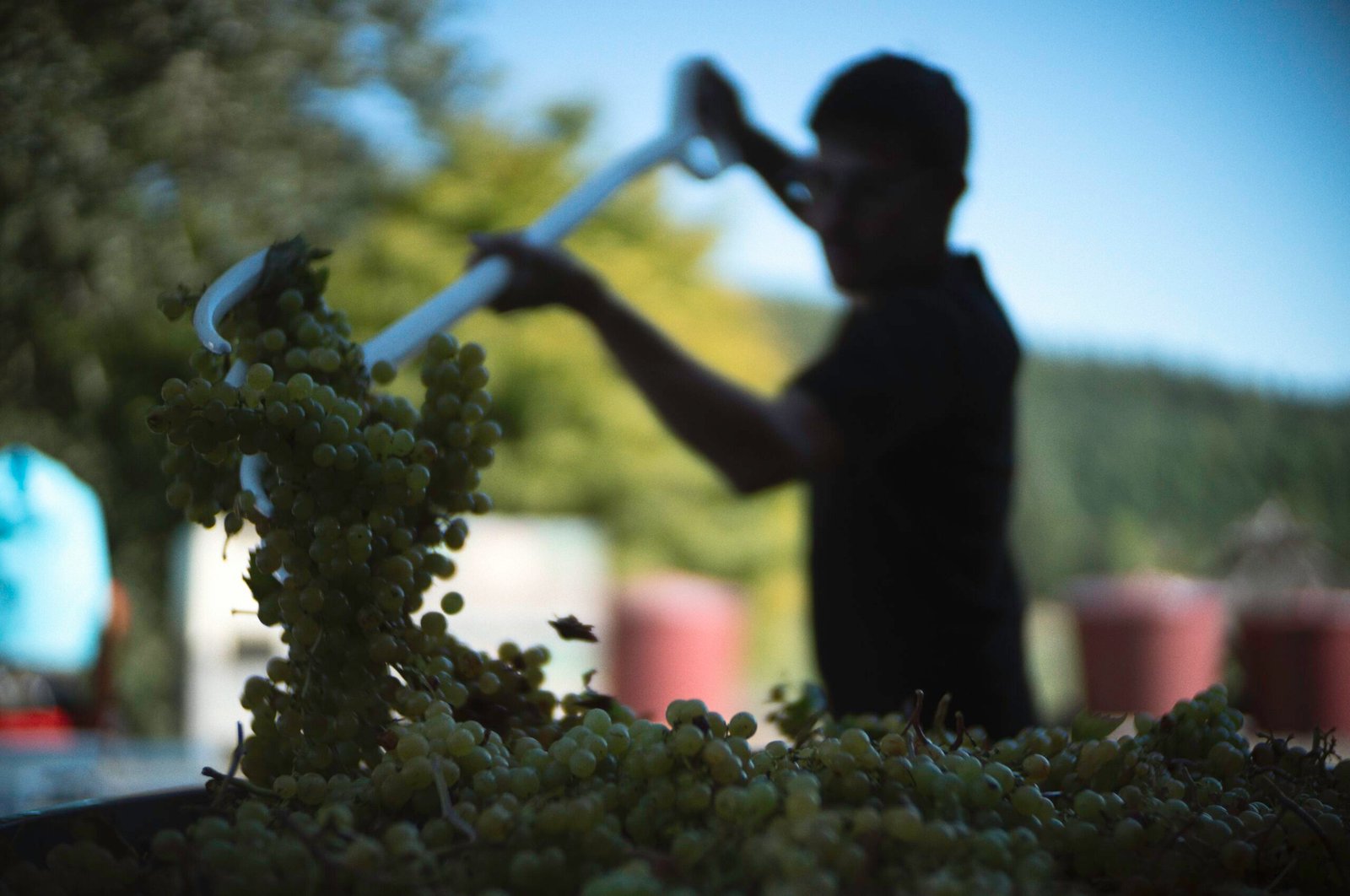
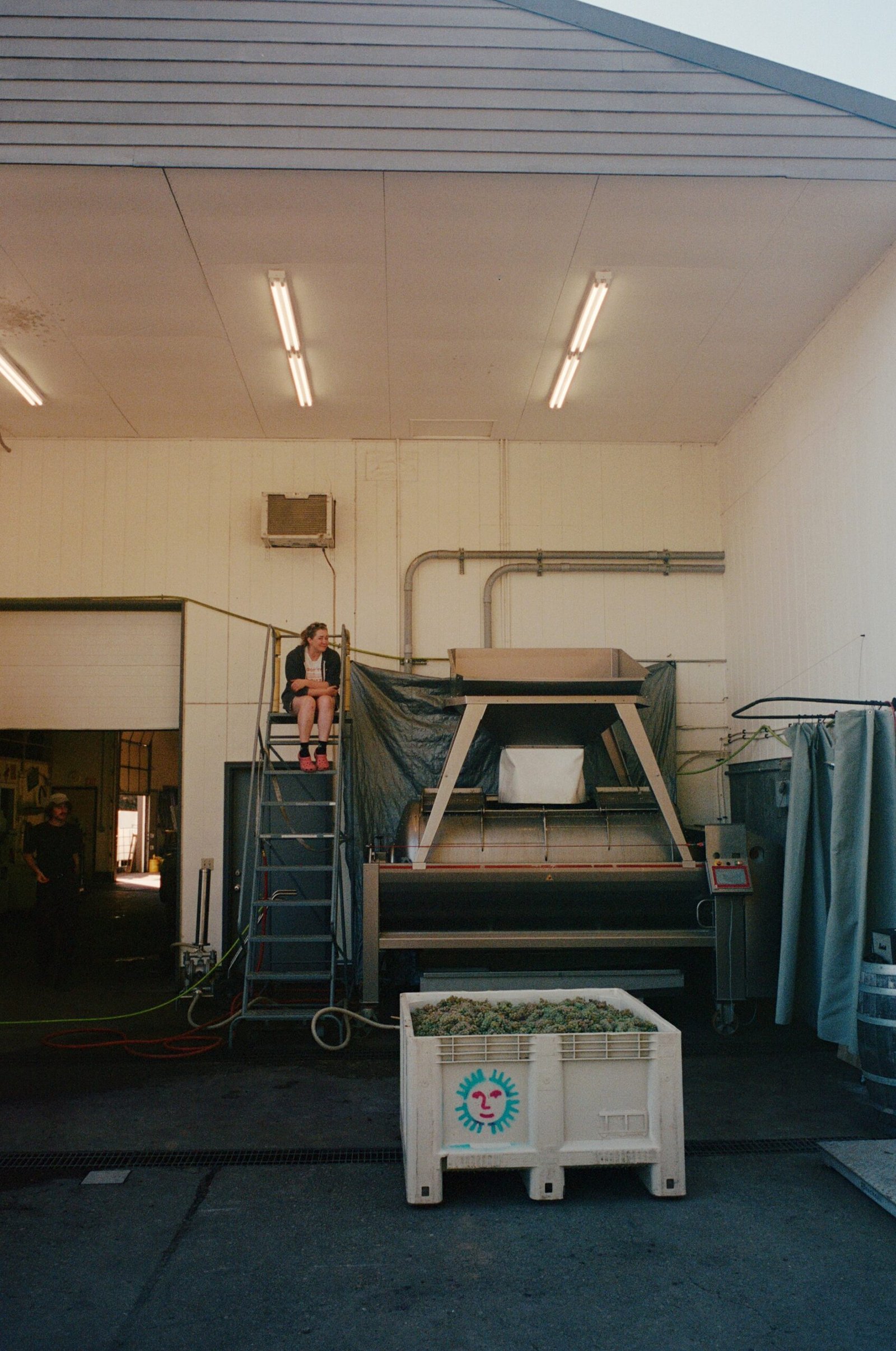
The first delivery was Auxerrois from Sunnyside Vineyard, a white wine grape more commonly associated with the Alsace region of France. This fruit would eventually become a component of one of my favourite wines from Fossil & Fawn: Only Always. The process of receiving fruit involves weighing each basket, dumping the grapes into the press using a forklift fitted with a special attachment, filling the press, and starting it running. A press cycle runs anywhere from two to four hours depending on the grapes and the style of extraction you’re looking for. The juice (which smelled extraordinarily fragrant) flowed from the pan beneath the press into a polycube container via a pump. The Auxerrois would rest there for a couple of days to let the sediment settle before the cleaner juice was moved to a stainless steel tank to begin fermentation. The Gewürztraminer and Riesling components of Only Always would follow over the next few days, all fermenting together as the final blend.
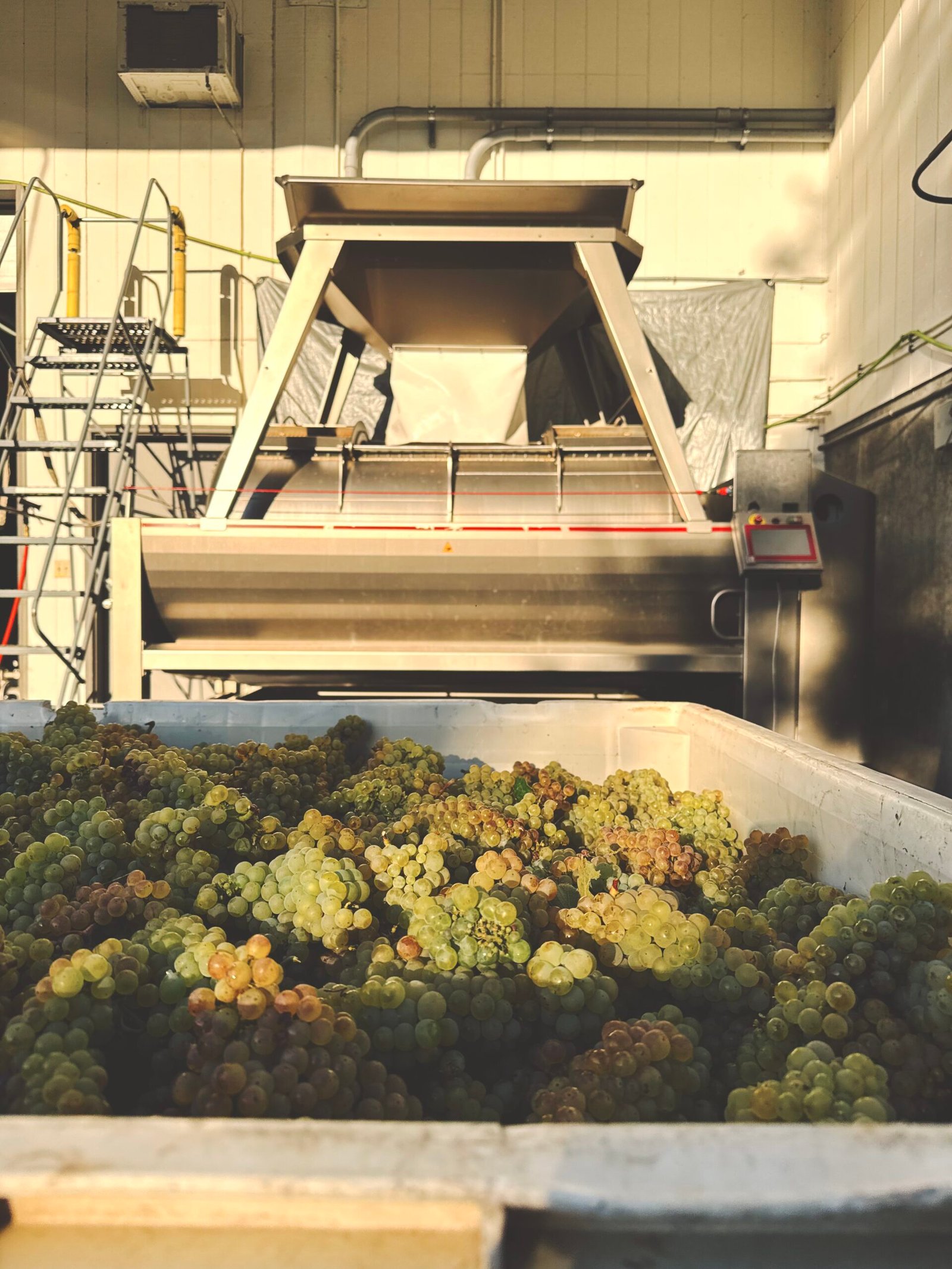
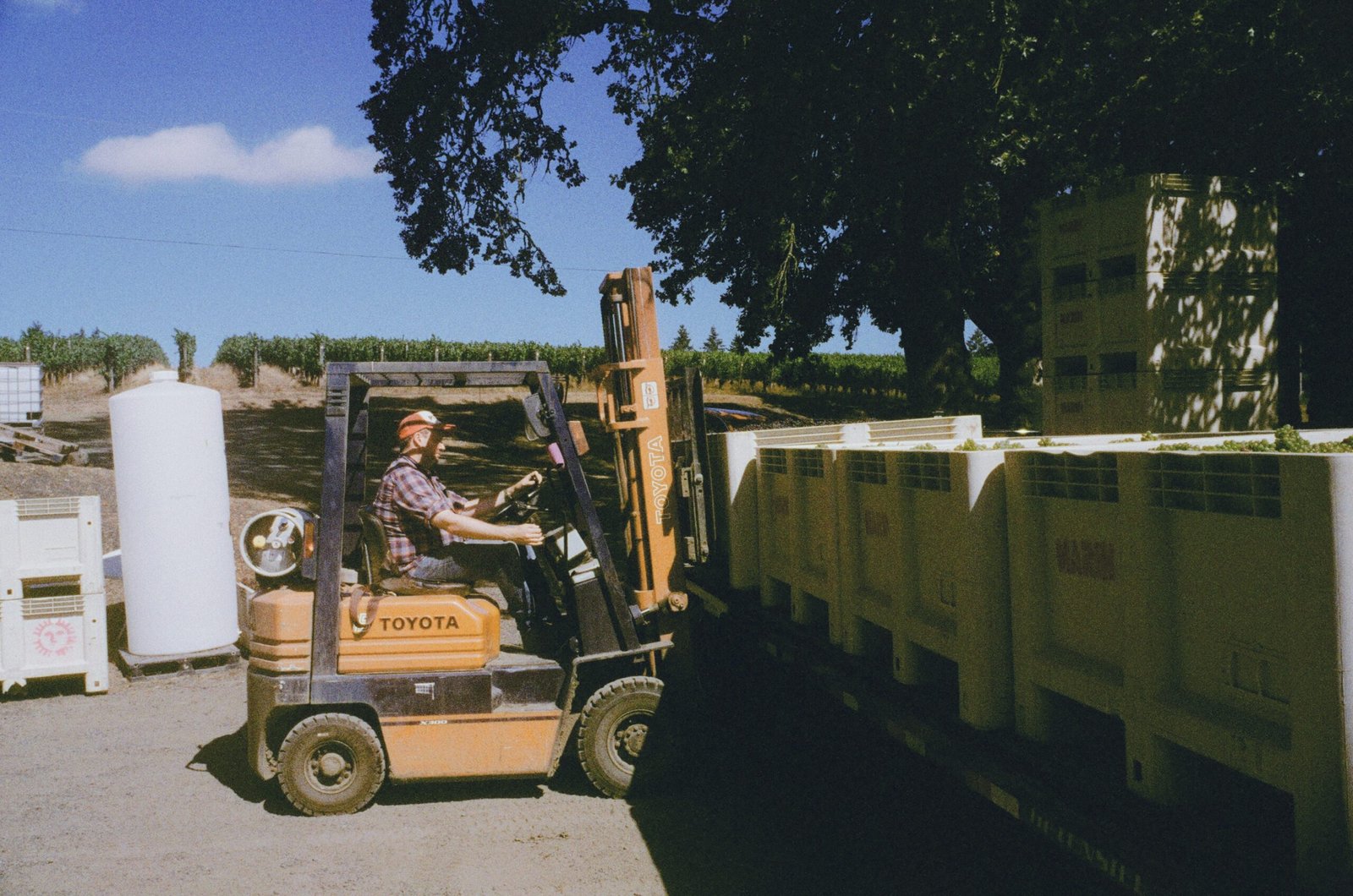
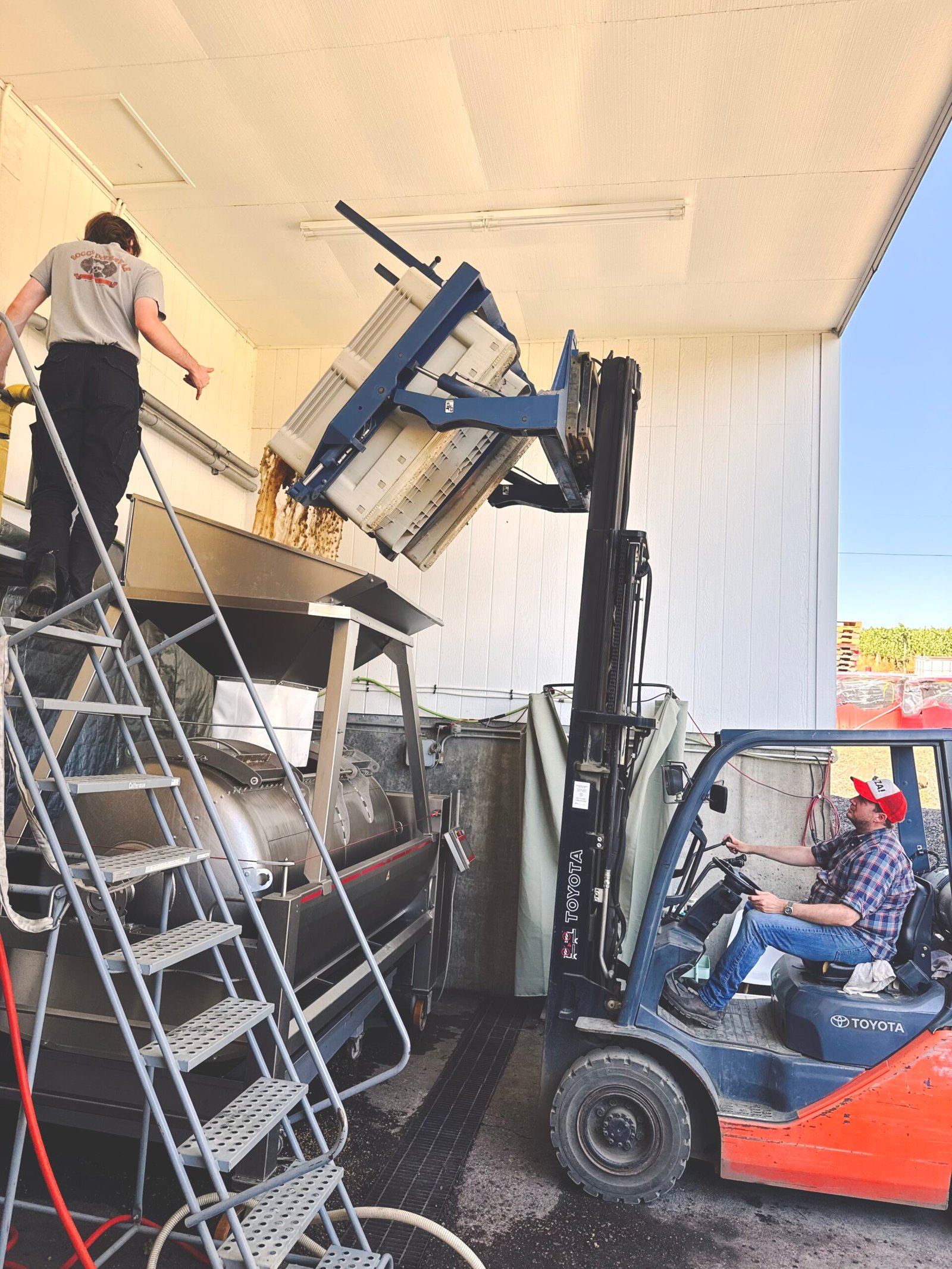
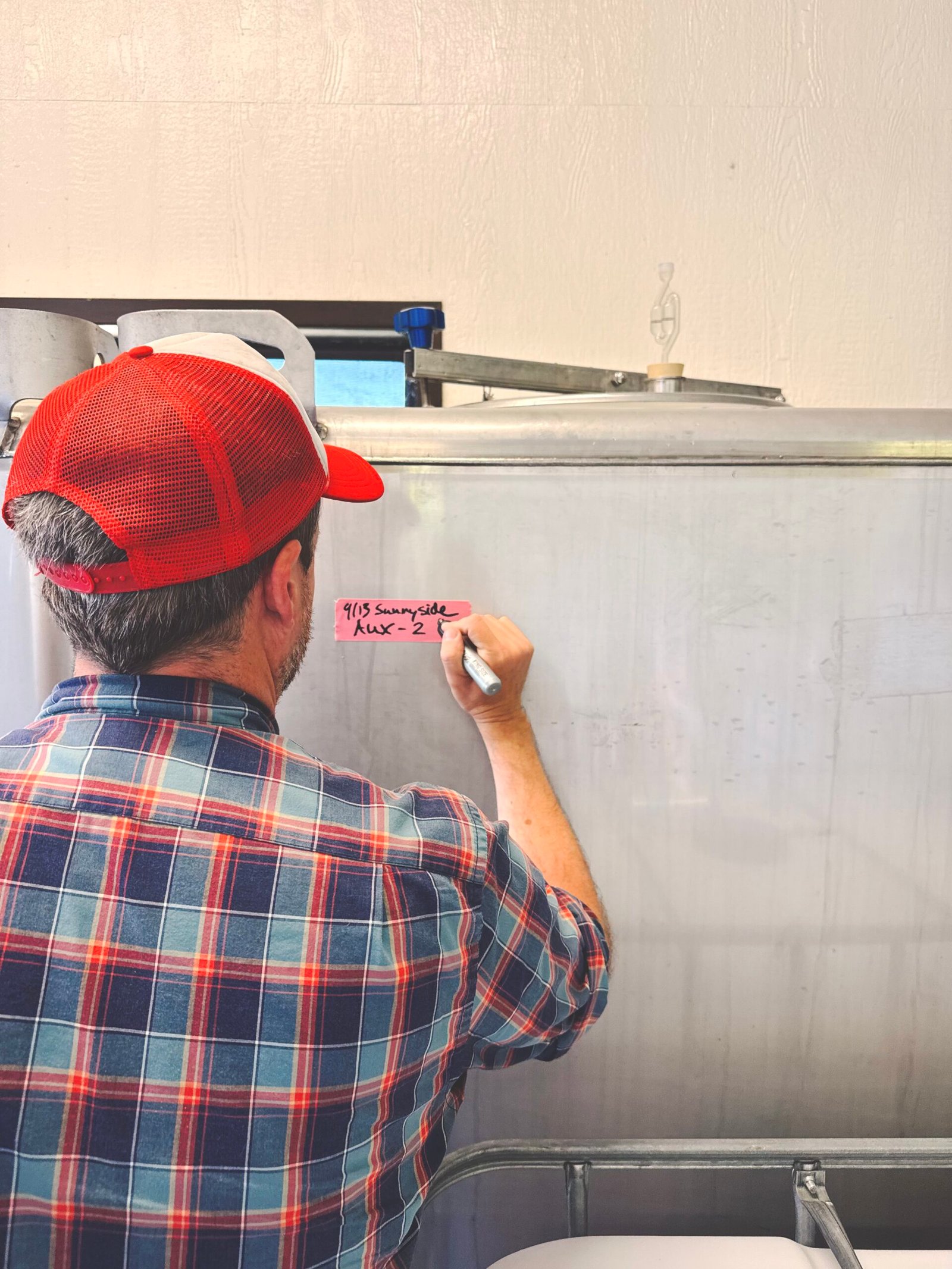
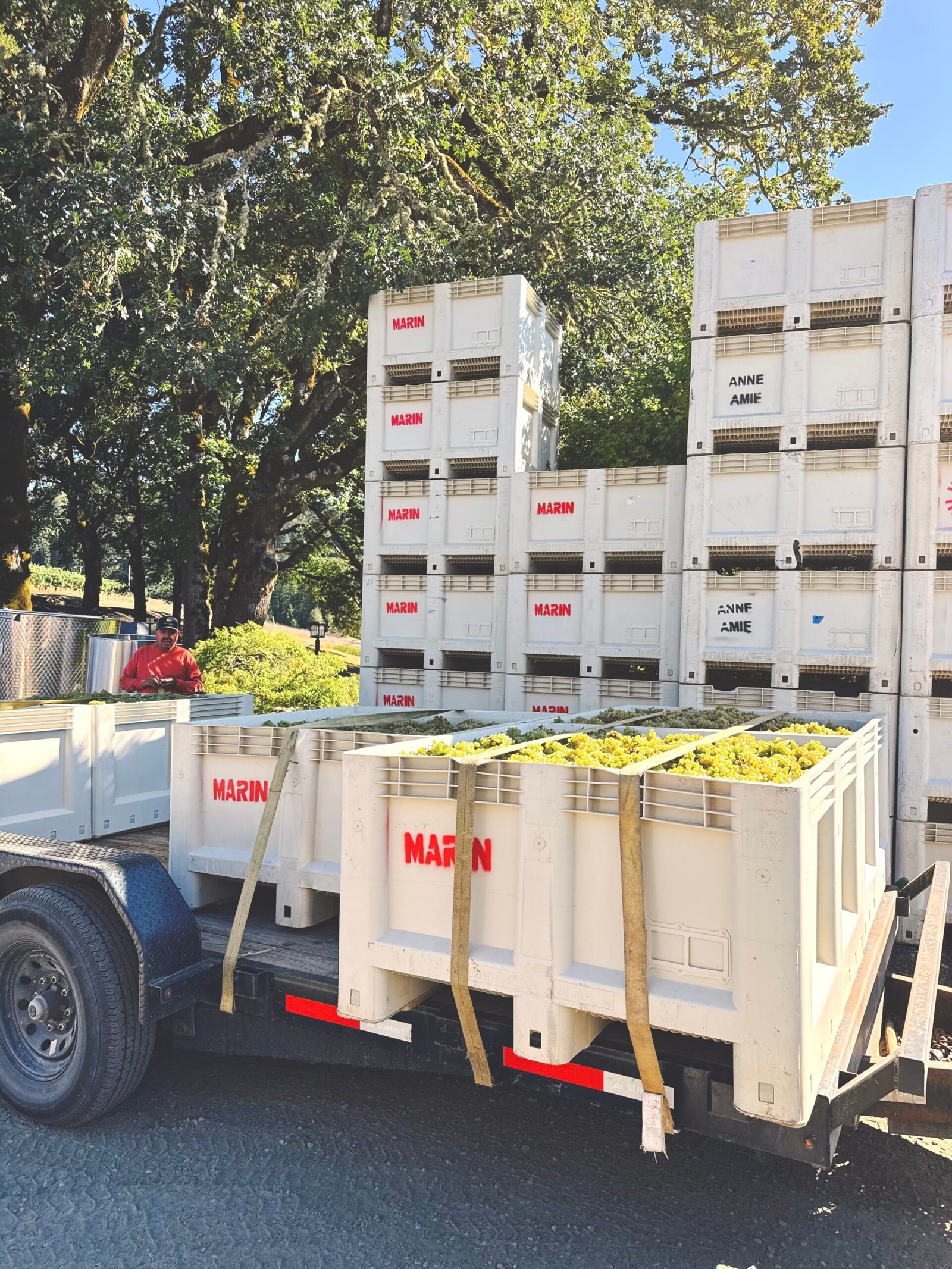
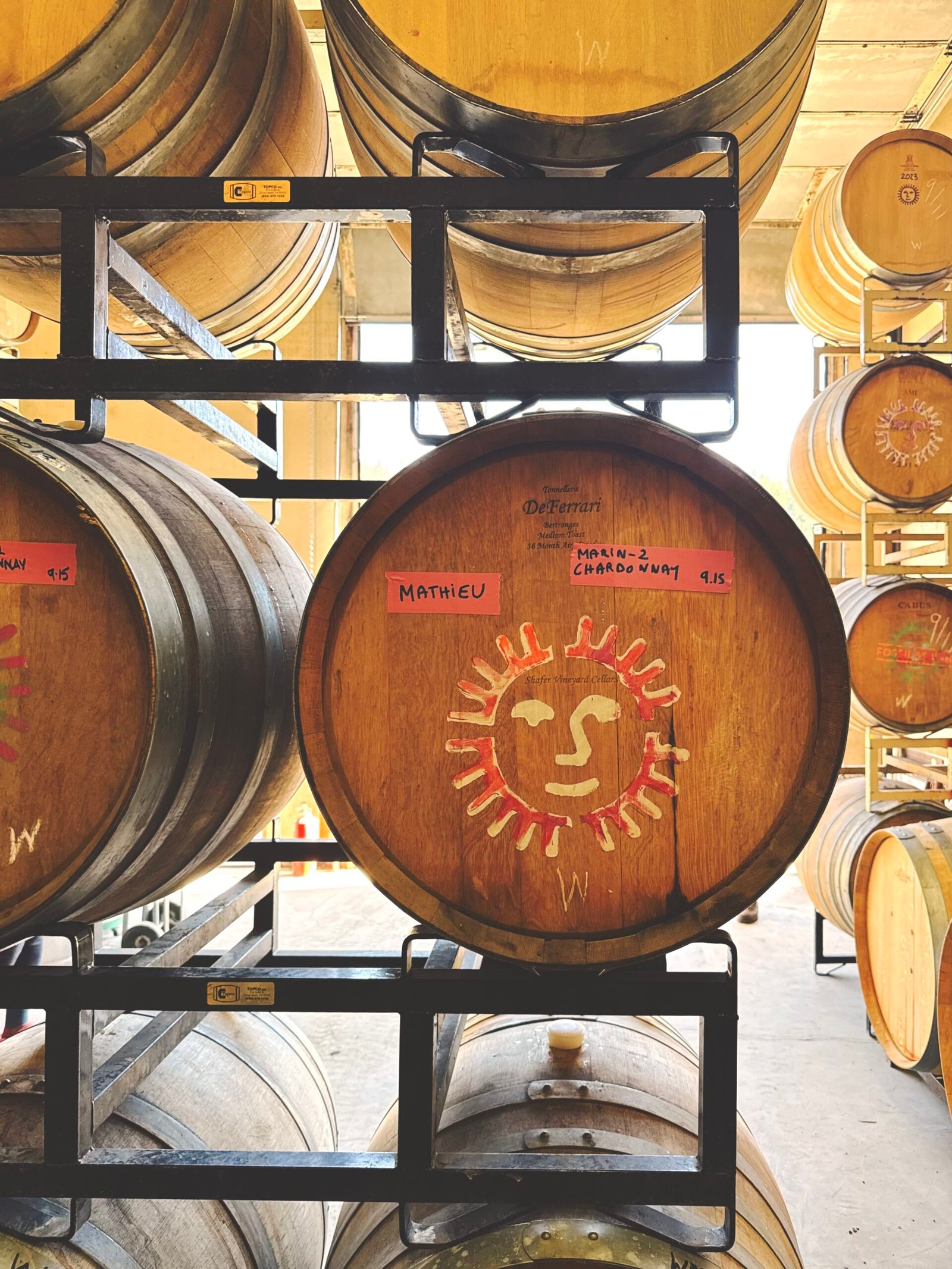
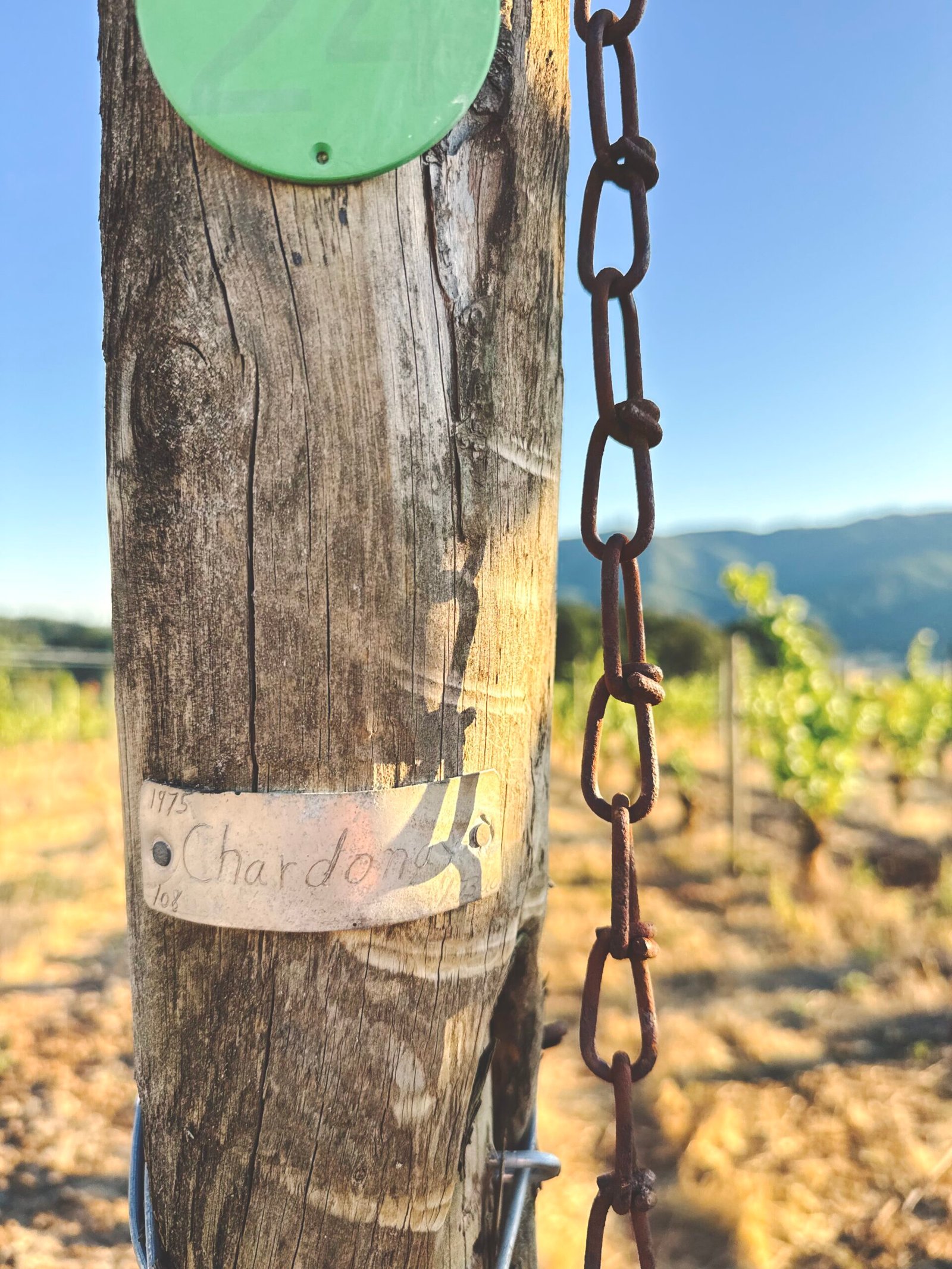
The following day was an important one, at least for me. We were receiving Chardonnay from the Marin Estate vineyard. This was the fruit I would use to make my first ever barrel of wine.
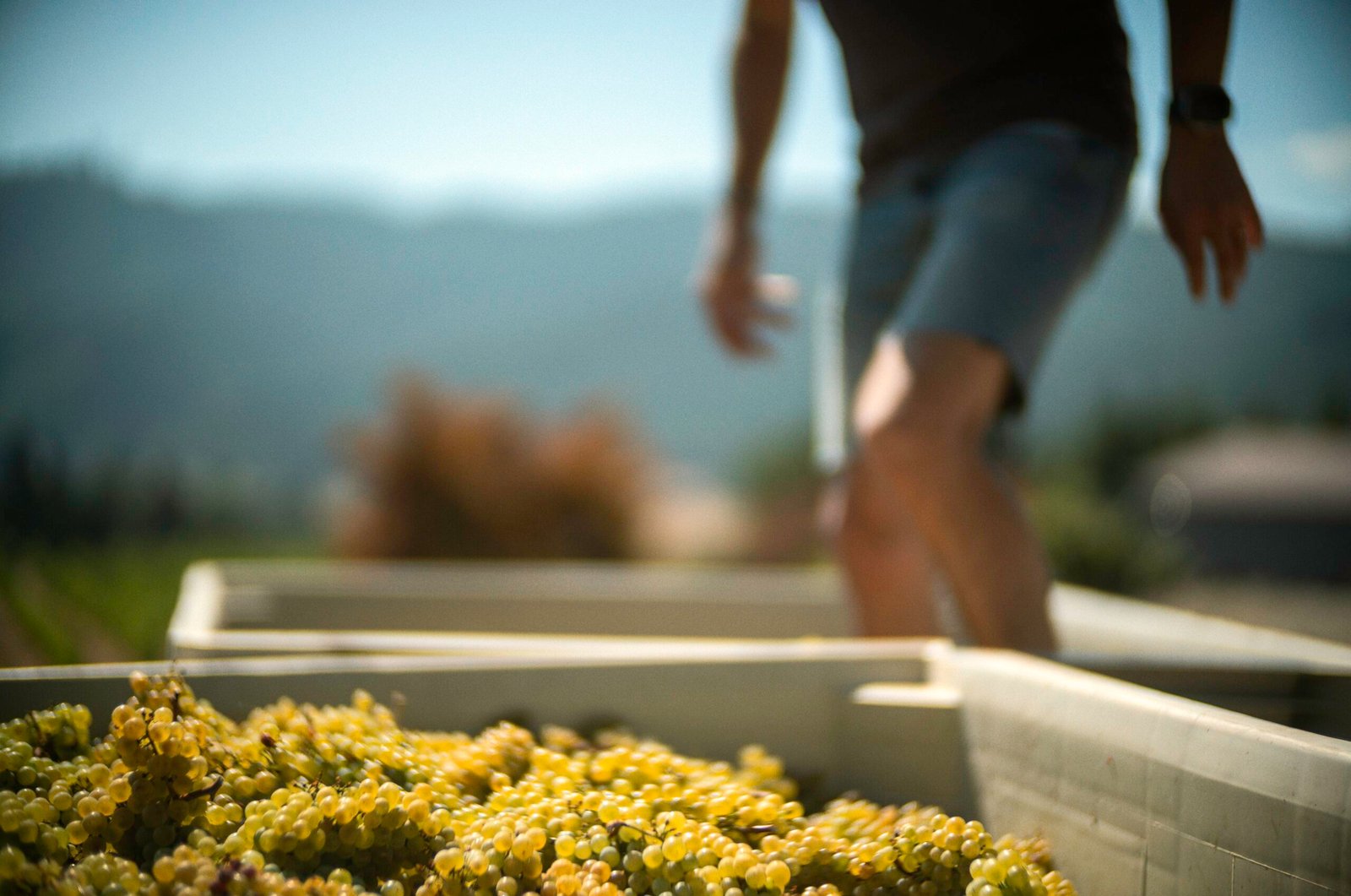
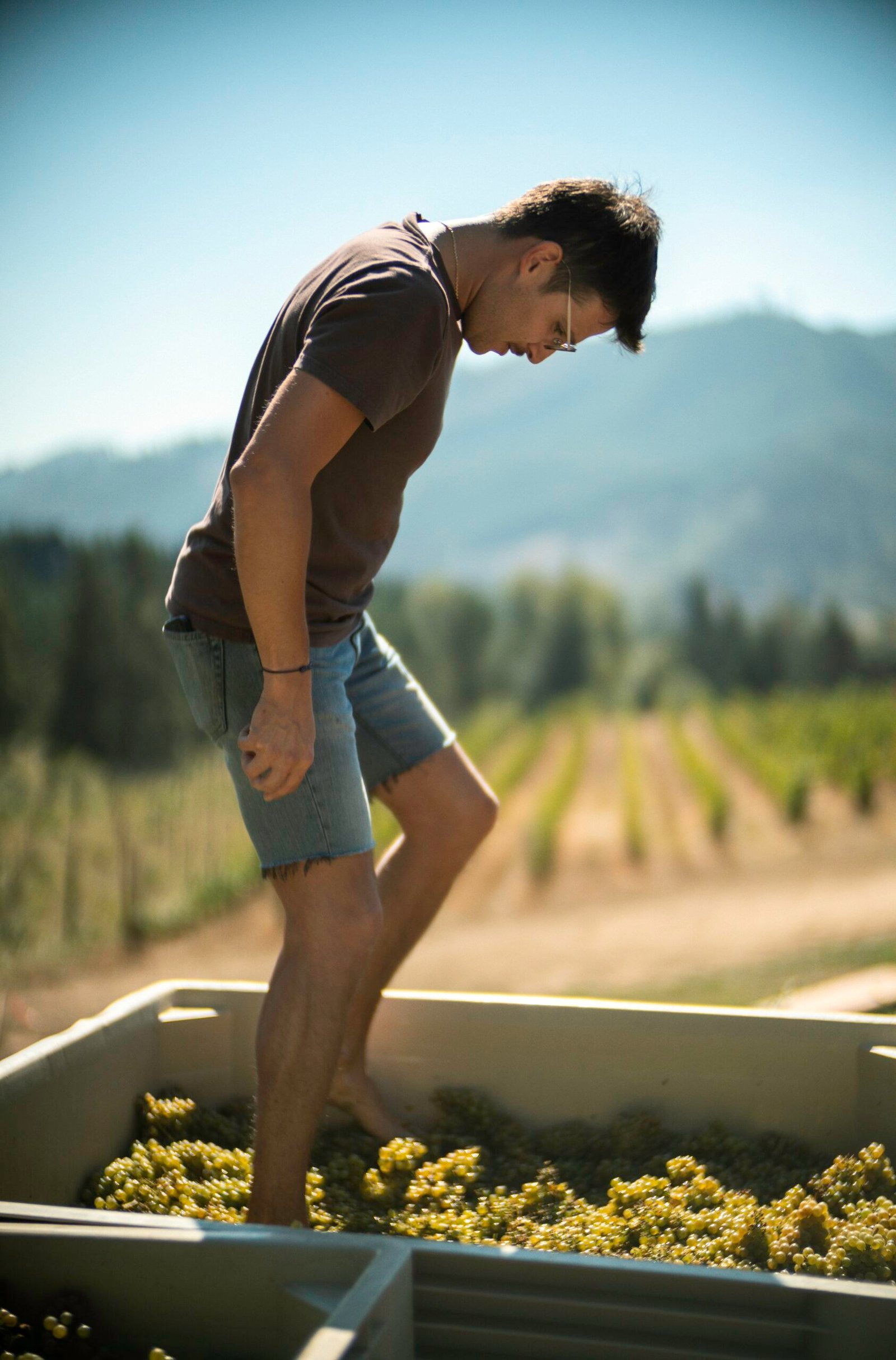
I was excited and nervous at the same time. The fruit arrived but the press was in use by another winemaker, and in order not to waste time, we foot-trod the bins we had just received. Another first. After washing our feet in a cleaning solution, we climbed on top of the grapes and started treading. It was harder than I expected, it took nearly twenty minutes before enough fruit was crushed to reach the bottom of the bin and stand in juice. My feet felt soft in a way I never felt before. By the time the press was free, we dropped the remaining juice and clusters in. The cycle was shorter since most of the pressing work was already done.
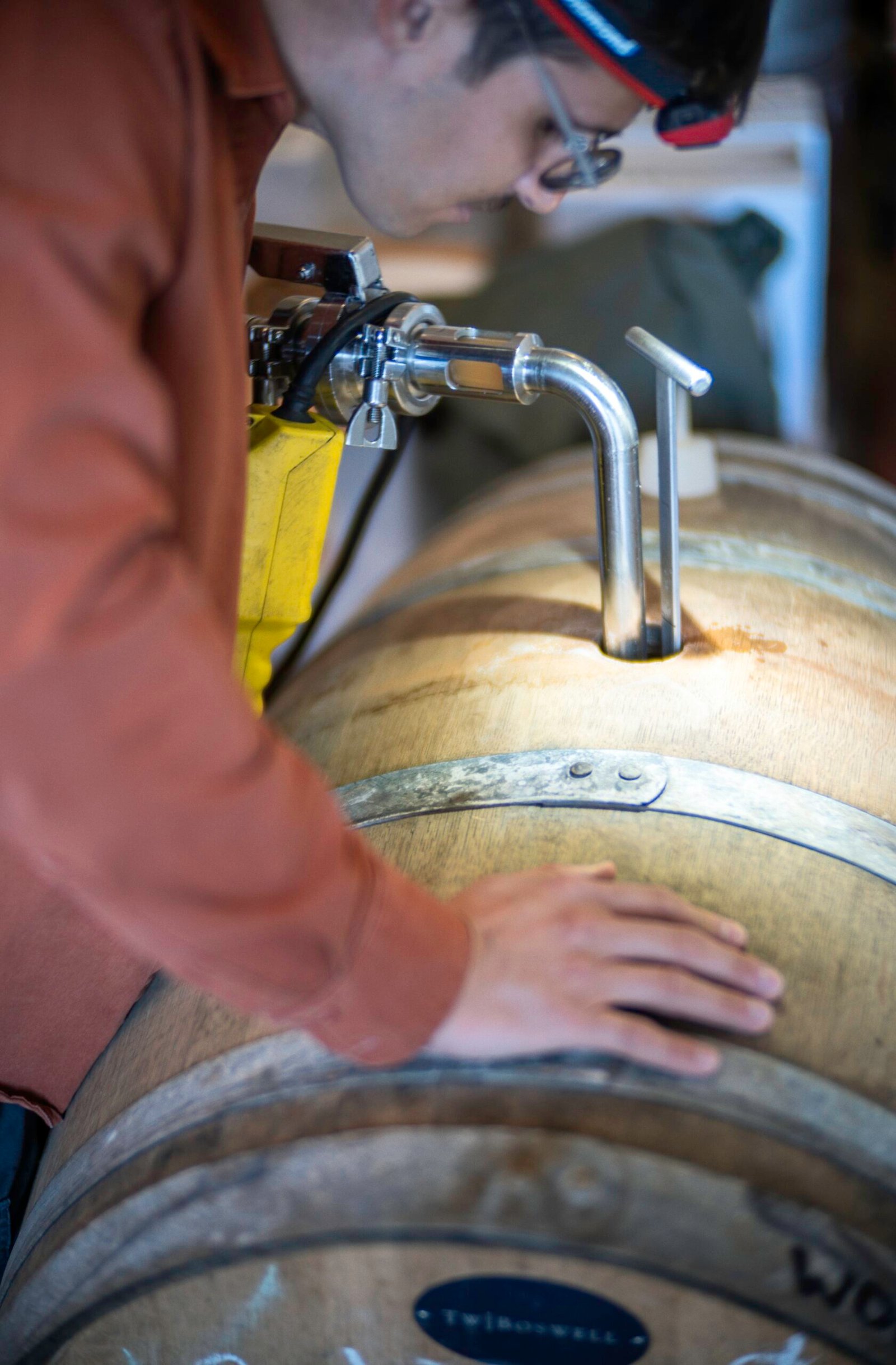
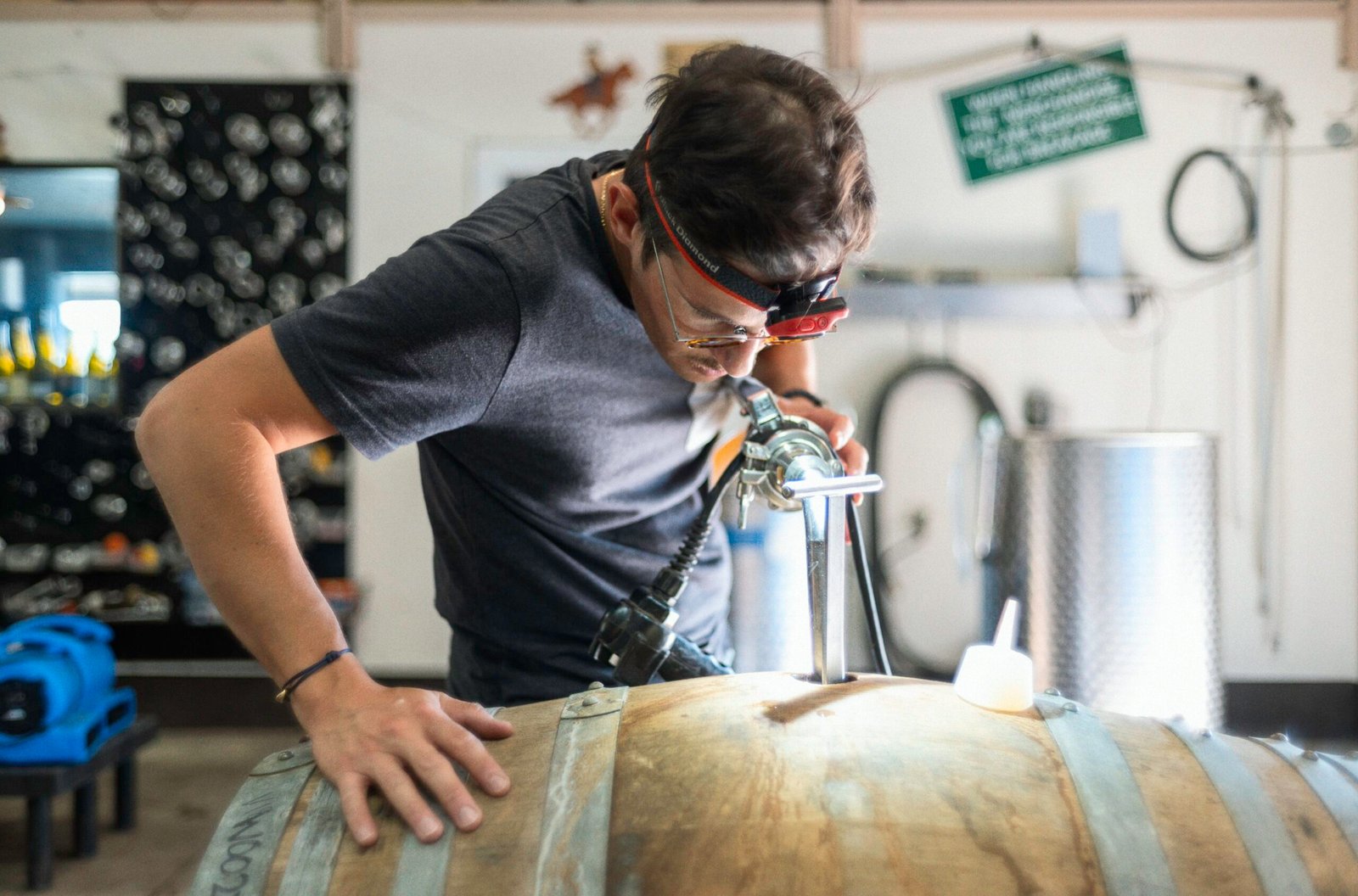
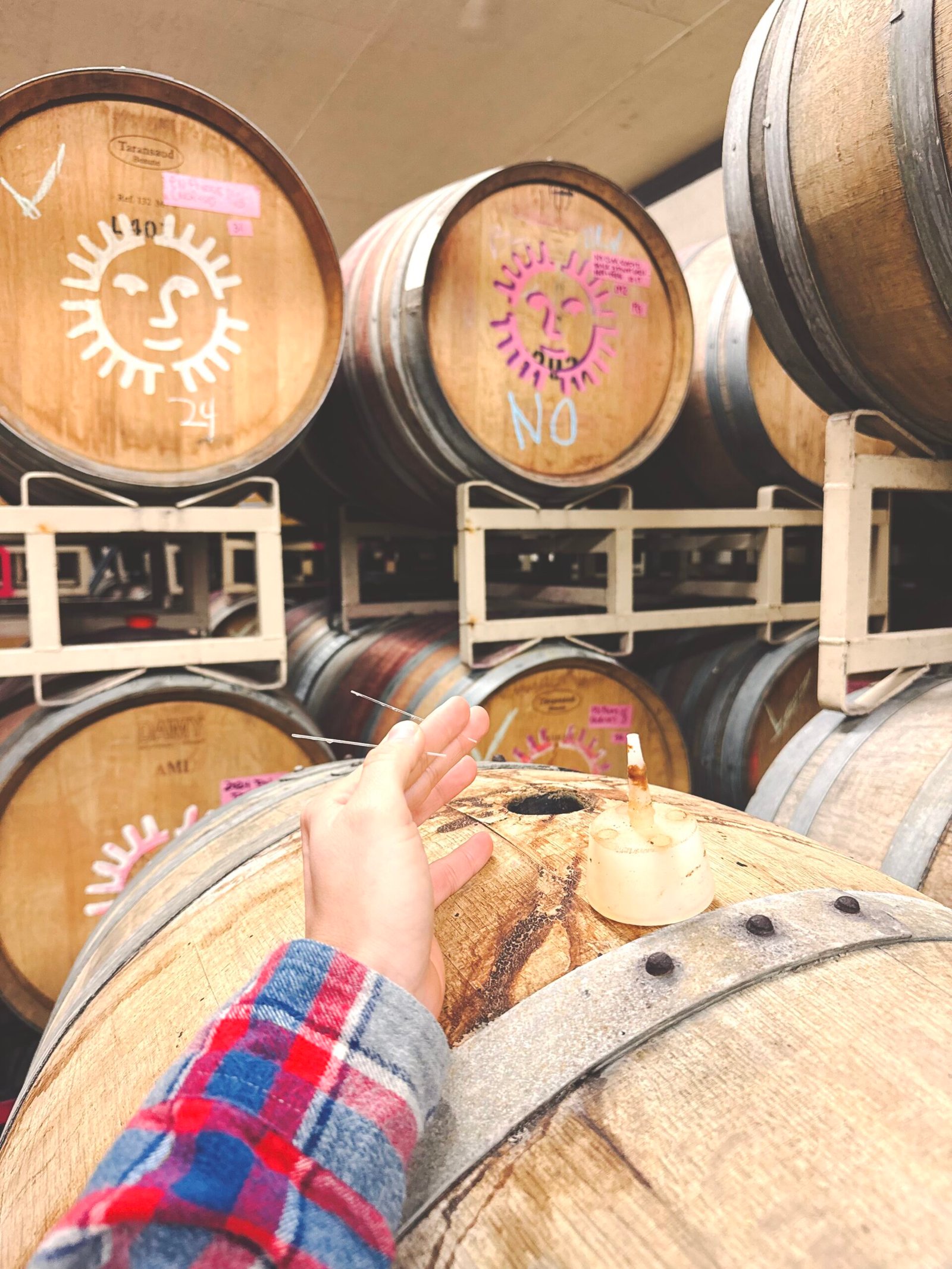
After a couple days of settling, it was time for what quickly became one of my favourite tasks of the entire harvest: barrelling down. Moving wine from a container into barrels. There was something meditative about it, knowing that this fresh juice was going into a vessel where it would quietly transform over the next nine to fifteen months, unseen, until it was ready.
In its simplest form, making white wine is surprisingly straightforward. Press the fruit, move the juice to a vessel, let fermentation begin, and wait. Of course there are countless decisions along the way, but the basic process is restrained. And yet the wines that emerge can be wildly different. That contrast fascinated me.
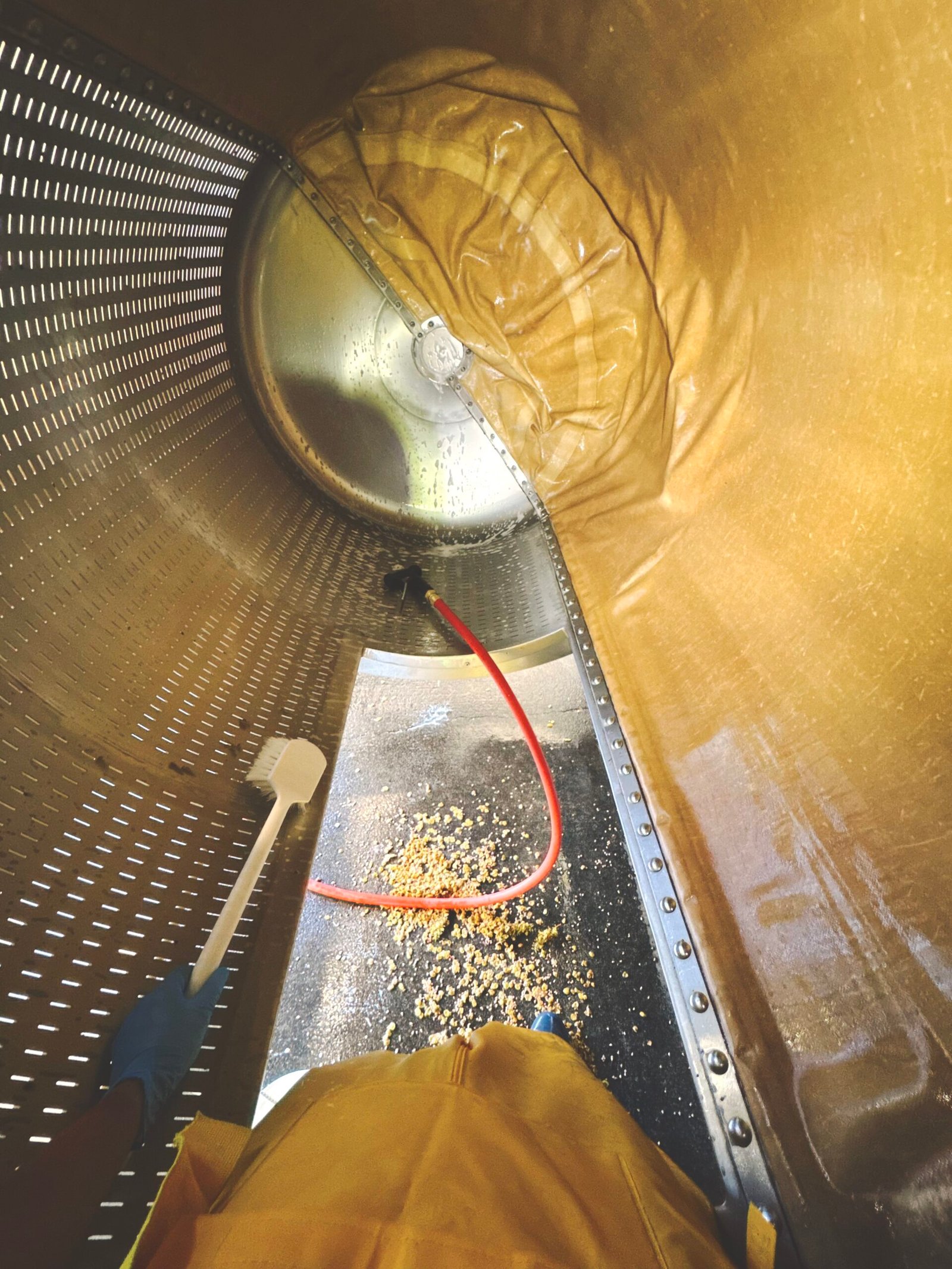
That same day I also learned how to clean the press properly. A meticulous, long, and surprisingly satisfying task. Jenny mentioned it was like cleaning a nice car. And I felt that feeling right away. It means a thorough spray and wash of the outside, followed by getting inside the drum to scrub away seeds and sugary residue from every surface. Methodical. Complete. Satisfying.

The barrel that chose me
I had already received, foot-trodden, and pressed the Chardonnay fruit for my wine. A couple of days after the juice had settled, it was time to choose and prepare the barrel it was going into.
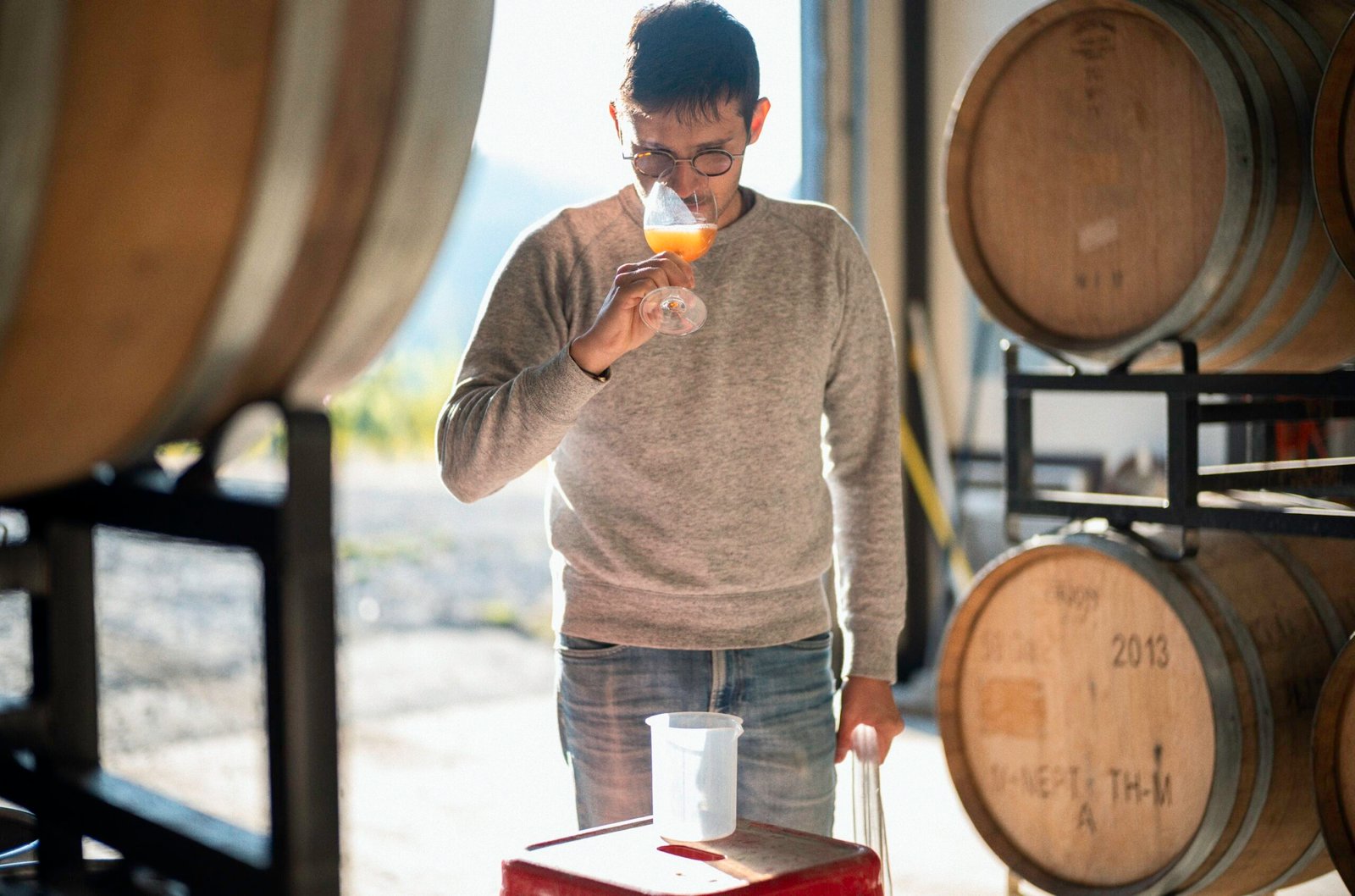
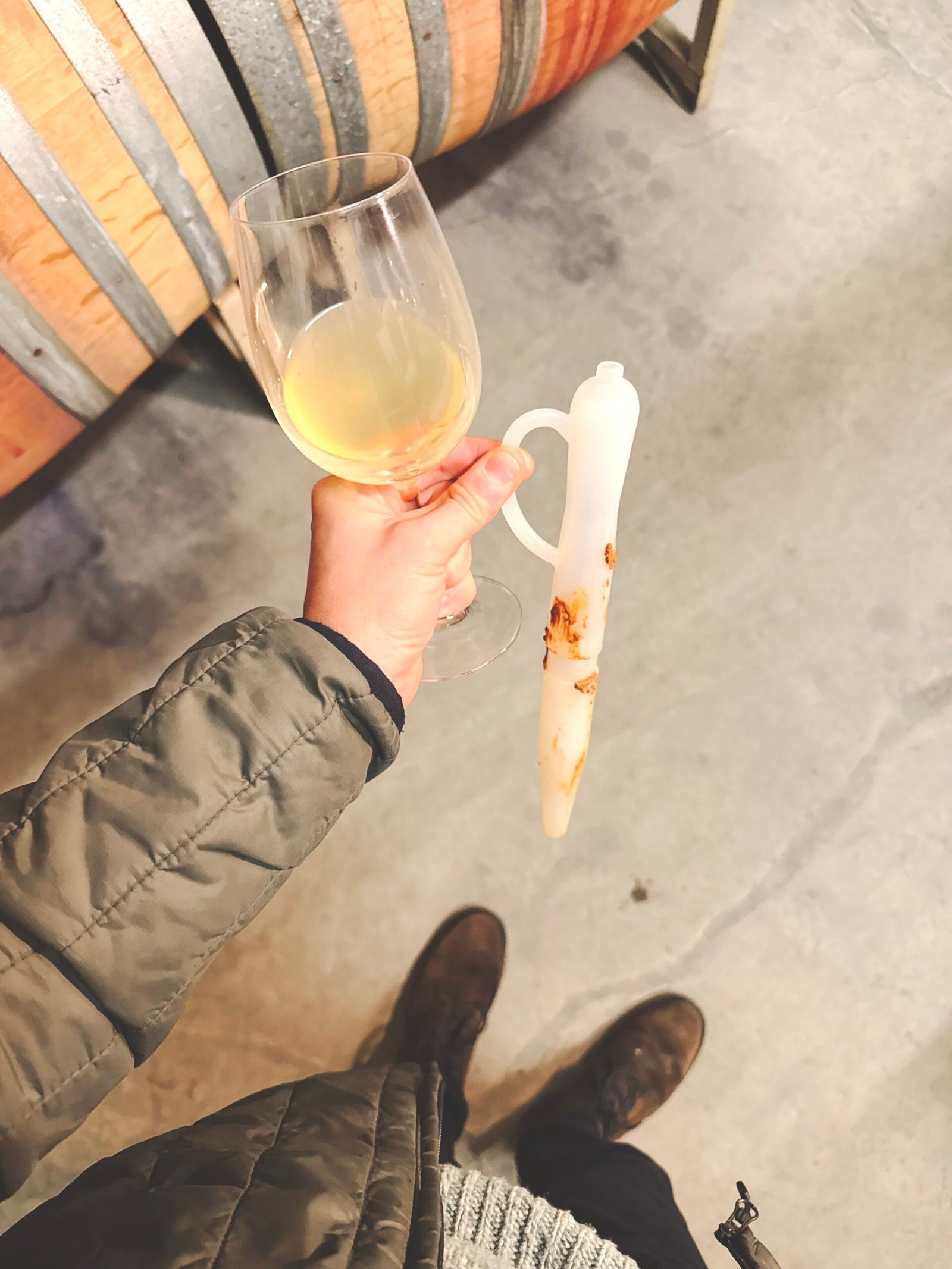
I washed every available white barrel, from newer oak from Oregon Barrelworks alongside older barrels from various Oregon and French wineries and once they were clean, I simply smelled them. One by one. I was looking for something I couldn’t entirely define: better aromas, something that resonated.
The one I chose was from Oregon Barrelworks, definitely neutral oak by this point, but made from French oak. Jim mentioned that when they import barrels from France, they often use the extra space in the shipping container to bring raw oak wood back as well, and that wood gets used to make barrels here. I found that immediately compelling: the oak originated in France and was shaped in Oregon. The fruit from my wine had been picked from a cutting in France and grown in Oregon. And I was French, having shaped a life in the Pacific Northwest. We were all, in different ways, the same story.
I picked that barrel.
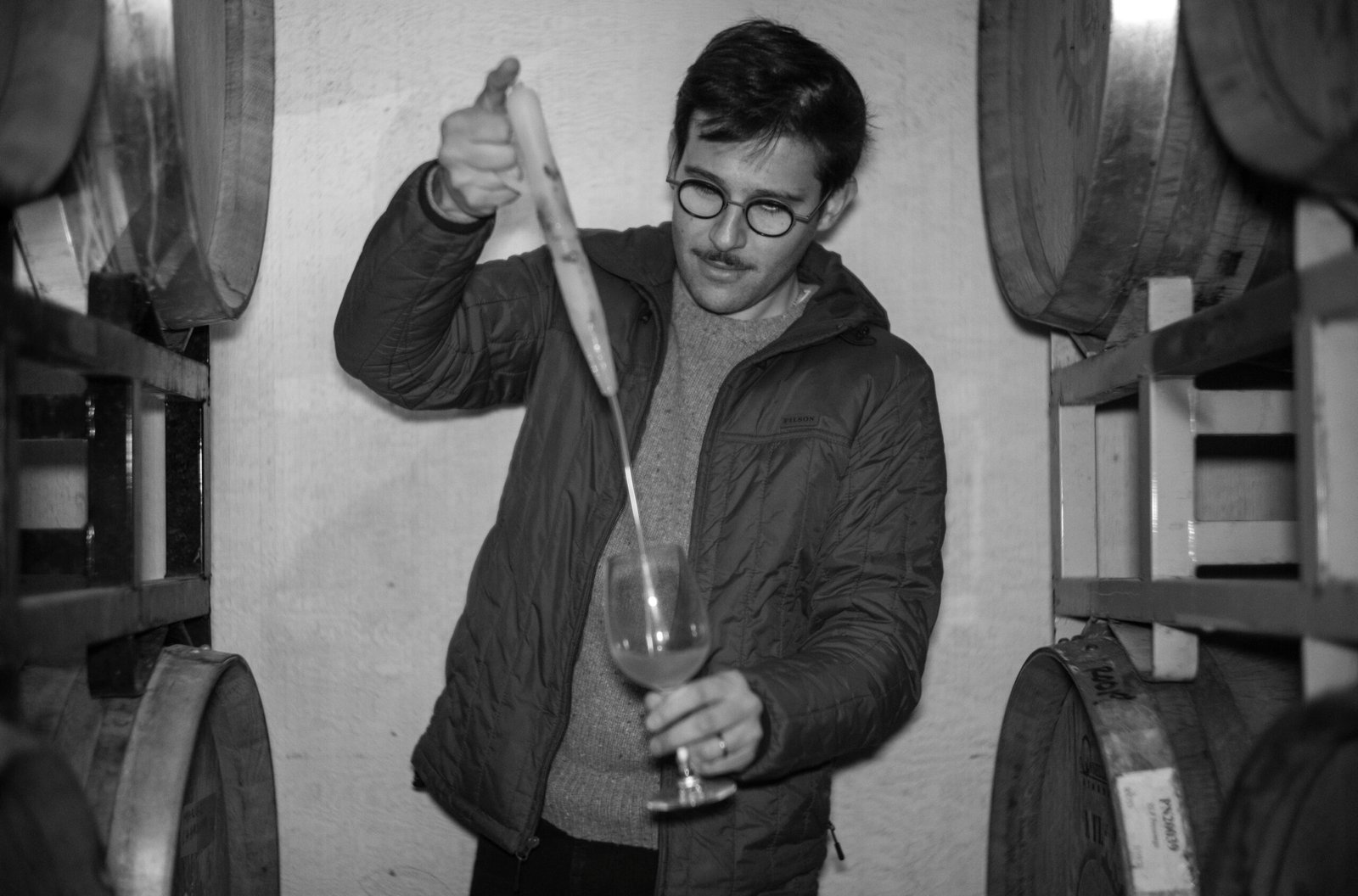
Barrelling down the Chardonnay, my first wine, was one of the singular moments of the whole harvest.
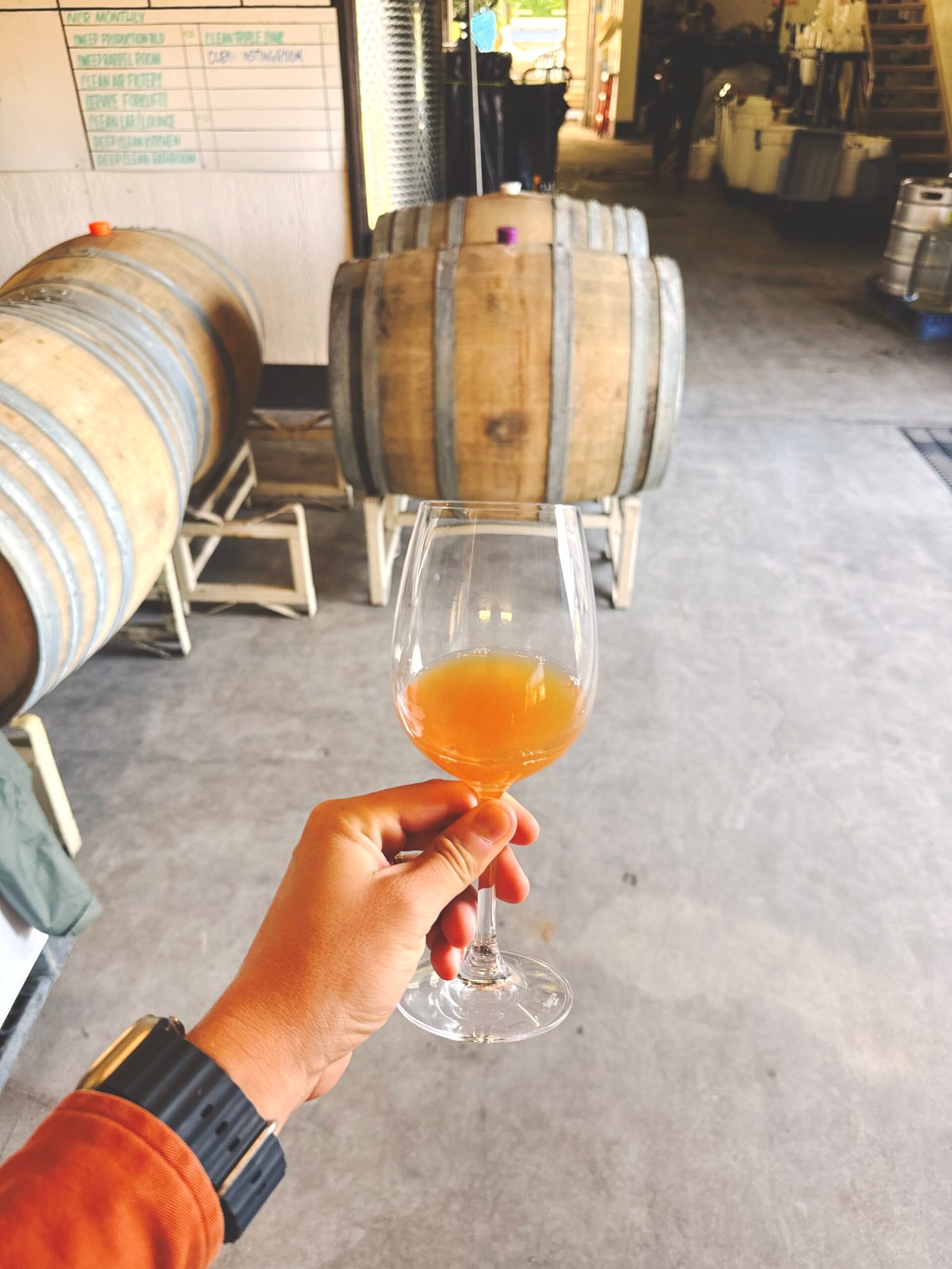
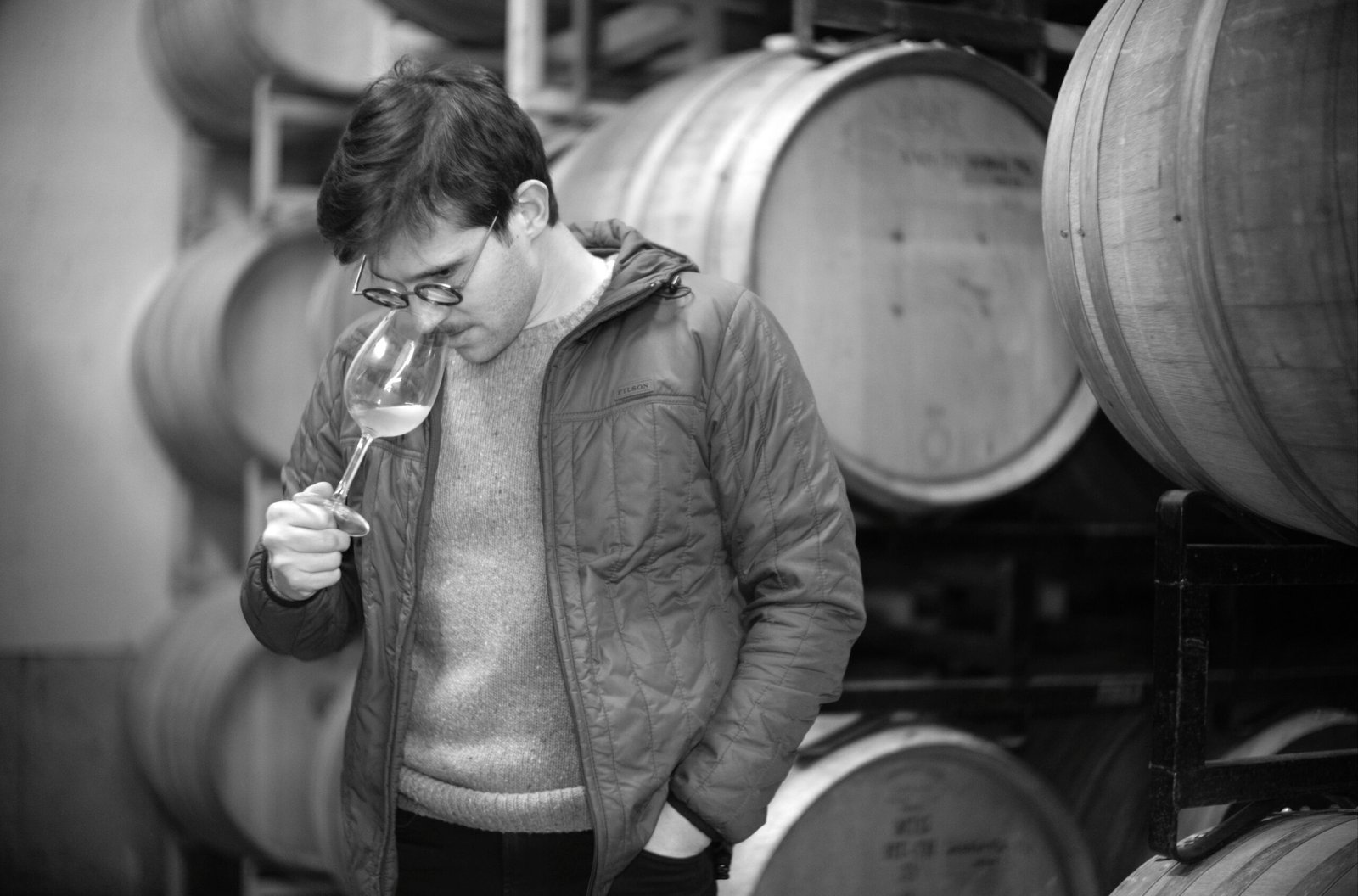
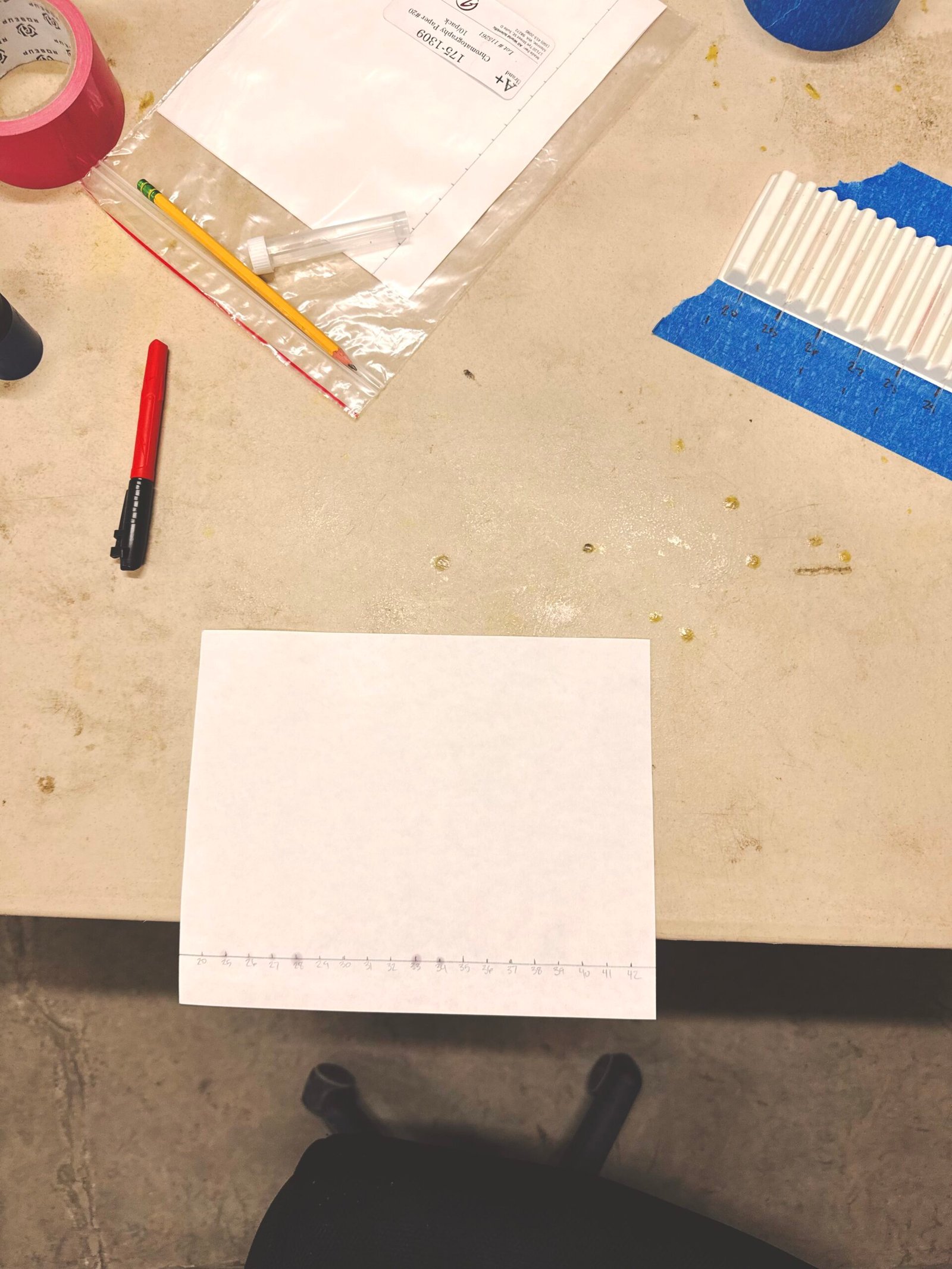
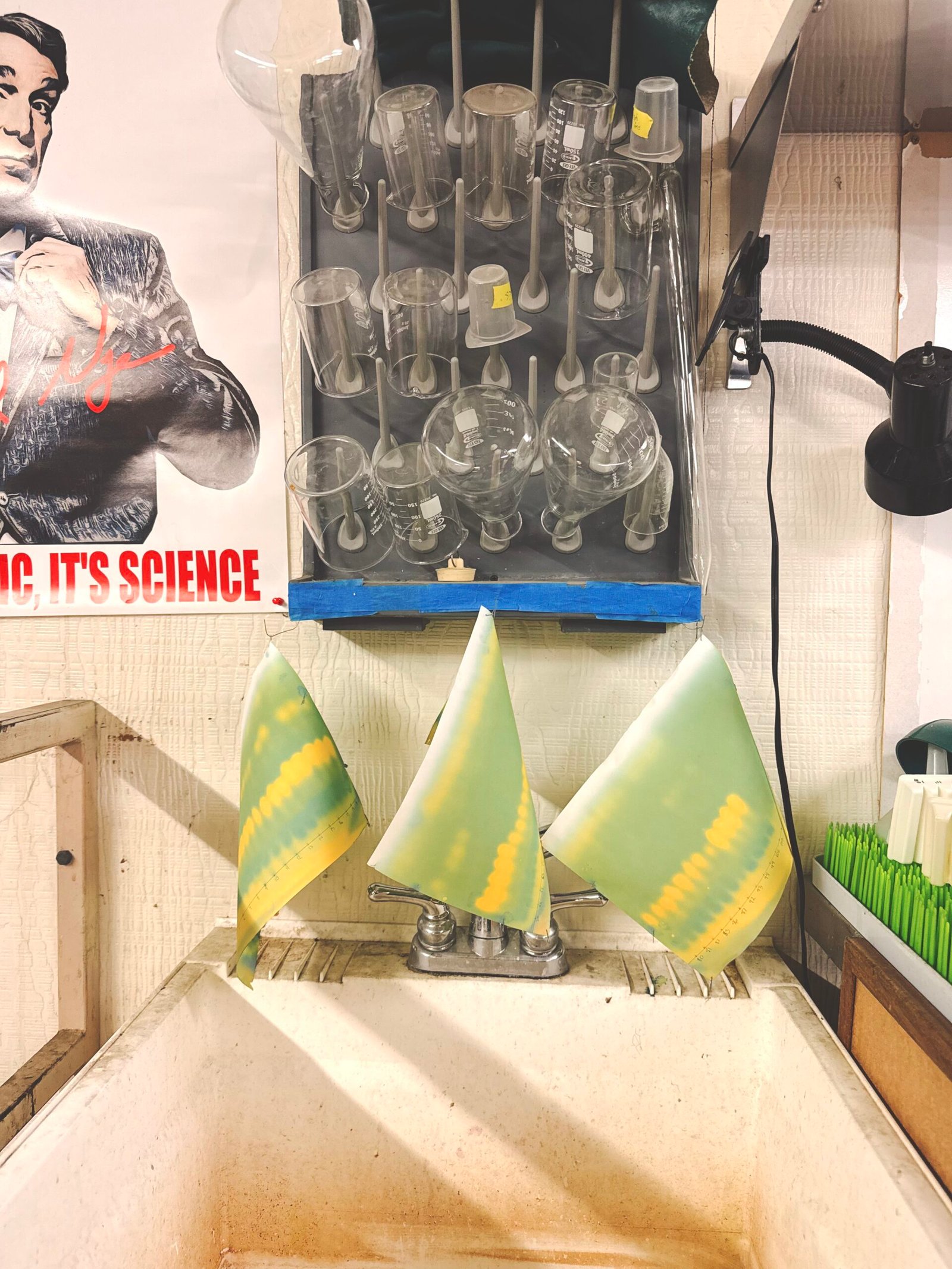
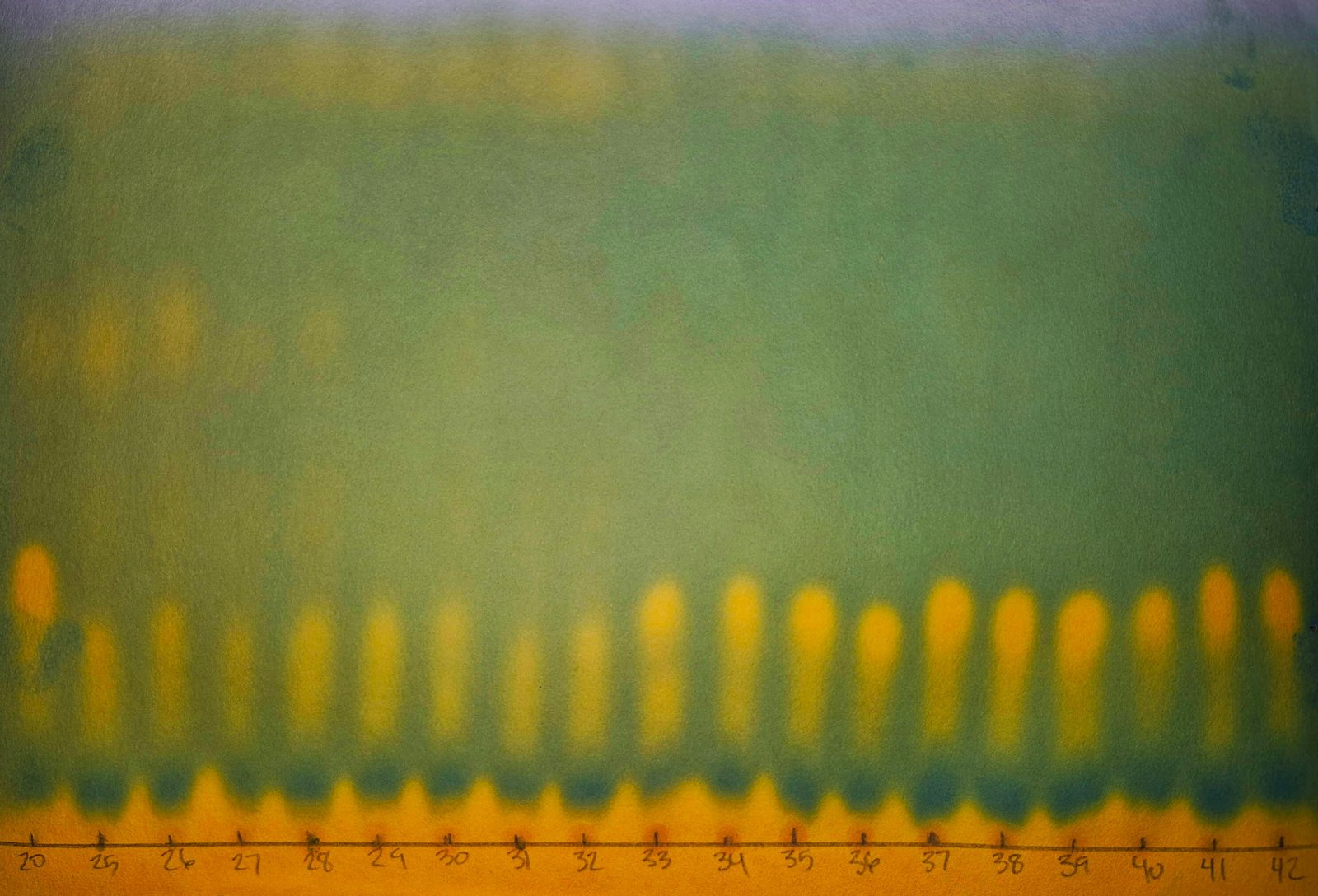
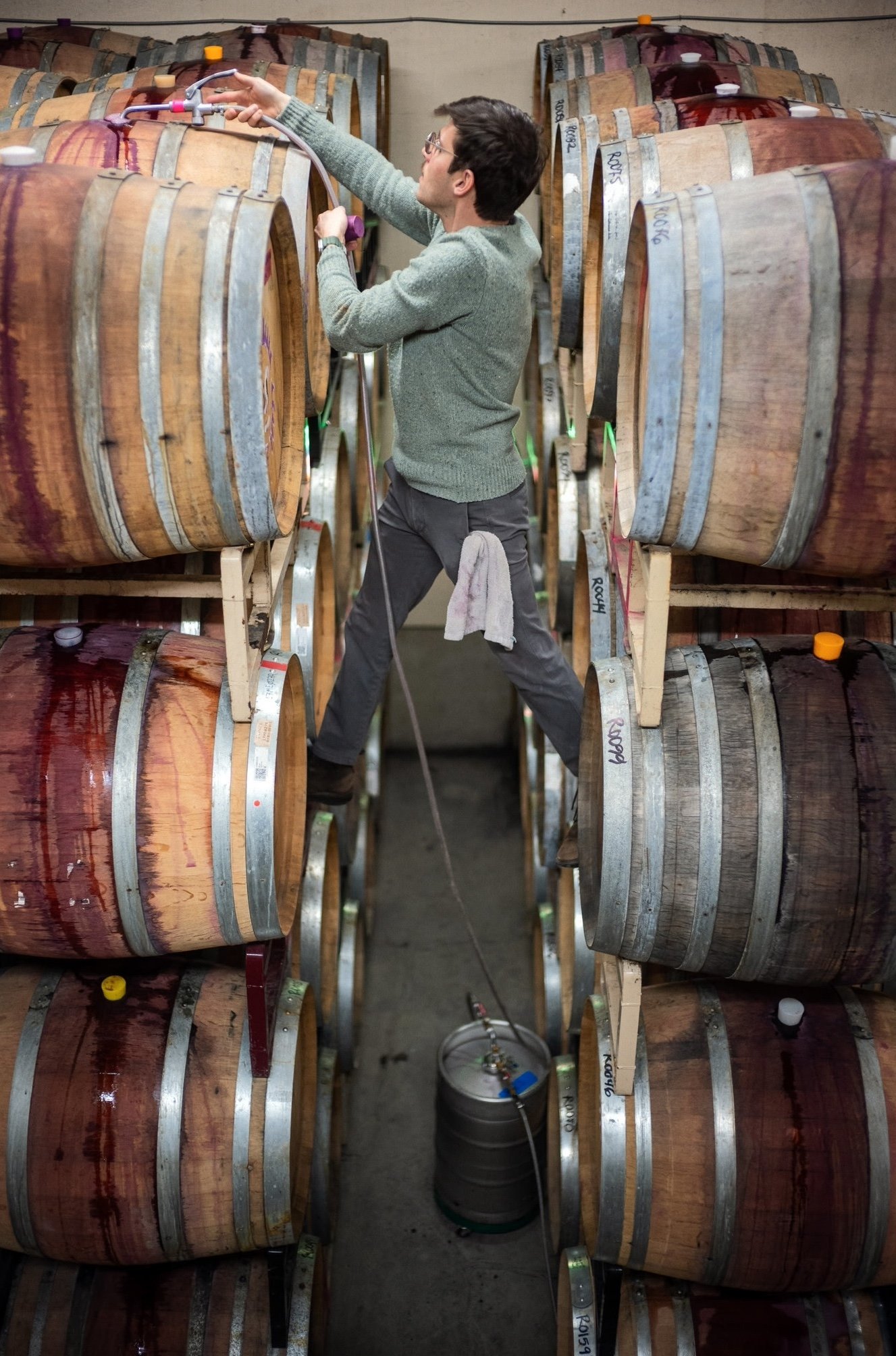
I monitored it throughout the harvest, and kept going back after the season ended, visiting the winery to help Jim with tasks like chromatography and topping barrels, and using those visits as an excuse to check in on my wine. It changed considerably: deep tropical fruit notes early on, moving toward greener, more delicate fruit as the months passed. I’m curious to see what it becomes by bottling, which should be sometime around August 2026.
It keeps me connected to this experience in a way that nothing else quite does. It’s also given me an unexpected creative project: designing the label and branding for this wine. Something that is still mine to shape.
When the reds arrived (September 18 – onwards)
The shift to red wines brought a different energy entirely.
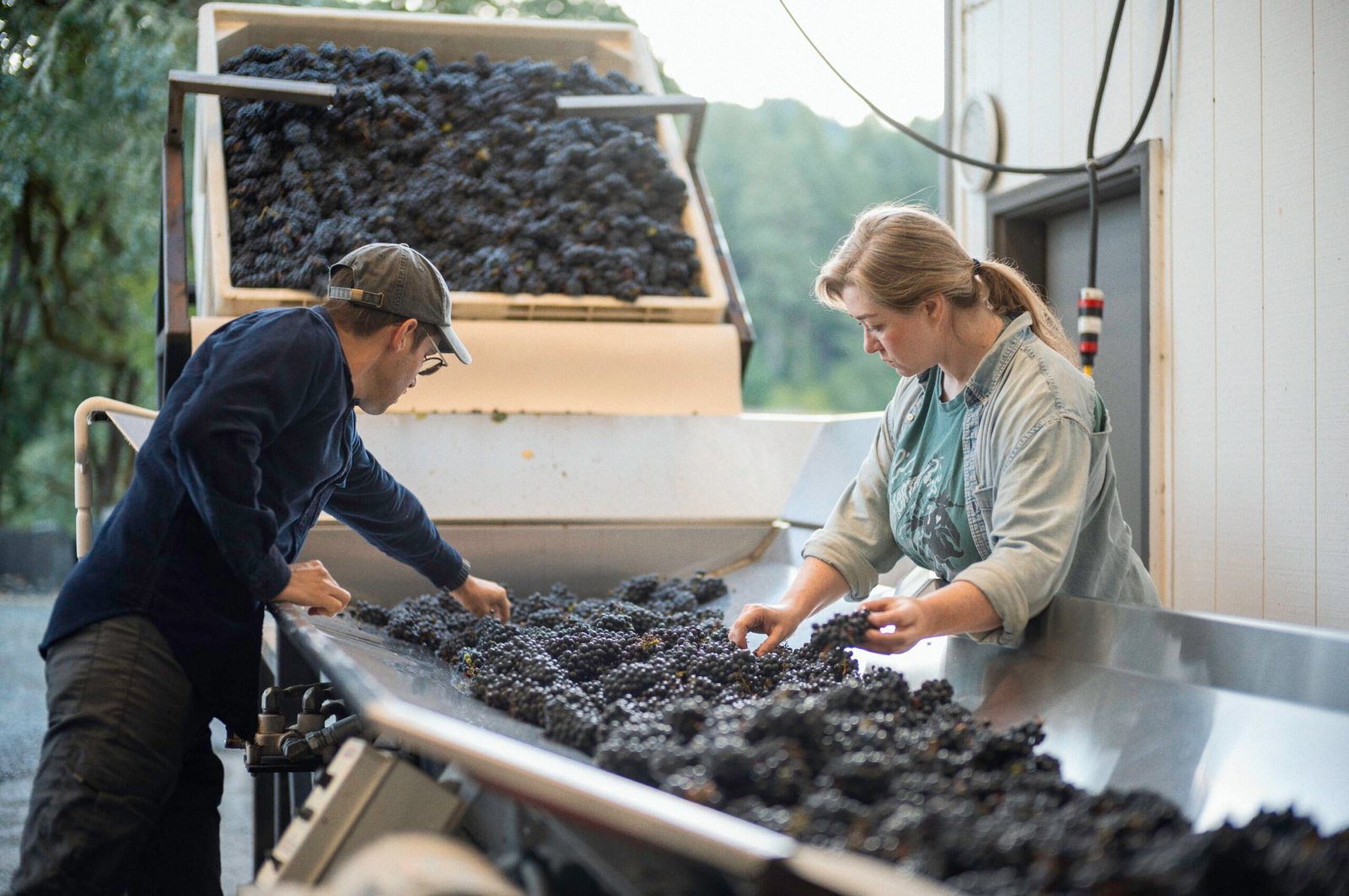
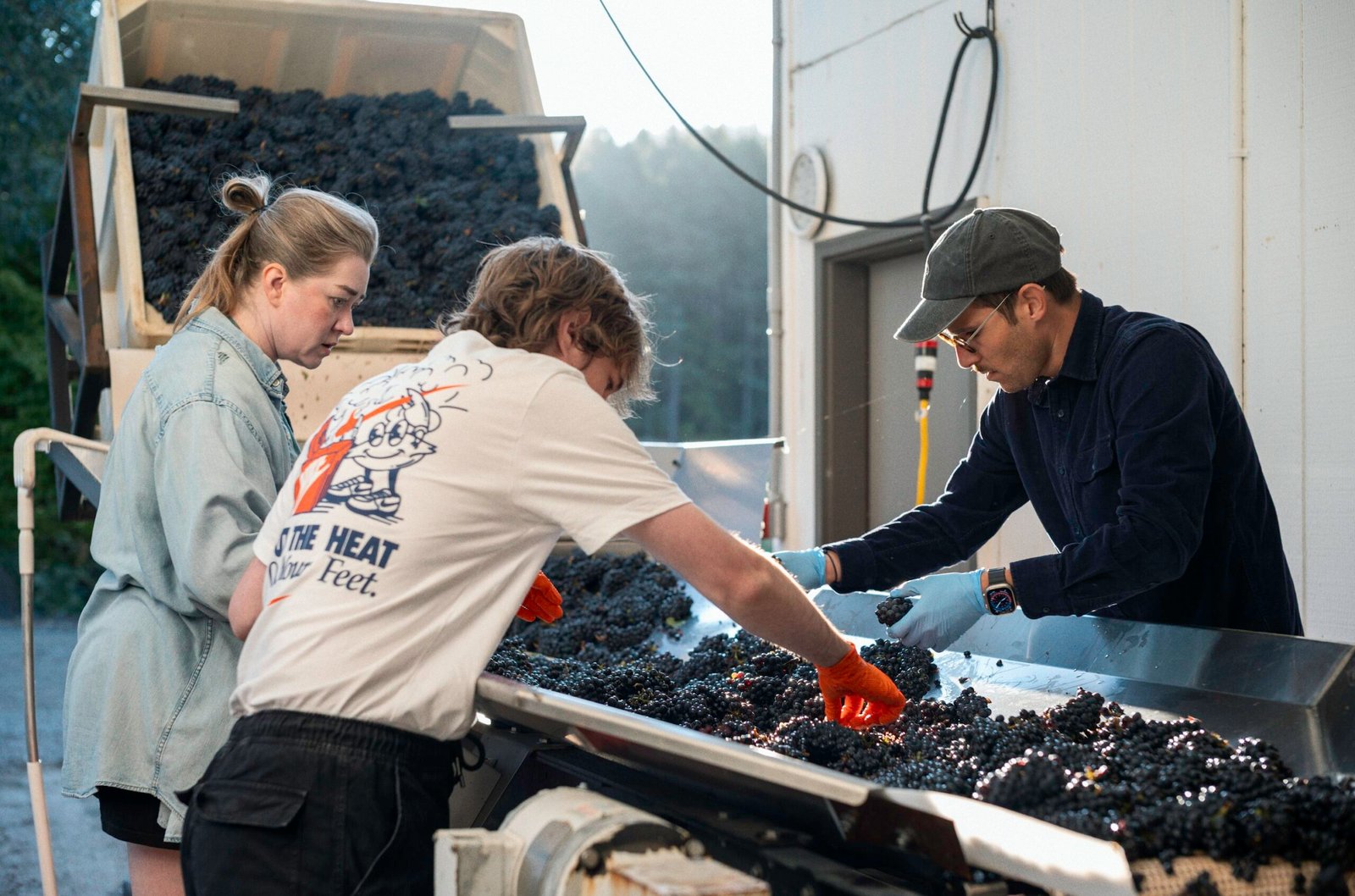
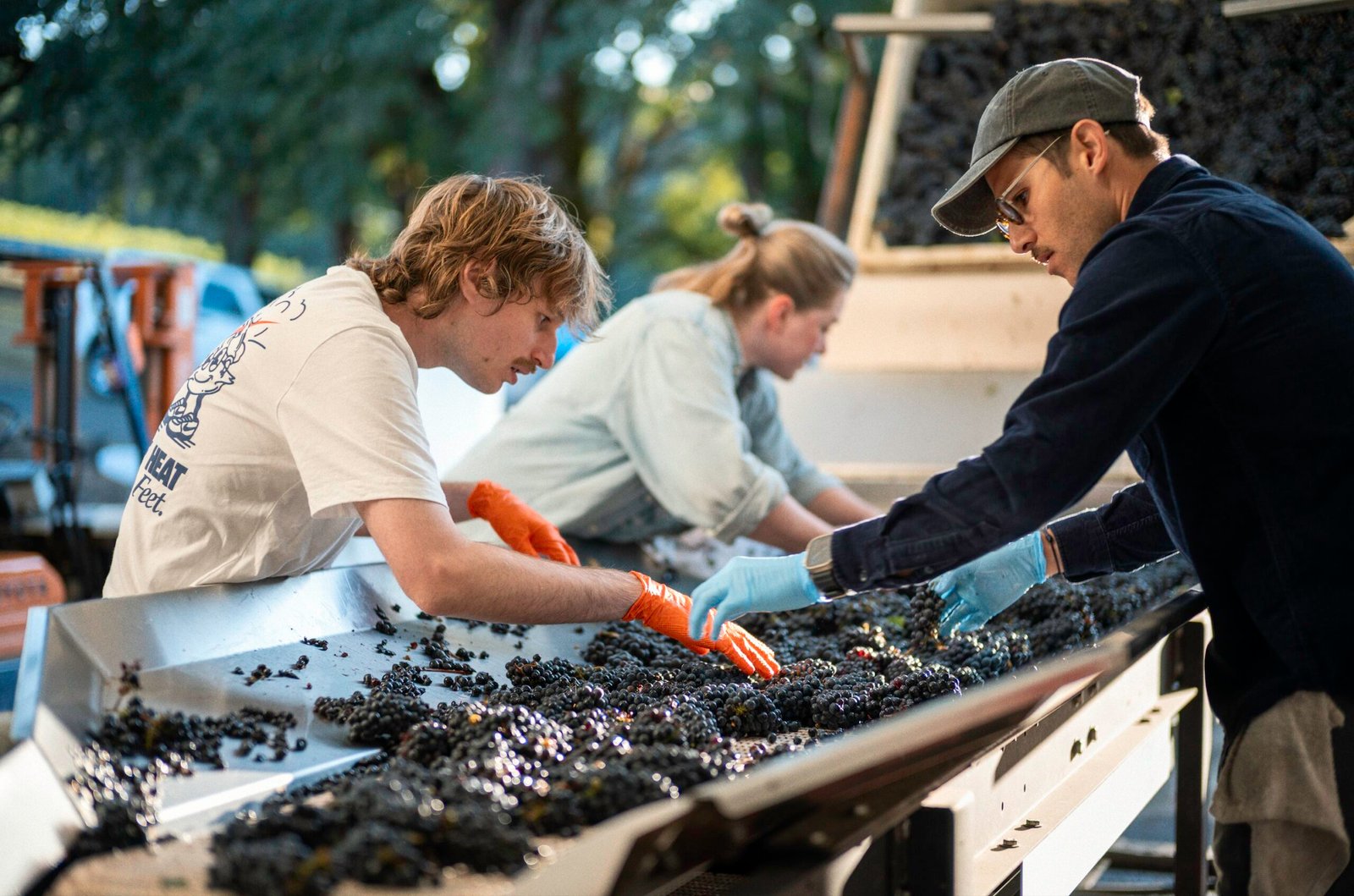
Our first red processing day was a large one: twelve tons of Pinot Noir arrived from the property the winery sits on, No Clos Radio itself. We started early, preparing the sorting table and the de-stemmer. As picking bins arrived, we dumped the fruit onto the sorting table and worked through it by hand, pulling out leaves, unripe grapes, anything affected by botrytis. The goal was that only the best fruit reached the de-stemmer. During the gaps between bins we swept, emptied the compost bins, moved stems away, and reset the stations.
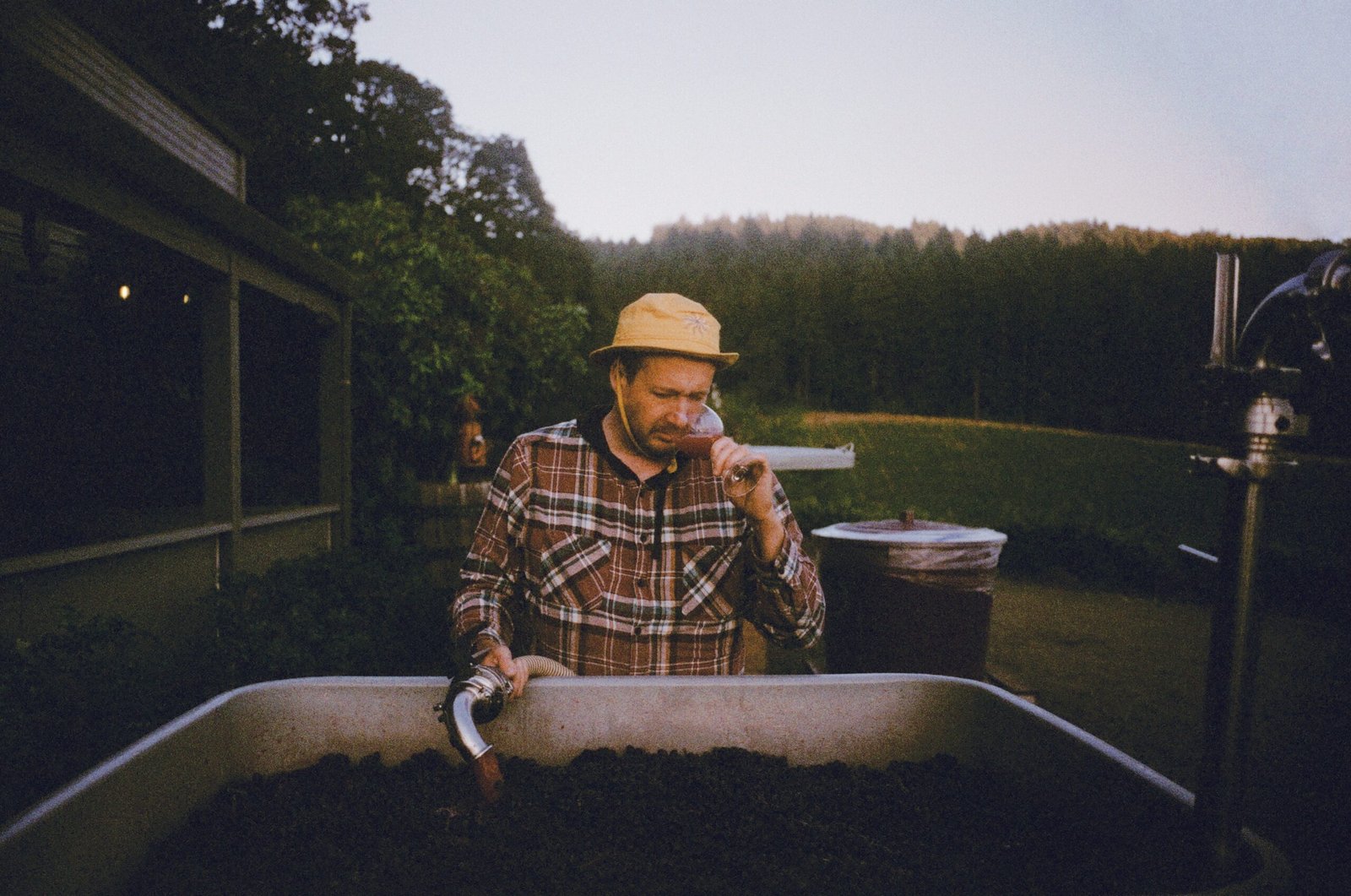
After a long and productive day, I made dinner and sat with Jim, Jenny, and Tyler from Momument wines. We talked about the day, the next steps, and blind-tasted a few wines. Then, after dinner, we walked back to one of the bins where the Pinot Noir was already resting. We stood and watched. You could feel the warmth rising off the fruit, and hear the low, almost animal sound of fermentation already beginning. It was one of those moments that stayed with me.
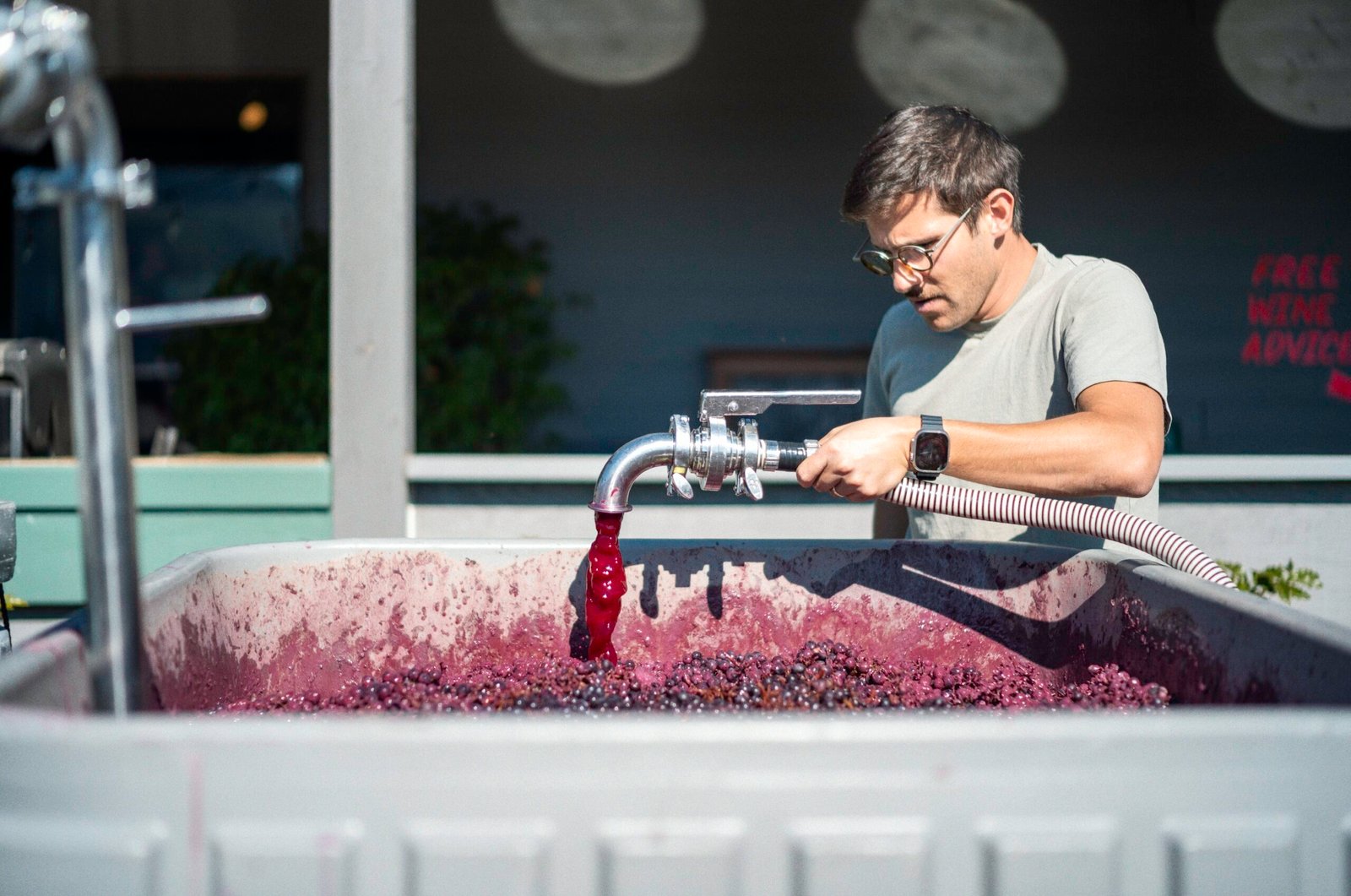
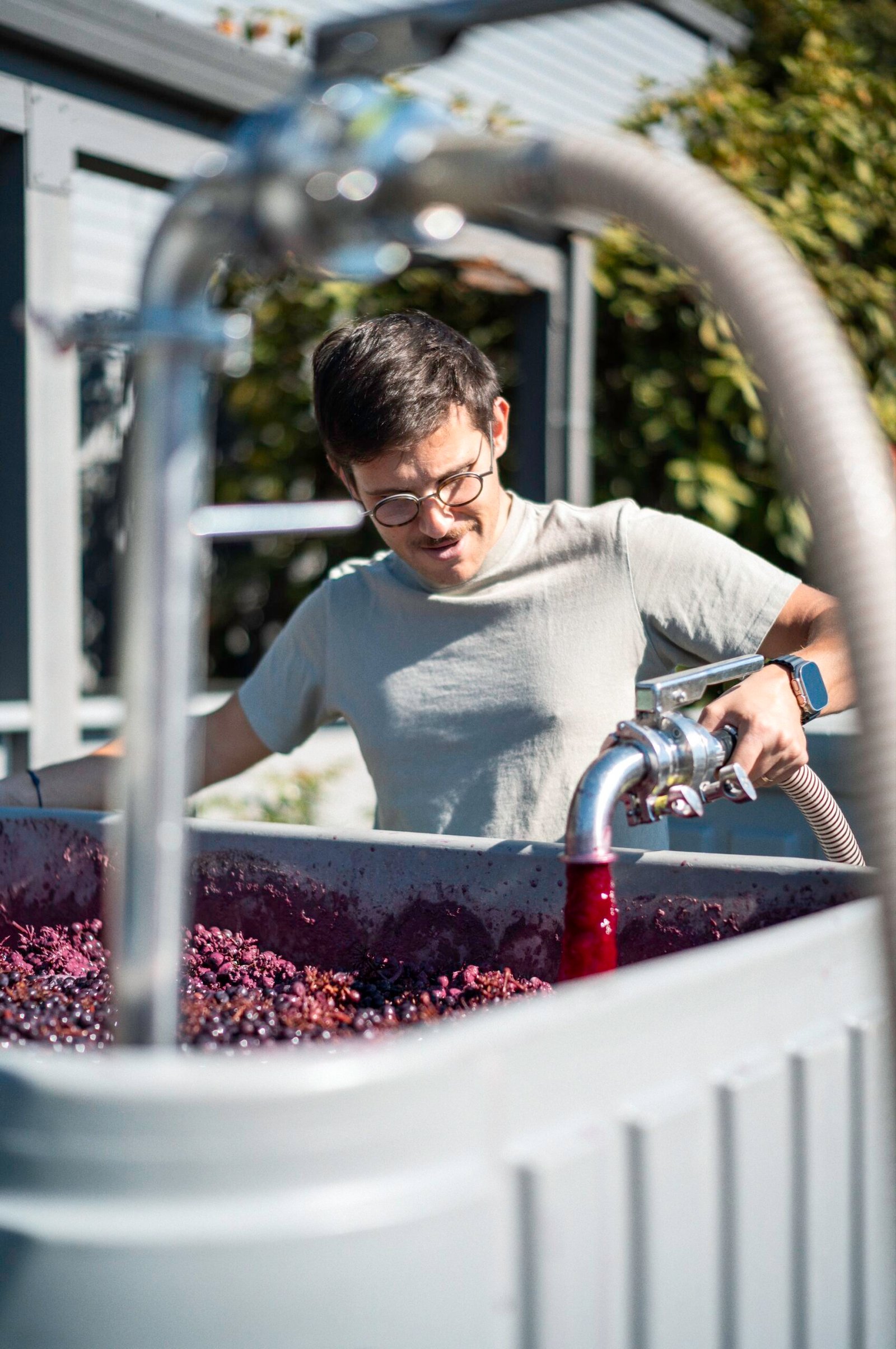
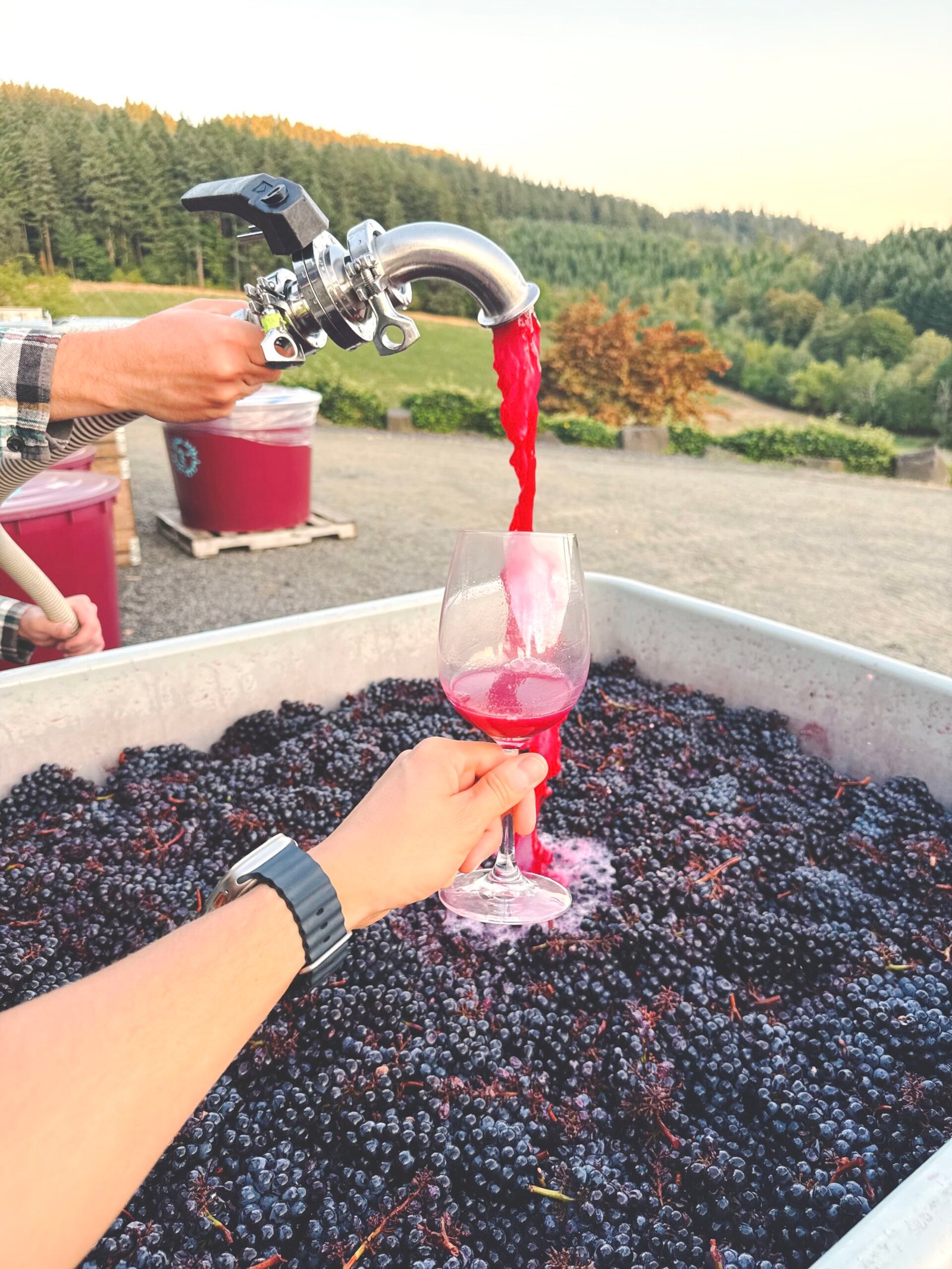
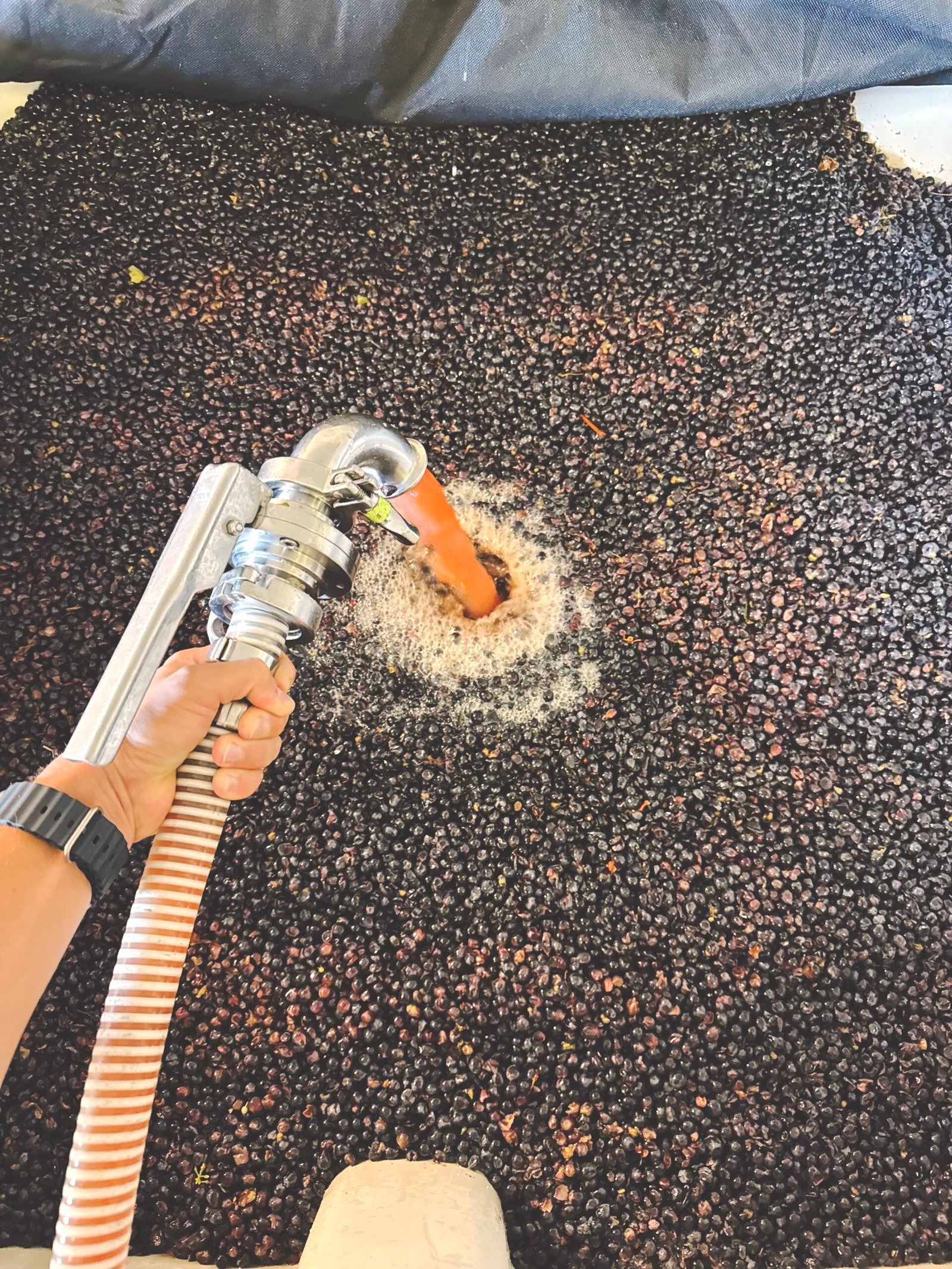
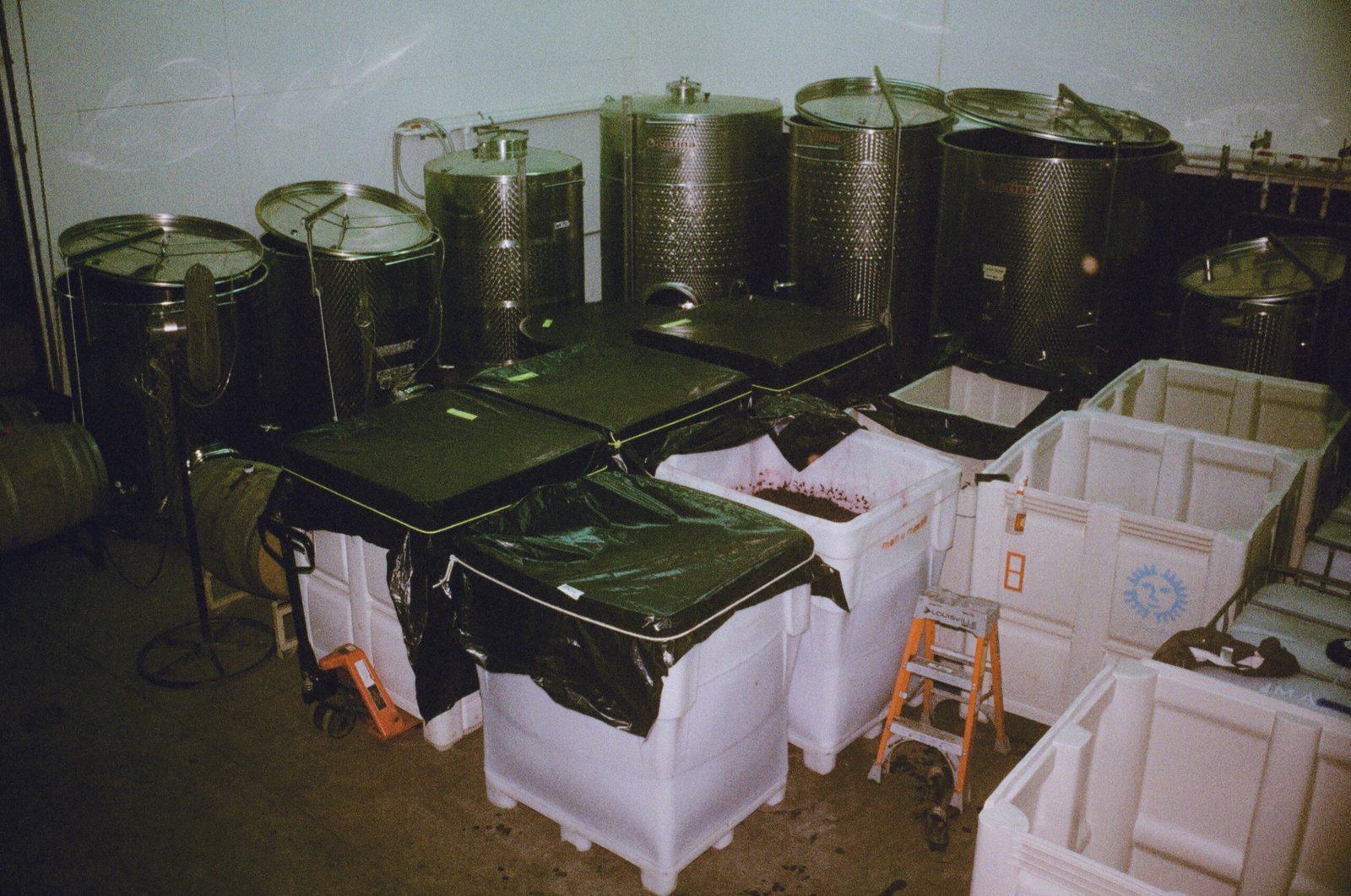
From that point on, the red fermenters began to shape the rhythm of every morning. Each day started with measuring the temperature and Brix of each fermenter, tracking the decline in sugar, the rise in heat, the progress of fermentation. This was followed by punch-downs: physically pushing the cap of fruit that rises to the surface back down into the juice, keeping it hydrated and extracting colour, flavour, and tannin. The cap forms under pressure from CO2 rising through the juice, and it could become genuinely thick and resistant. It was good work for your core. As more fruit arrived and more fermenters were added to the rotation, the punch-down rounds grew longer and more demanding.
During the BTPs (Brix, Temperature, and Punchdowns) and throughout the day, we’d put music on the Bluetooth speaker. I played some Kevin Morby, obviously, which was fun and felt like a small piece of home. I listened to other people’s playlists too, which I liked. Music made the repetitive tasks feel less like repetition.
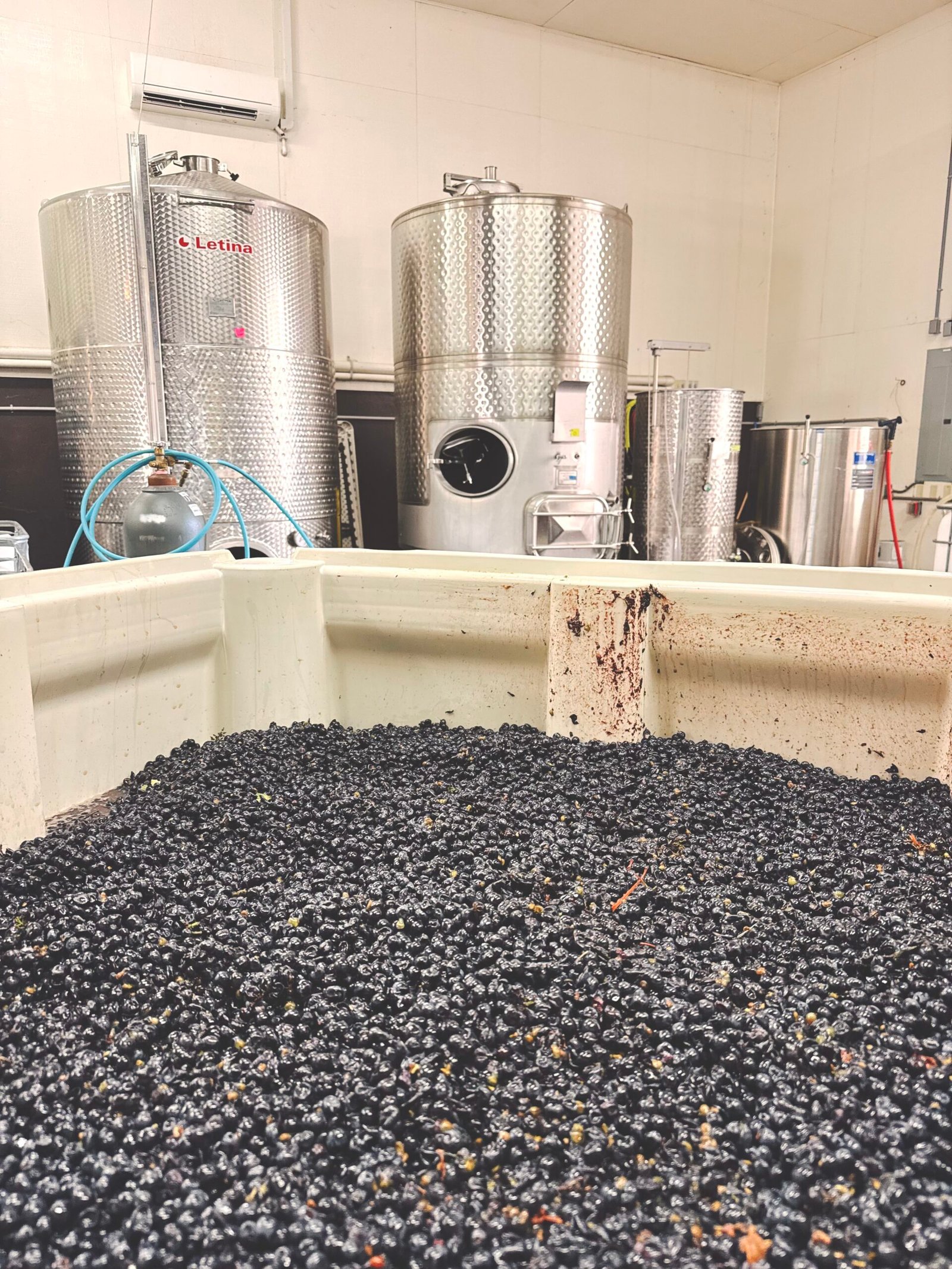
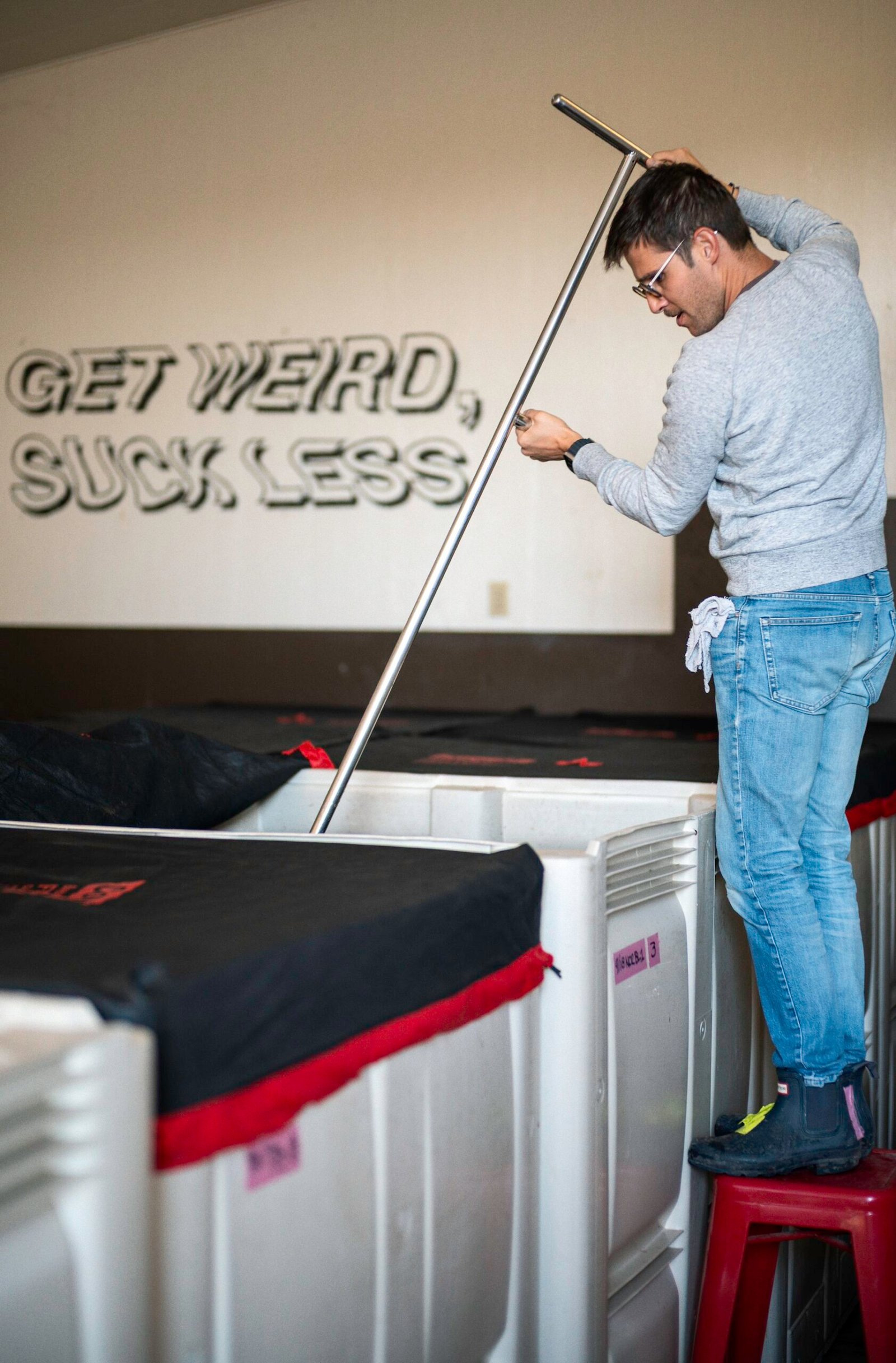
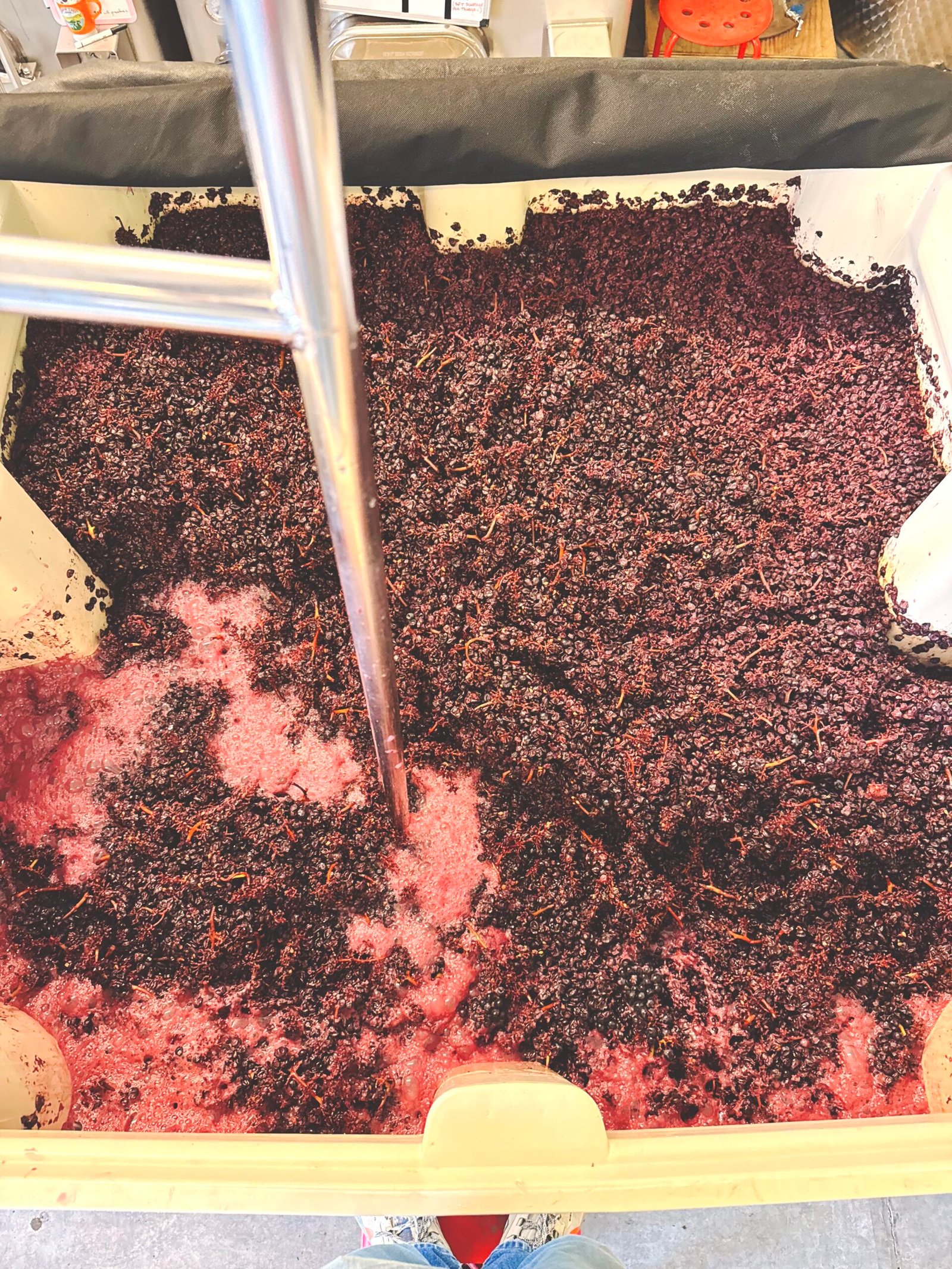
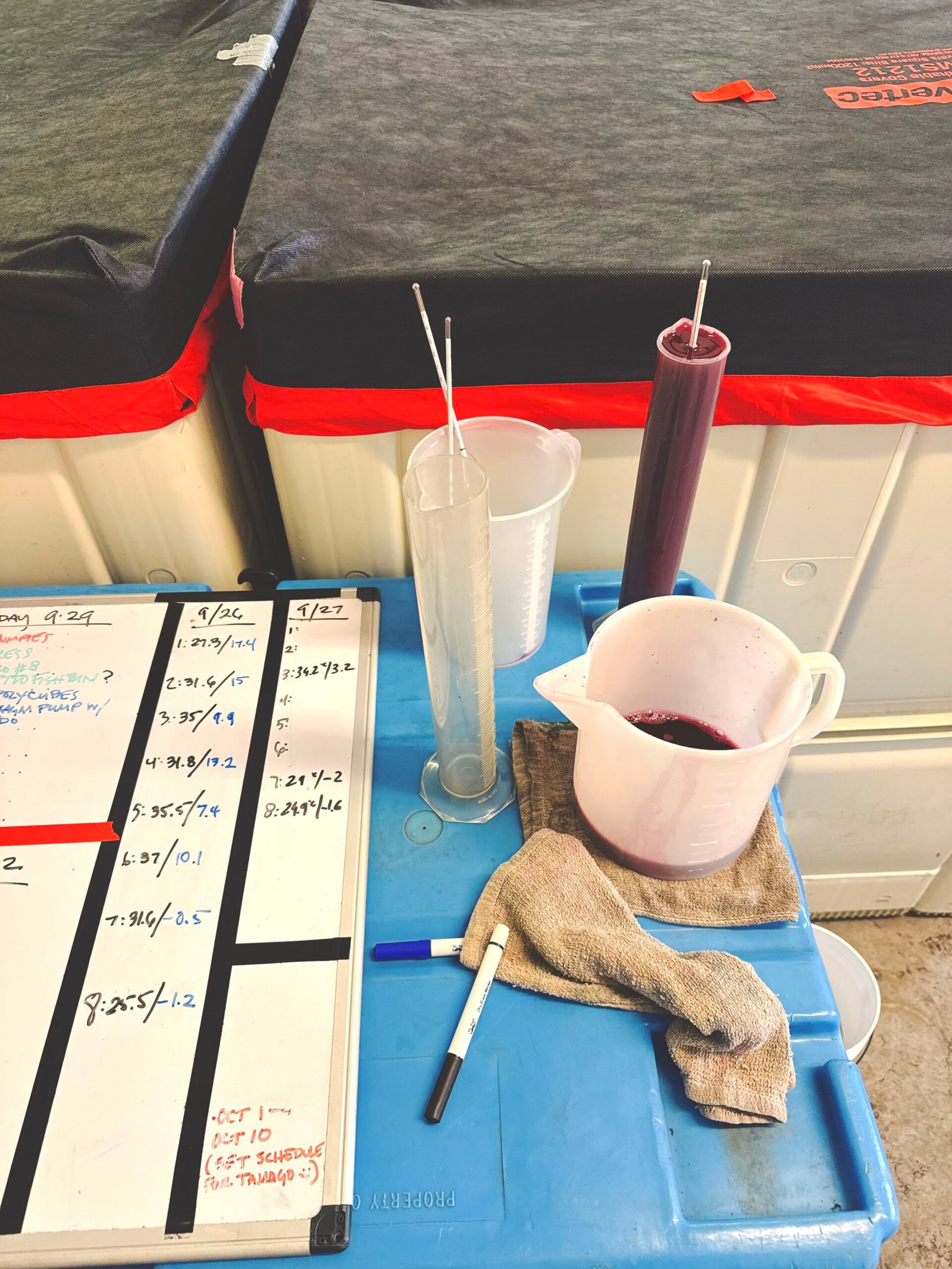
Some red wines called for pump-overs instead, which meant inserting a probe through the cap to the bottom of the bin and using a pump to pour juice back over the top, keeping everything hydrated without the physical extraction of a punch-down. This suited lighter reds like certain Pinot Gris and Gamay fermentations, where the winemaker wanted less structure and more freshness in the final wine. These choices, punch-down versus pump-over, frequency, timing are some of the levers a winemaker pulls to shape what ends up in the glass.
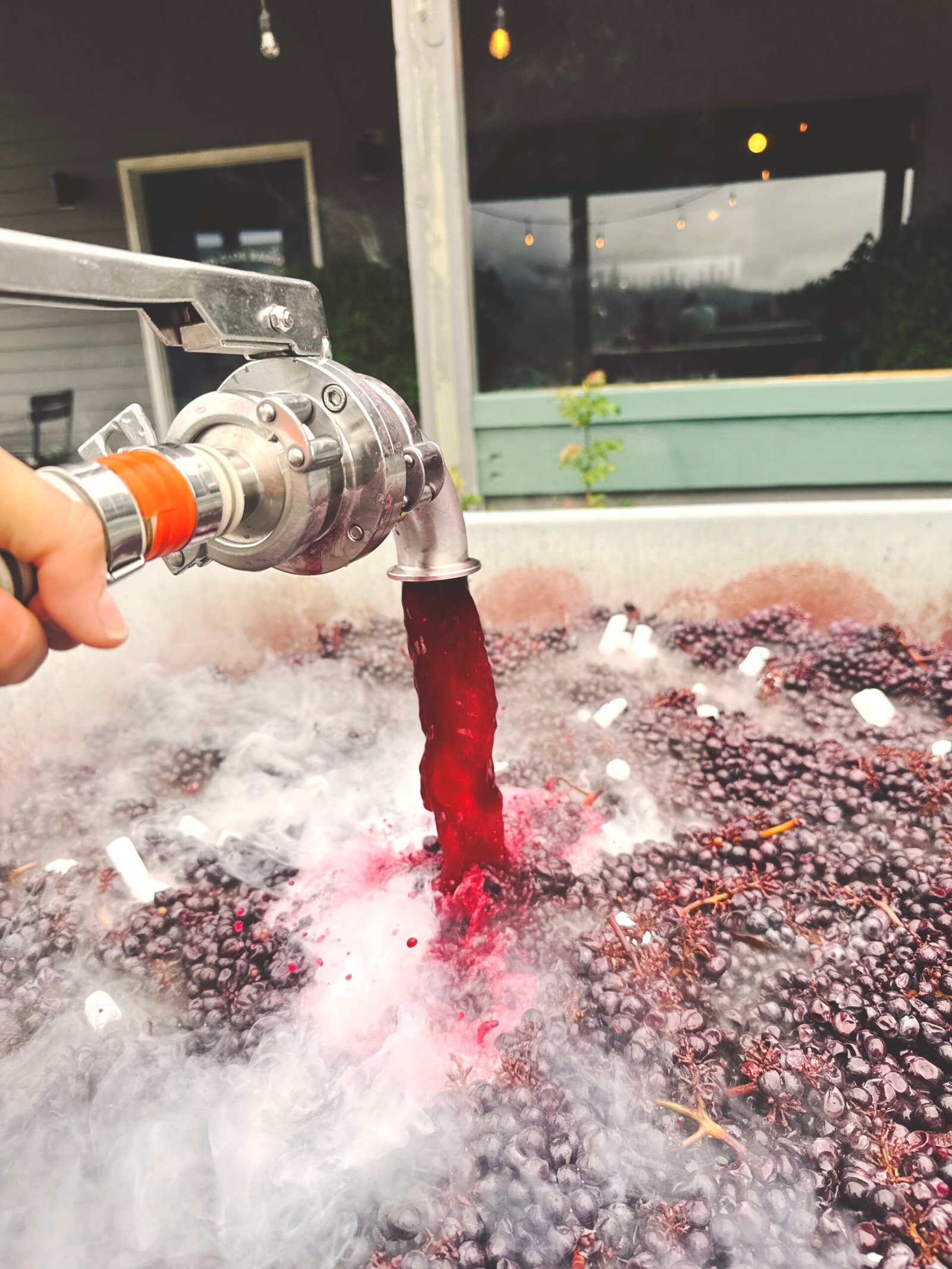
Other wines bypassed all of this entirely. Some of our fruit went into large round bins for carbonic maceration: whole clusters sealed in with a touch of dry ice, left to ferment within the berries themselves over four to six weeks. The resulting wines tend to be vibrant and fresh, fruit-forward with low tannins. We would come back to these in a few weeks.
By September 22nd we had processed forty-one tons of fruit. We were thirty-six percent of the way through harvest. Our bodies started to feel the physical toll of harvest, but I was adjusting. My excitement being there, learning about winemaking and seeing the result of our work every day, allowed me to push through and still be excited about every day.
The time between
Beyond the work itself, there were the hours in between.
We each cooked for ourselves most nights, with the occasional dinner Ross made for the group which was always a welcome thing. Early in harvest I had gone to the Safeway in Forest Grove and stocked up for the first couple of weeks. Nothing complicated: chicken with vegetables, pasta, something on the BBQ with leftovers stretched into lunch the next day. After a long physical day, simple and satisfying was all I wanted.
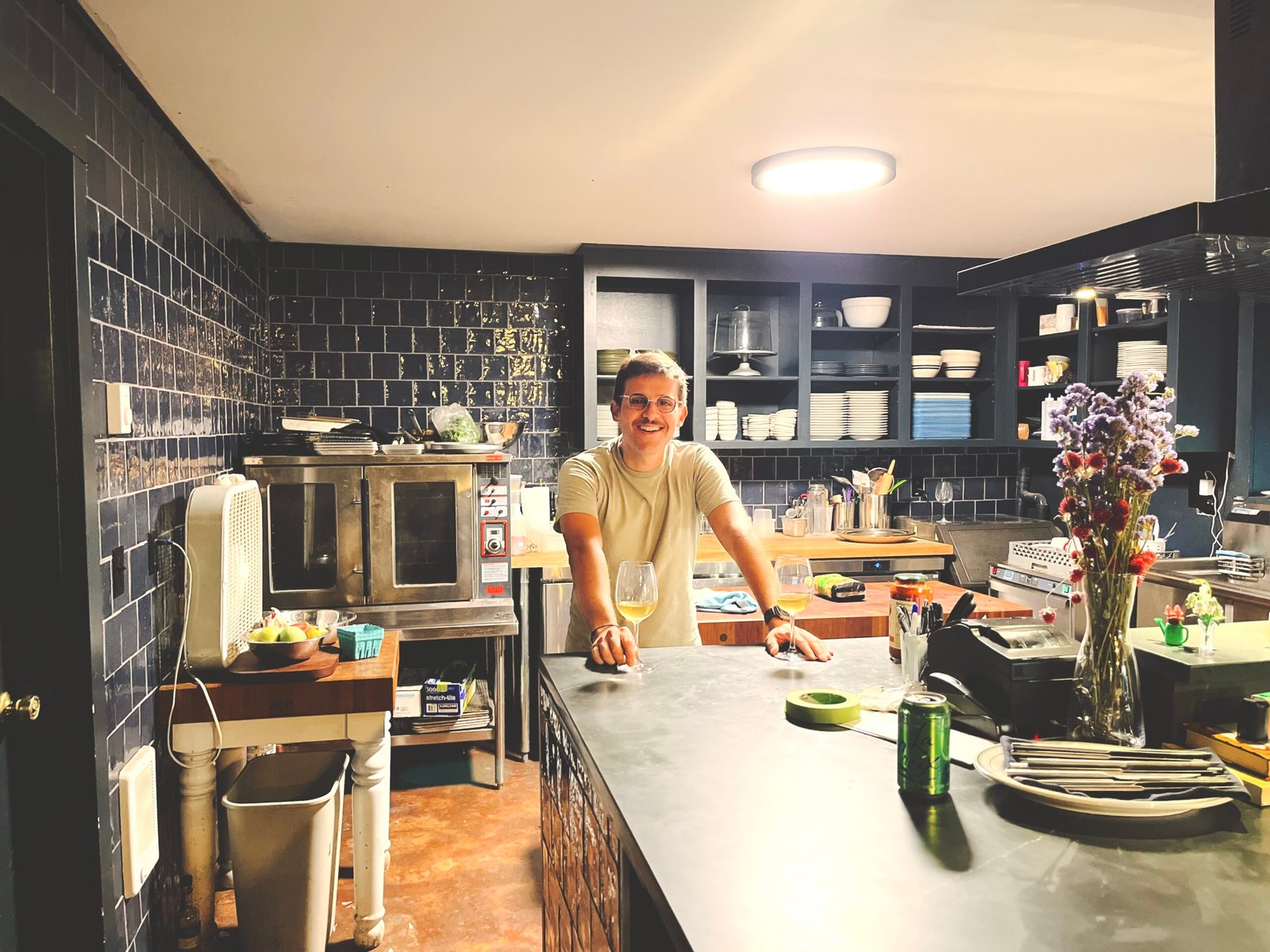
We didn’t always eat together, but often enough we ended up at the communal table outside, with whatever bottles had been opened that day. Some evenings were quiet in a way that felt a little lonely. Others, I didn’t mind the solitude at all, there were nights where I had nothing left to give and was glad to be alone with my thoughts, and a glass of wine.
I had pitched my tent on a platform next to the winery and thanks to a thick air mattress, I was sleeping very well and didn’t mind camping for a few weeks.
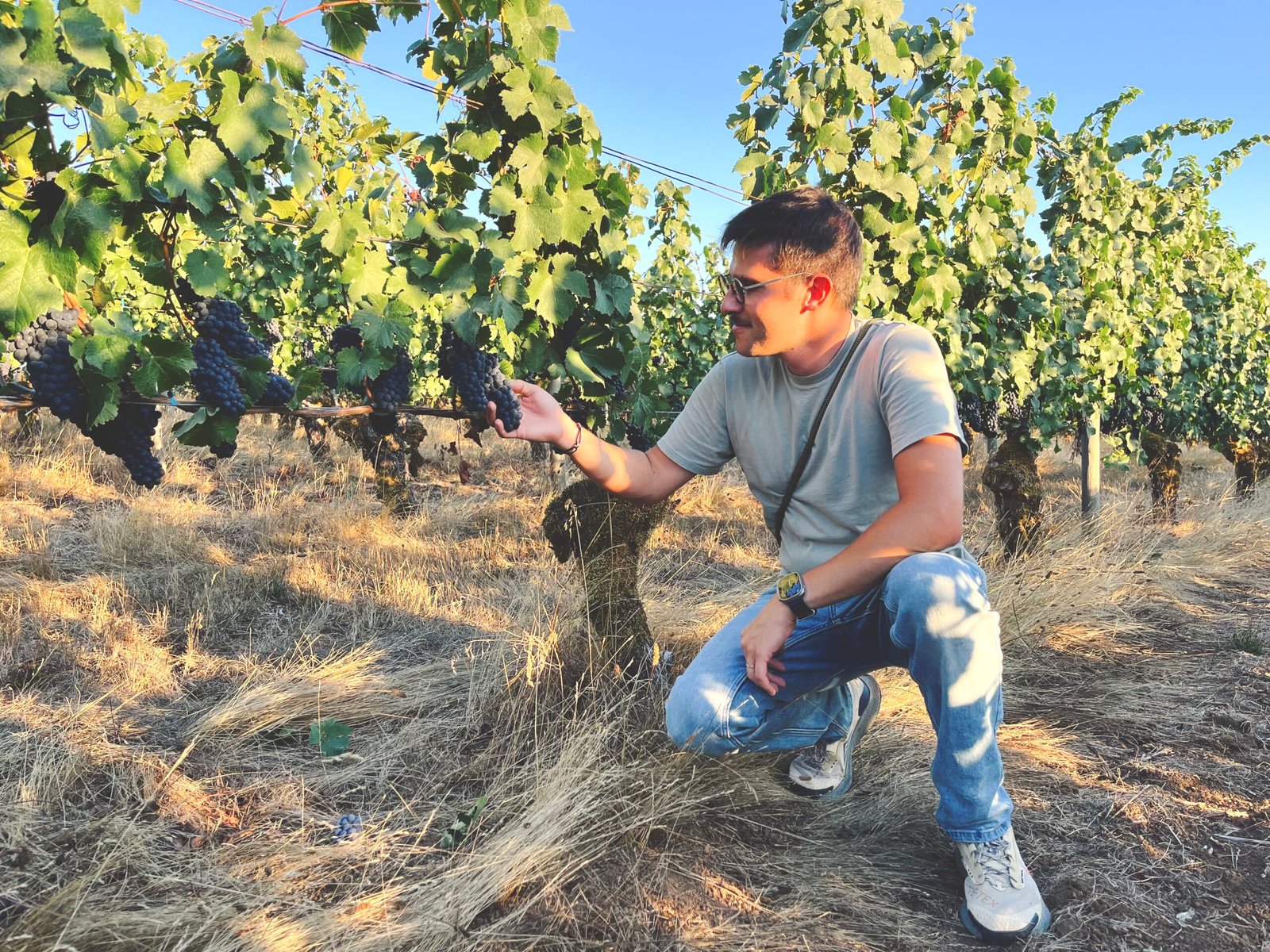
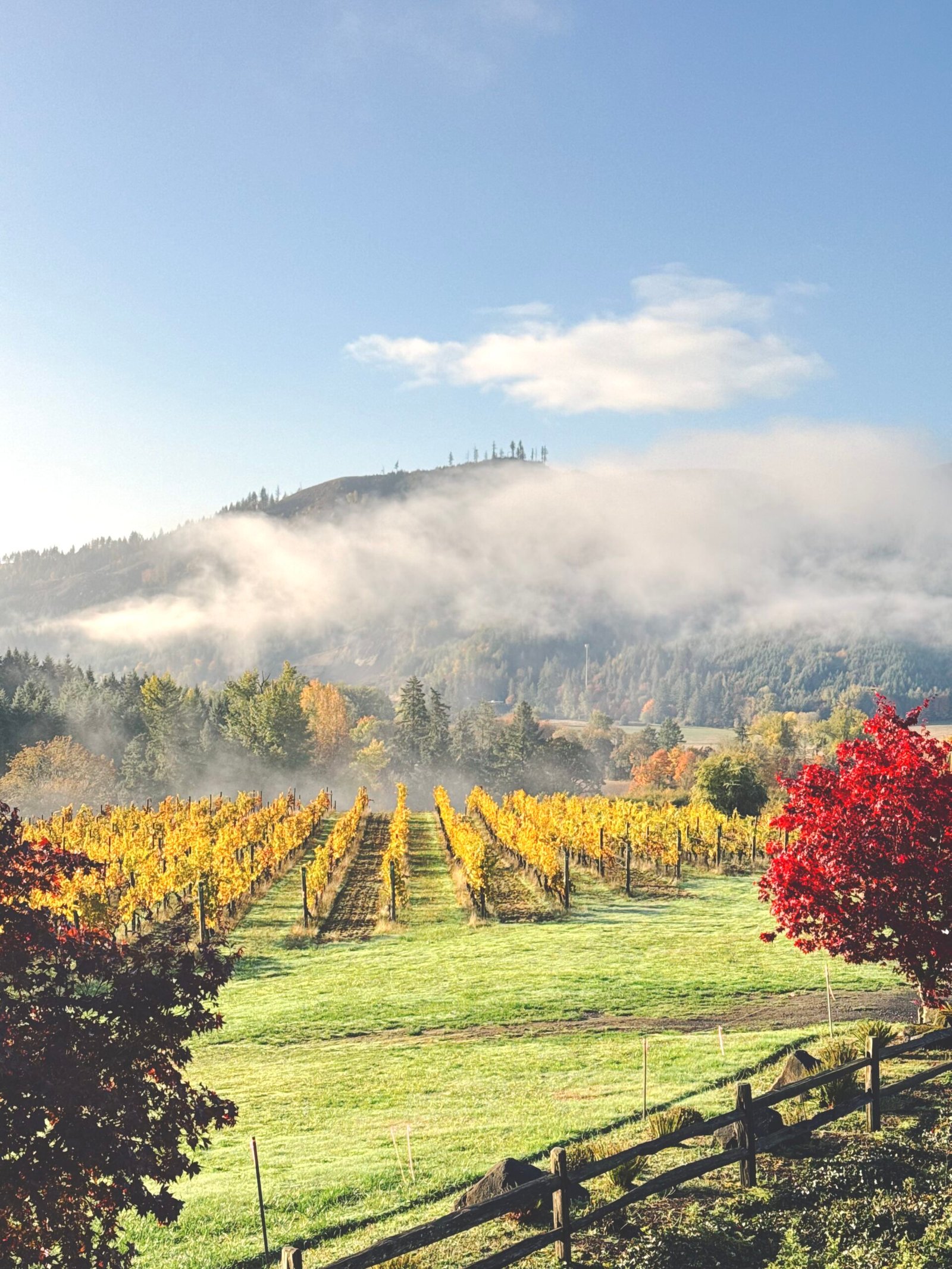
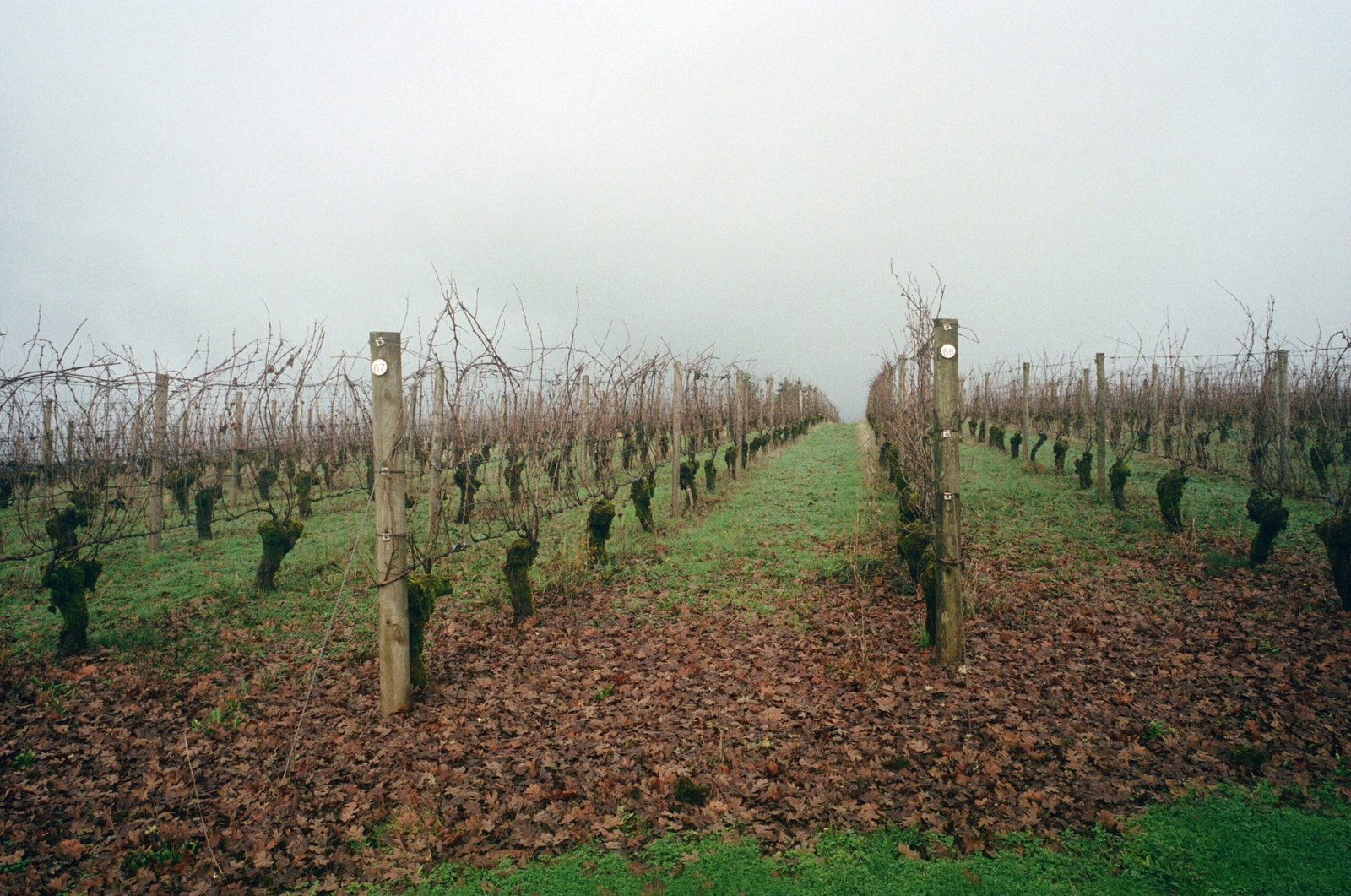
One evening, Jim and I walked out into the vineyard at golden hour, the night before a significant portion of the No Clos Radio fruit was due to be picked. The light was particular. It felt like a moment worth remembering.
Some nights, Ross from Maloof wines and Tyler from Monument wines would open bottles from their collections and blind-taste us. From a couple of wines to, on at least one occasion, rather a lot more with everyone involved in harvest. It was genuinely fun to watch how these experts tasted, the precision and the confidence of it, the way they moved through a glass. I learned more from those evenings than I expected.

When harvest slowed down (October 3 to late October)
On October 3rd, our last fruit arrived: three tons of Riesling. The bulk of the harvest pressed out on October 7th.
After that, I packed up the tent. But the harvest didn’t end so much as it faded.
There were still tasks every few days. The carbonic fermentation wines needed pressing which meant moving fruit and juice from round bins to square ones, since square bins are the only kind the forklift can grab to dump into the press. It was physically demanding work, and the payoff was sensory: opening those sealed containers after four weeks of fermentation, the smell of it, then the smell of the pressed juice. Worth it.
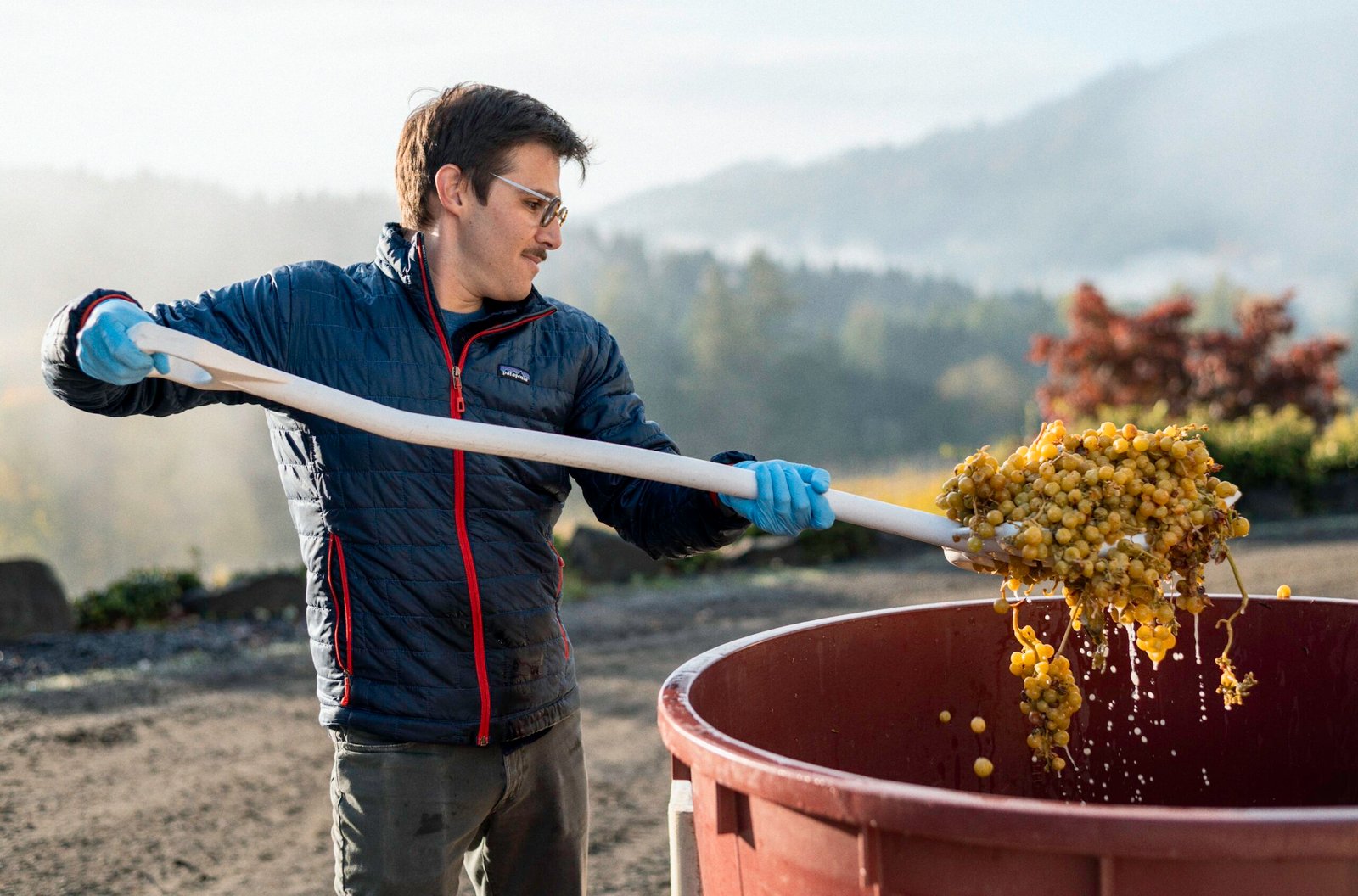
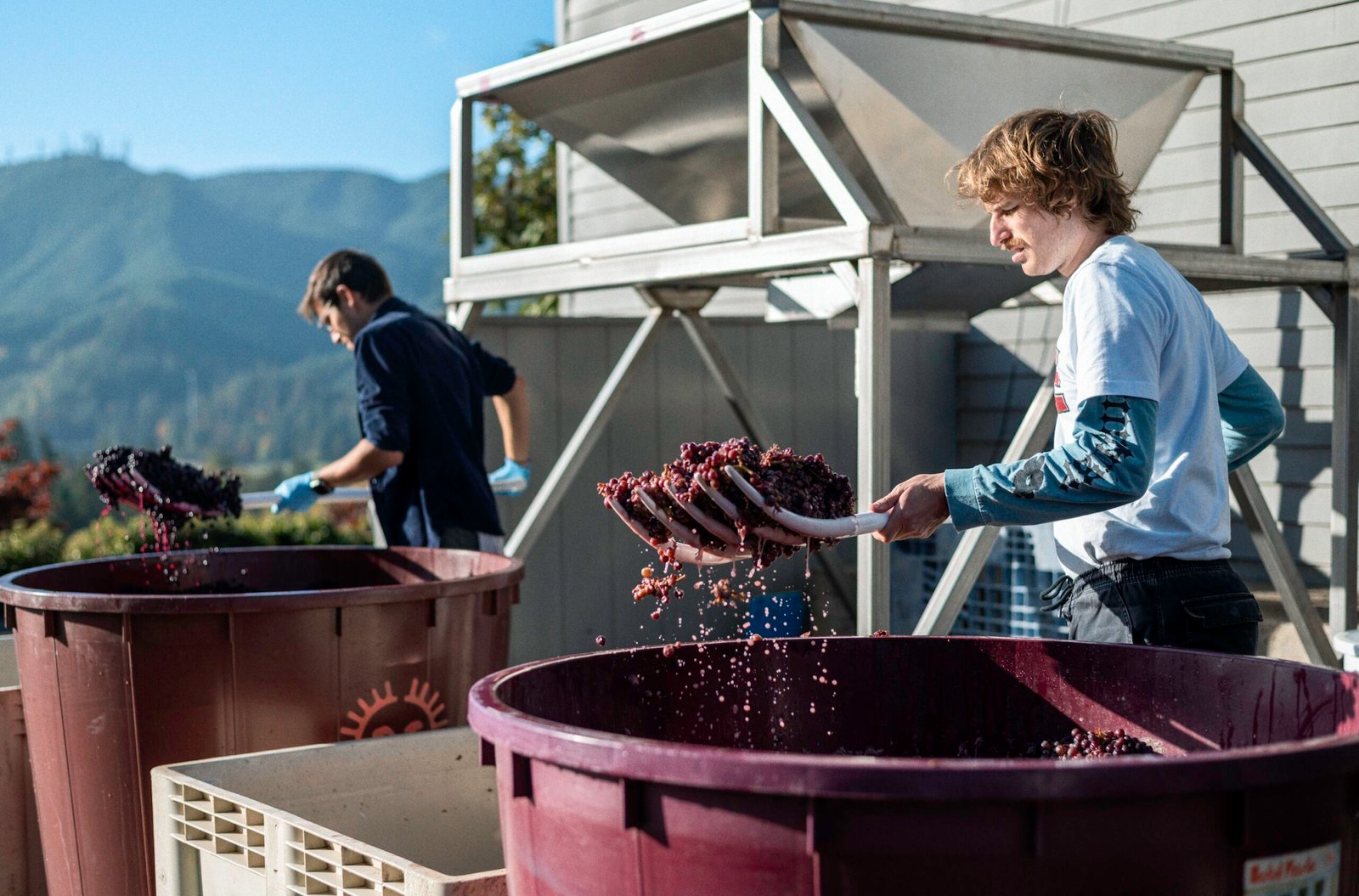
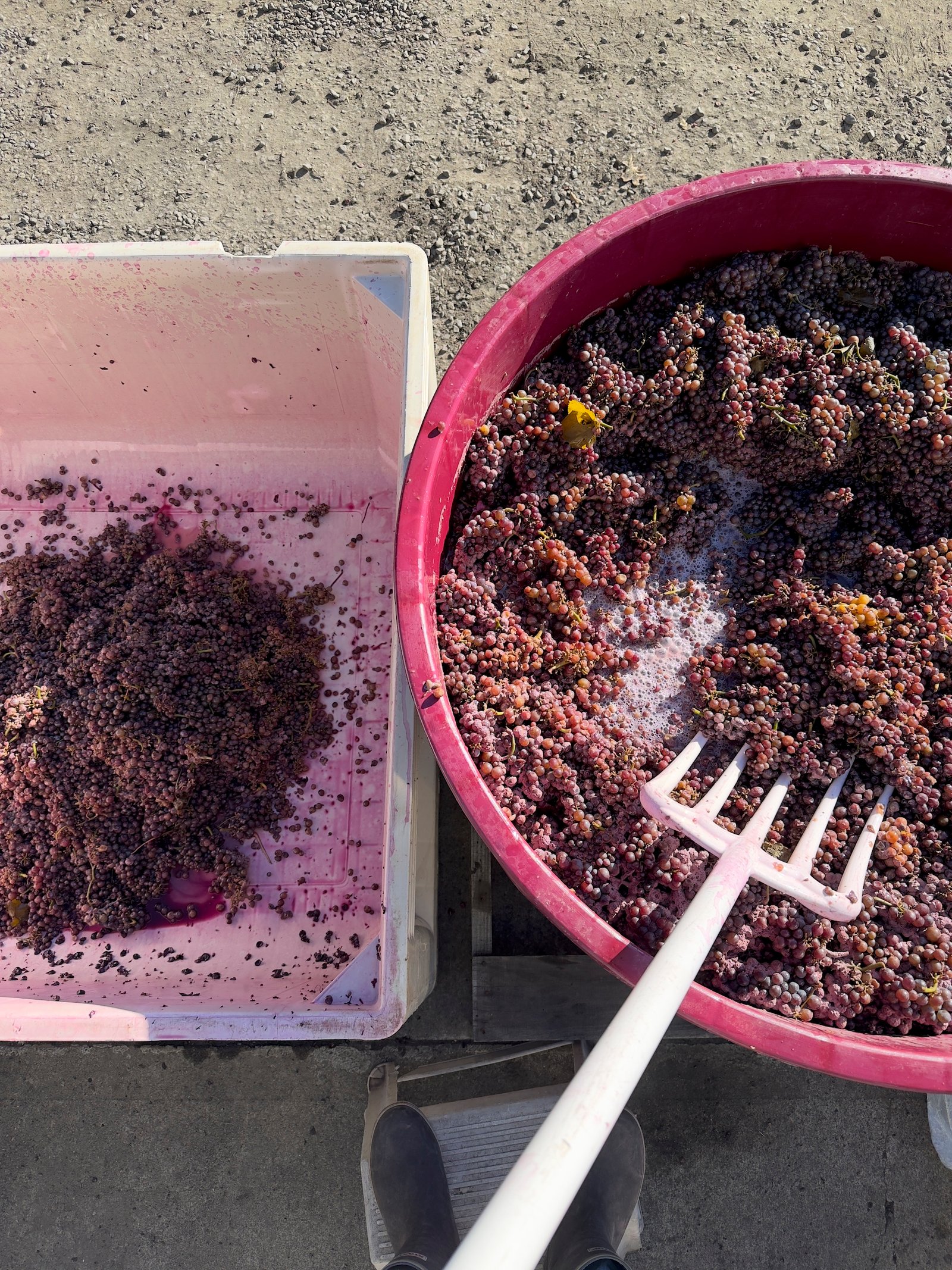
The piquette also started being made toward the end of October. Piquette is a low-alcohol wine made with the pressed skins of those carbonic reds (and whites) to extract the remaining sugars and yeasts. A kind of last yield from everything the fruit had already given.
Back home, beginning to seriously start finding work again, I kept drifting back to the harvest in my mind. The transition to a normal routine wasn’t easy. It had been so total, so physically and mentally consuming that it took real time to come down from it. I was already looking forward to going back.
Looking back
Harvest was an extraordinary experience. Afterward, I finally understood the pull my dad had felt. The desire to be part of something so intense and rewarding, so tangible in its result. Wine is one of the few things that starts as a fruit on a vine and ends as a bottle on a table, with an enormous amount of care and labour and patience in between. I get it now. I feel it.
This experience only reinforced my desire to do more in the domain of wine production. I want to make small batches, year after year, and slowly refine what I know and how I work. It reminds me of the Vin de Noix which I make every year, five years after learning the recipe properly from my dad, adjusting it a little each year, until this year’s batch felt like the best I’d made, and something genuinely my own. I want that with wine.
I learned what I came to learn: the full arc of production, from fruit on the vine to the art of attending to wine with patience, to the work of creating something you’re proud enough to want to share. I hadn’t expected the creative extension of making my own wine: the label, the branding, but I’m glad it’s there. I hope to use what I learned here as a foundation for future harvests.
For now, I keep thinking about those harder, more physical days: the sorting table at seven in the morning, the punch-downs, cleaning the press on a hot afternoon, the quiet sound of fermentation in the bins at night, and the feeling of being completely alive.

P.S. Thank you Jim for the beautiful photos, and Jenny for being so cool. You should all try Fossil & Fawn‘s wines. And monument. And MALOOF.
P.S.2. More of my wine photos.