

I originally shared this entry on Instagram in spring 2025, but it felt right to give it a permanent home here as well, with additional photos. This was a part of my journal for our trip in South Africa.
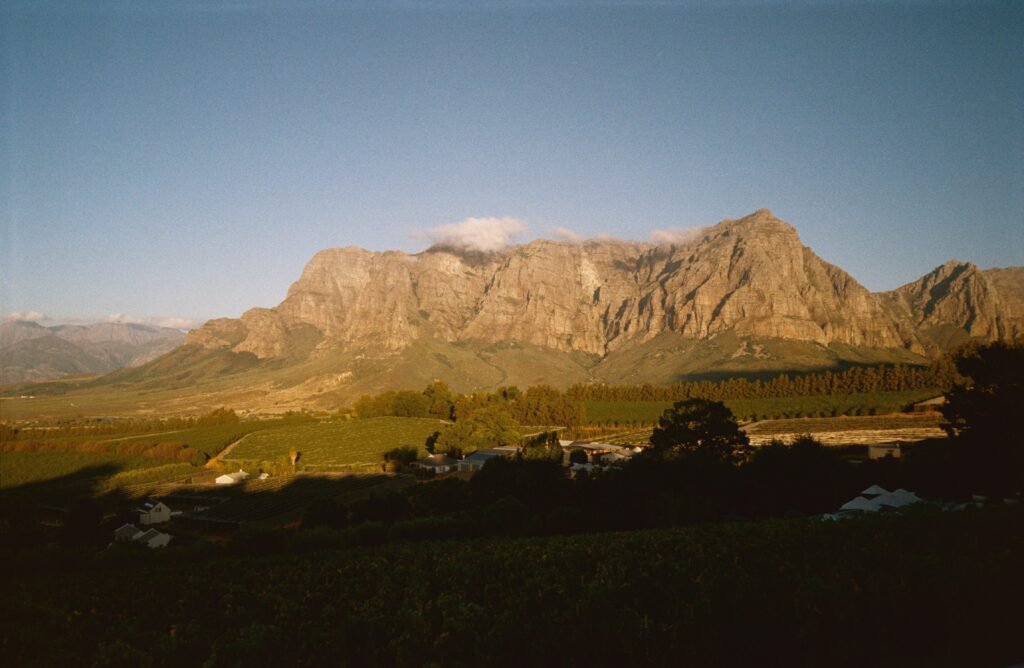
There’s something really satisfying about being part of harvest again, even just as an observer. In Stellenbosch, under a soft morning light, I watched the Chardonnay grapes being picked. Golden clusters were gathered by hand as the steady rhythm of shears and filling crates played out under the rising sun. Seeing the vineyard wake up like that reminded me how much quiet, intense labor happens long before anything ever touches a barrel.
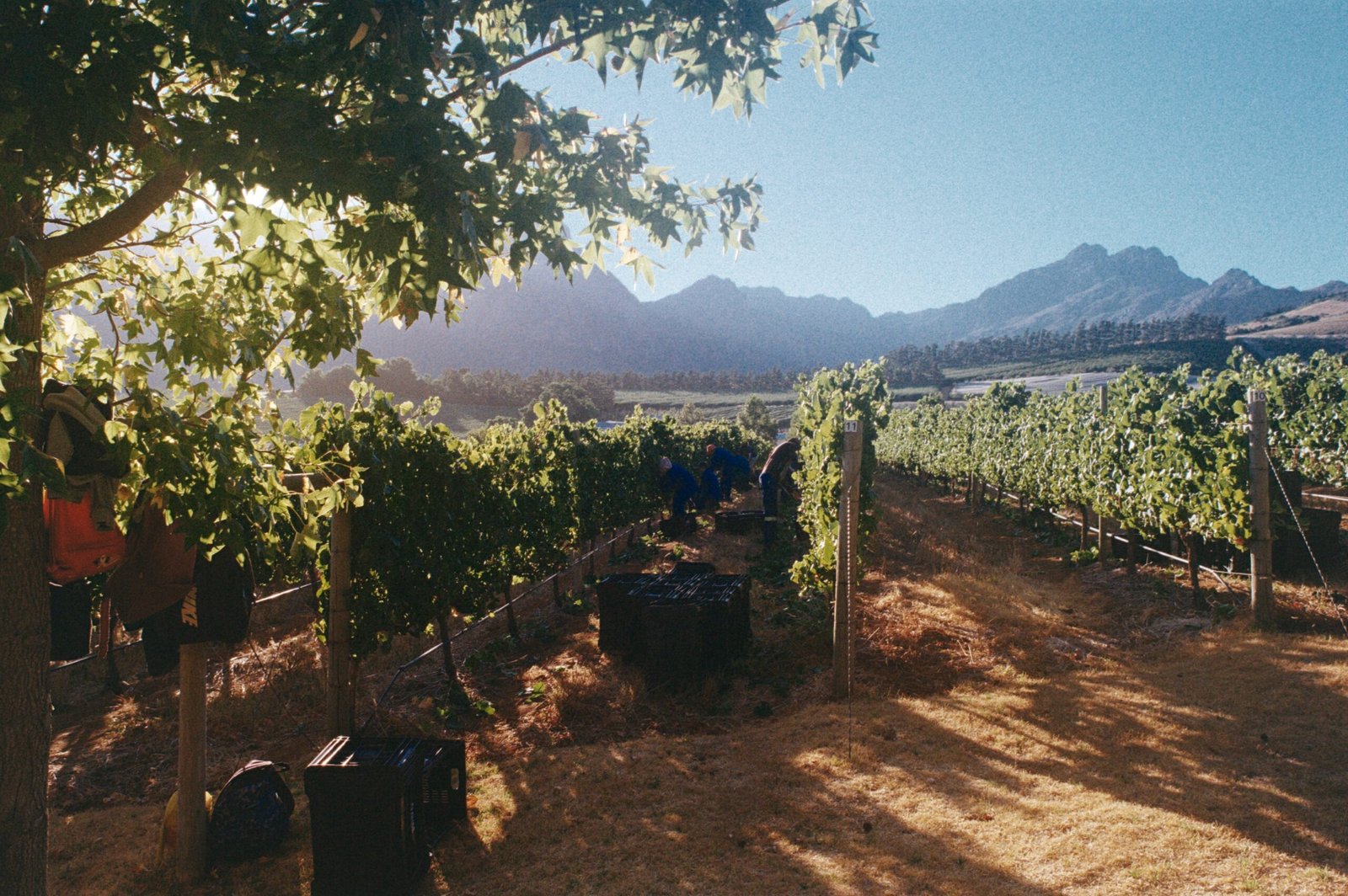
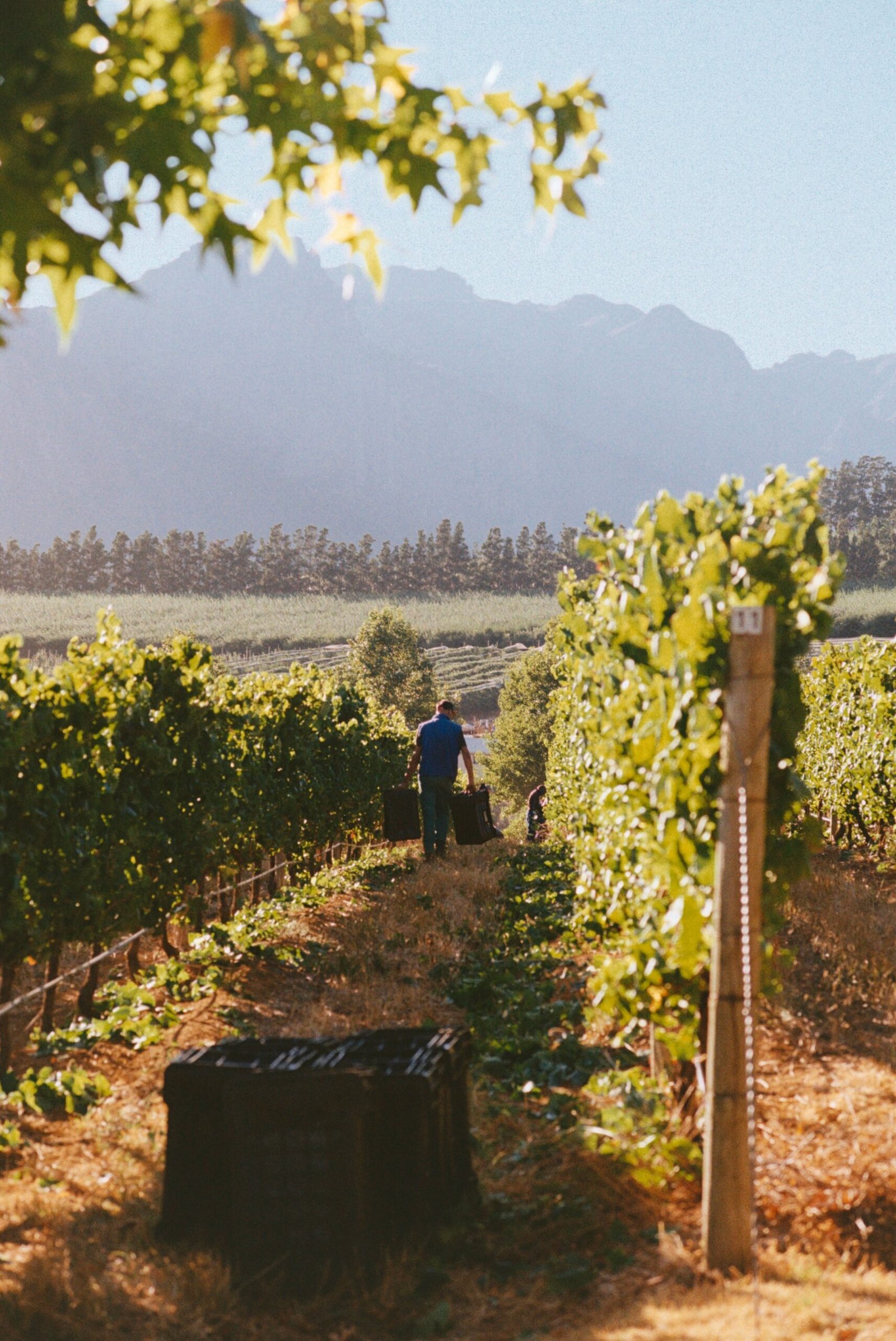
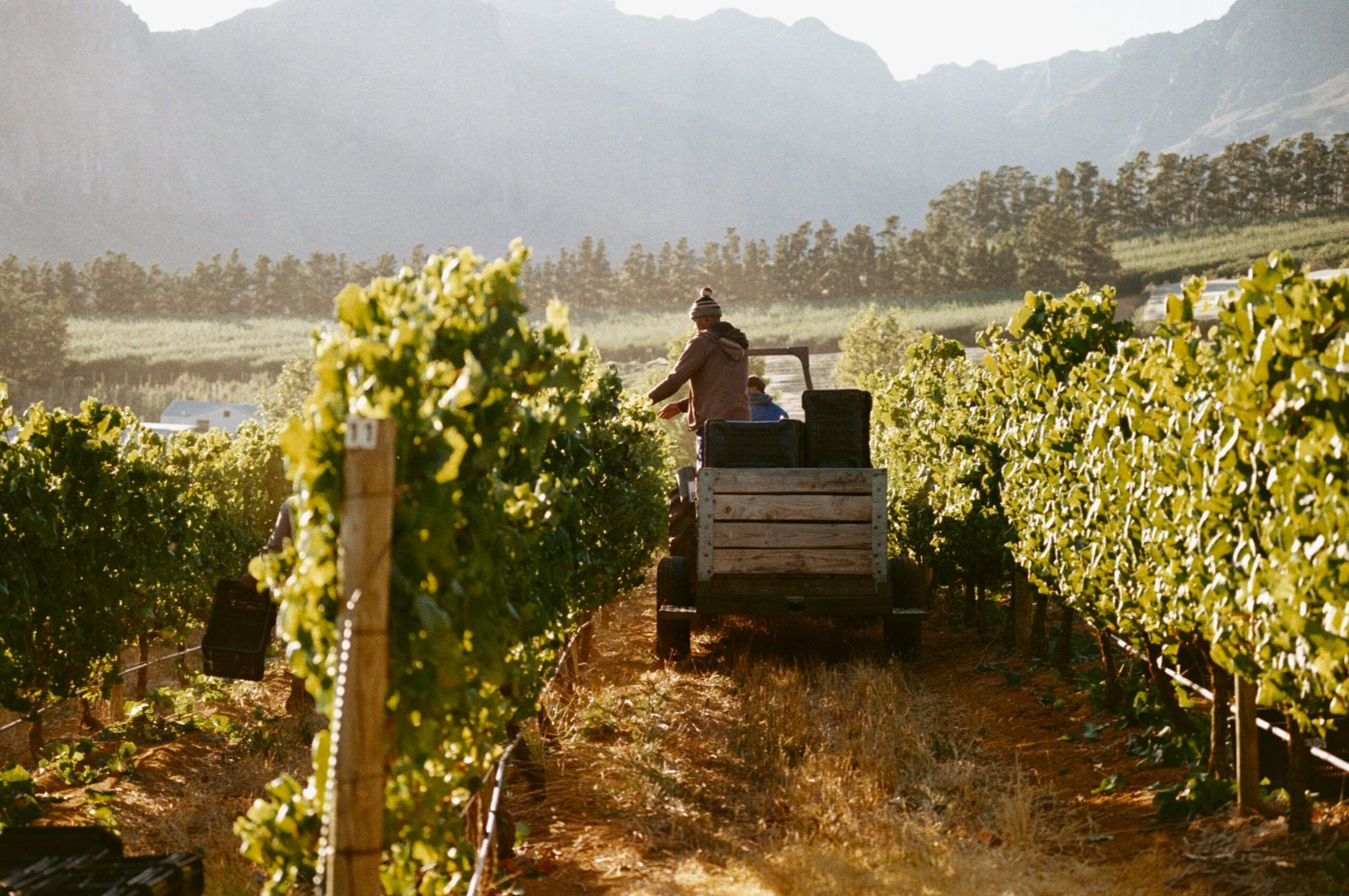
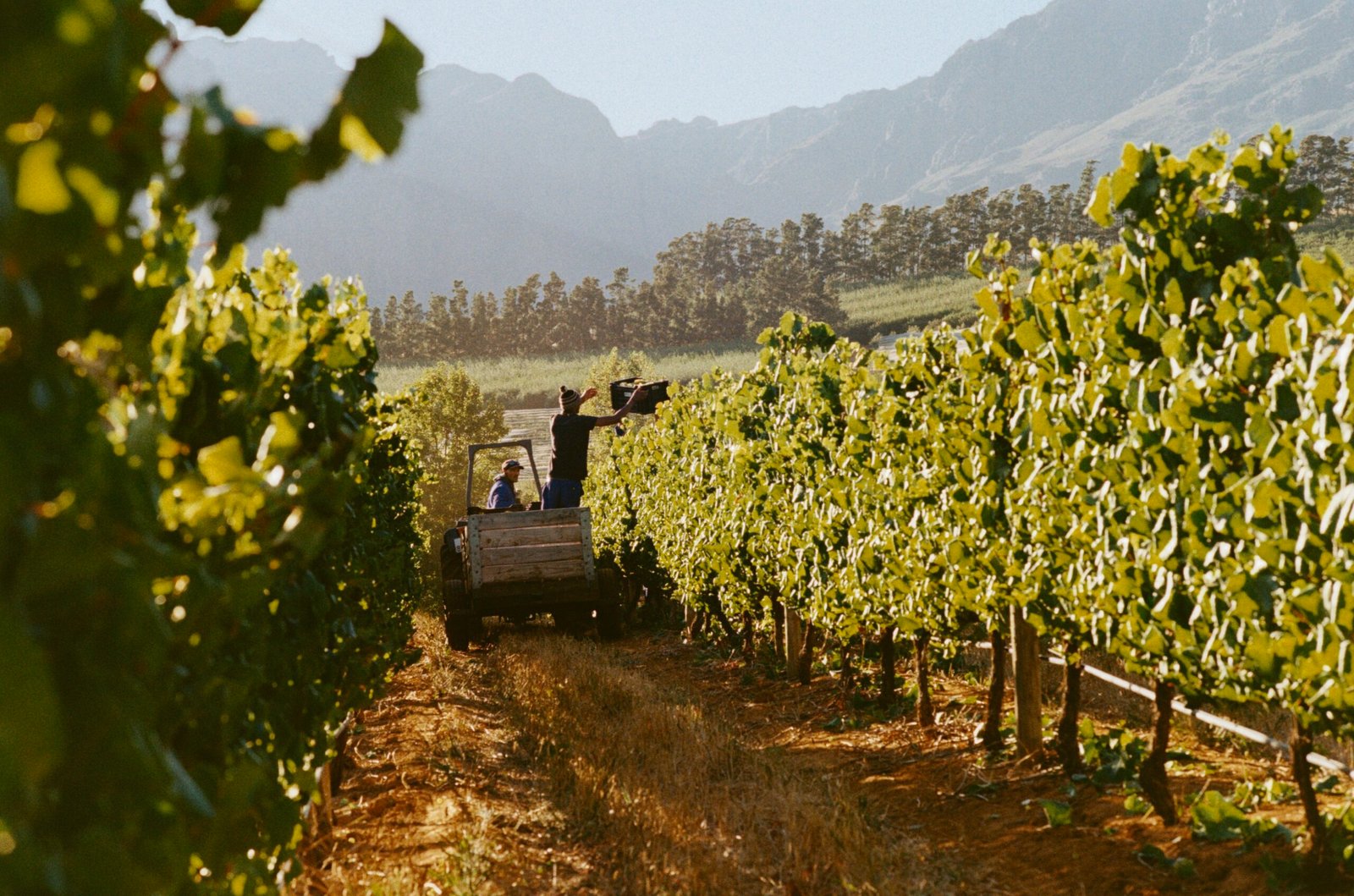
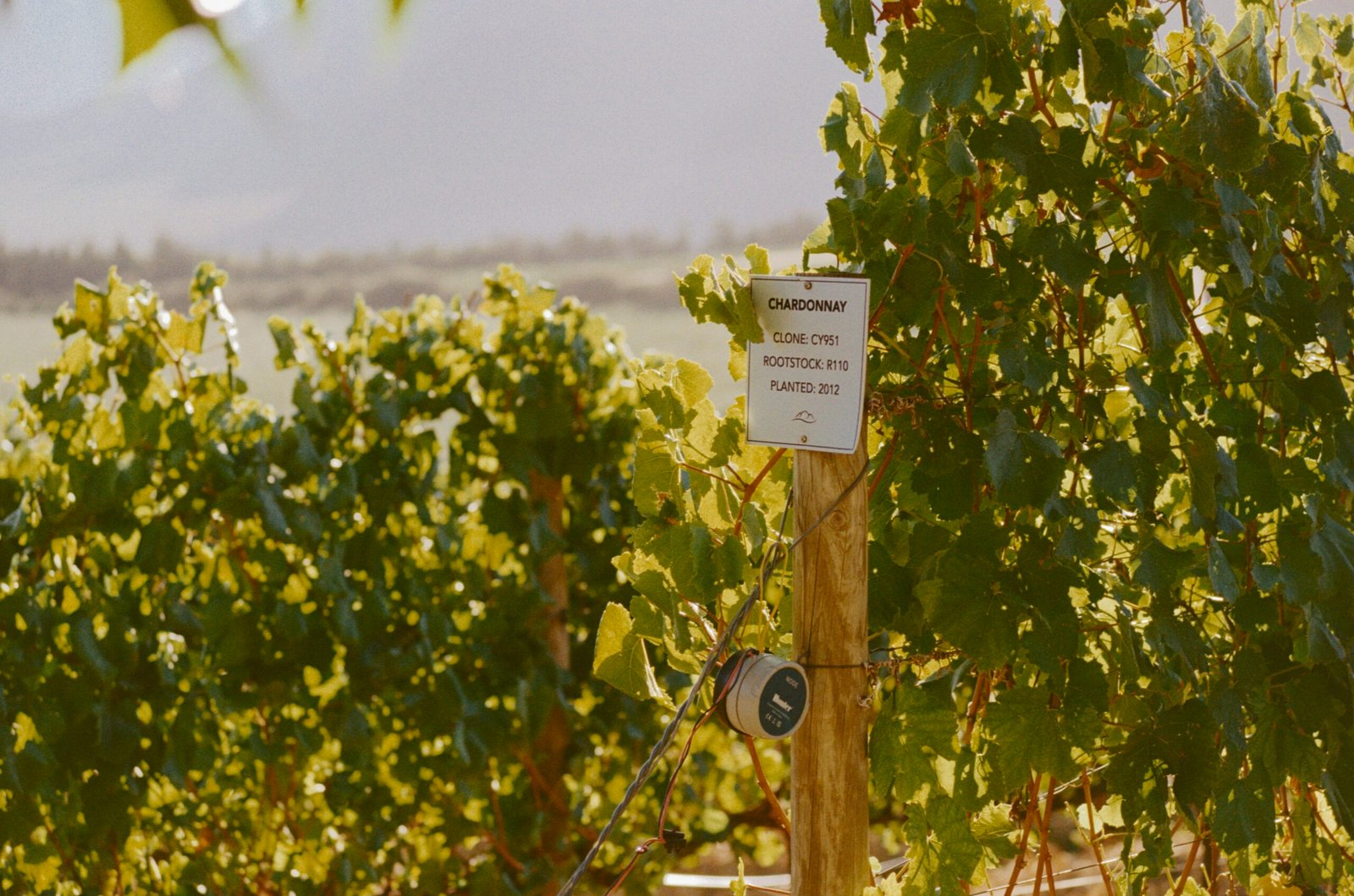
Twenty minutes in, I’d already burned through a full roll of film. I had to sprint back to our room for more, my heart racing not from the run but from the sheer energy of it all. The fruit, the people, that morning light, and the shared sense of purpose. I felt lucky to be that close to the process again.
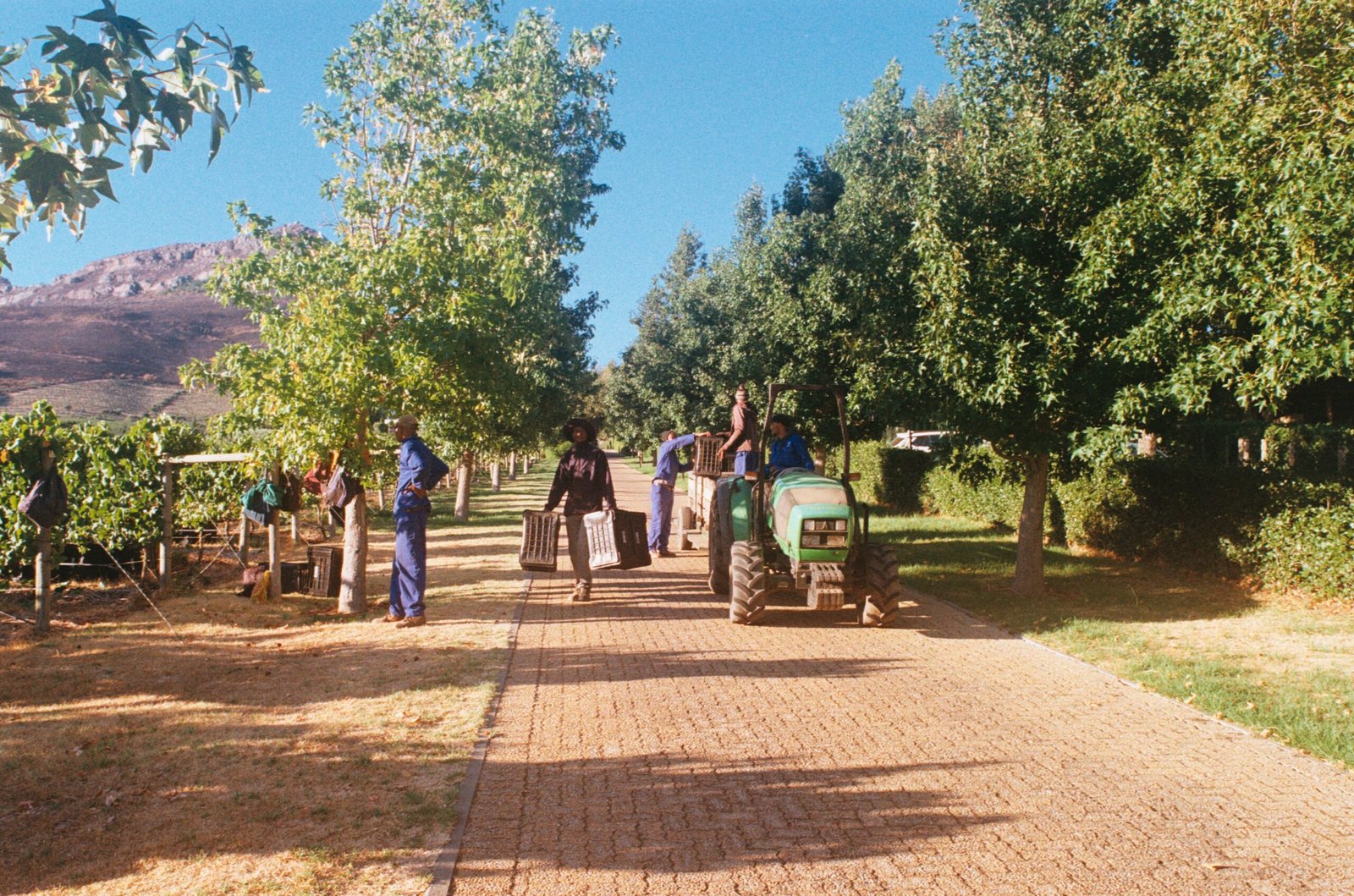
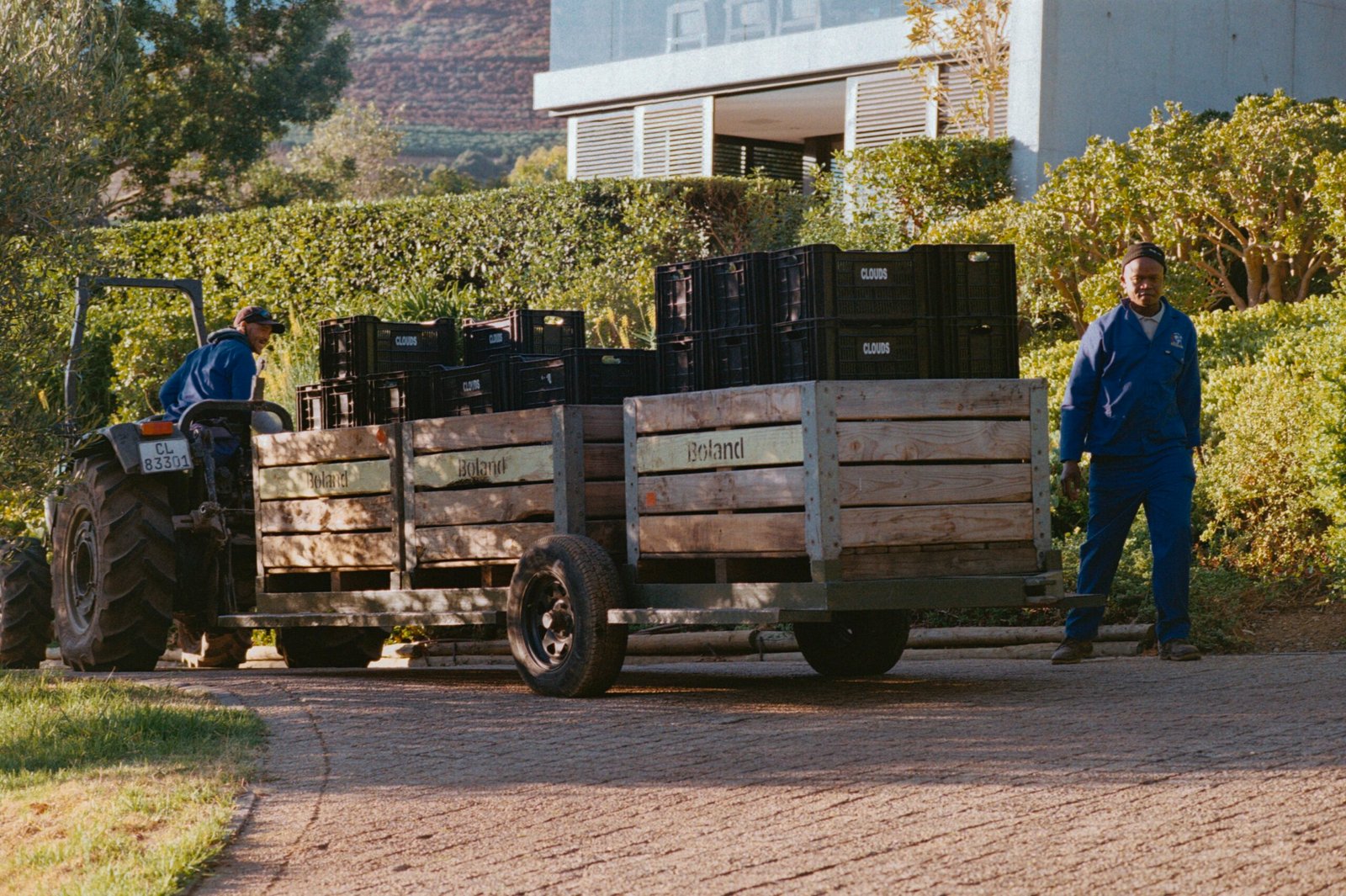
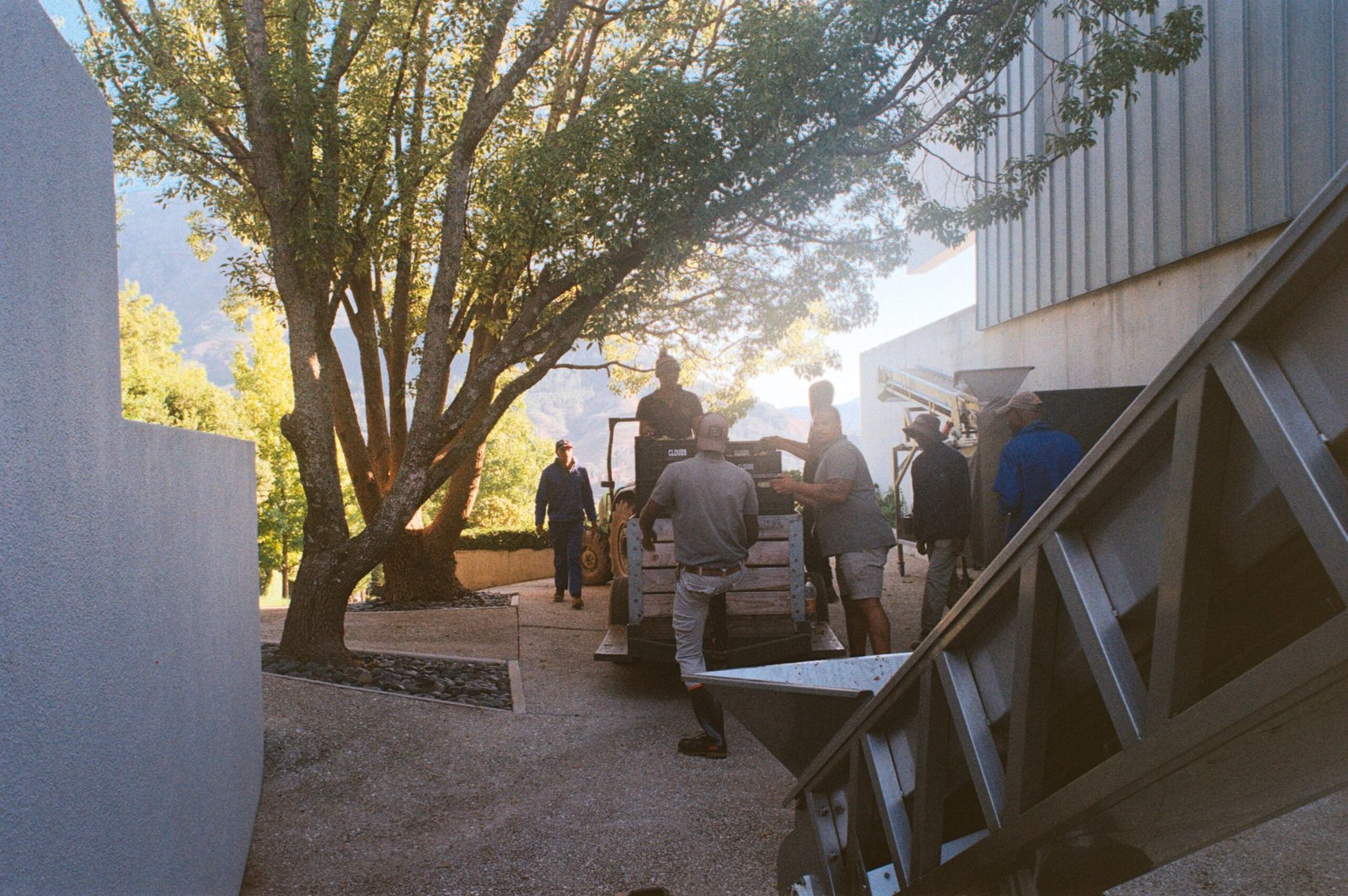
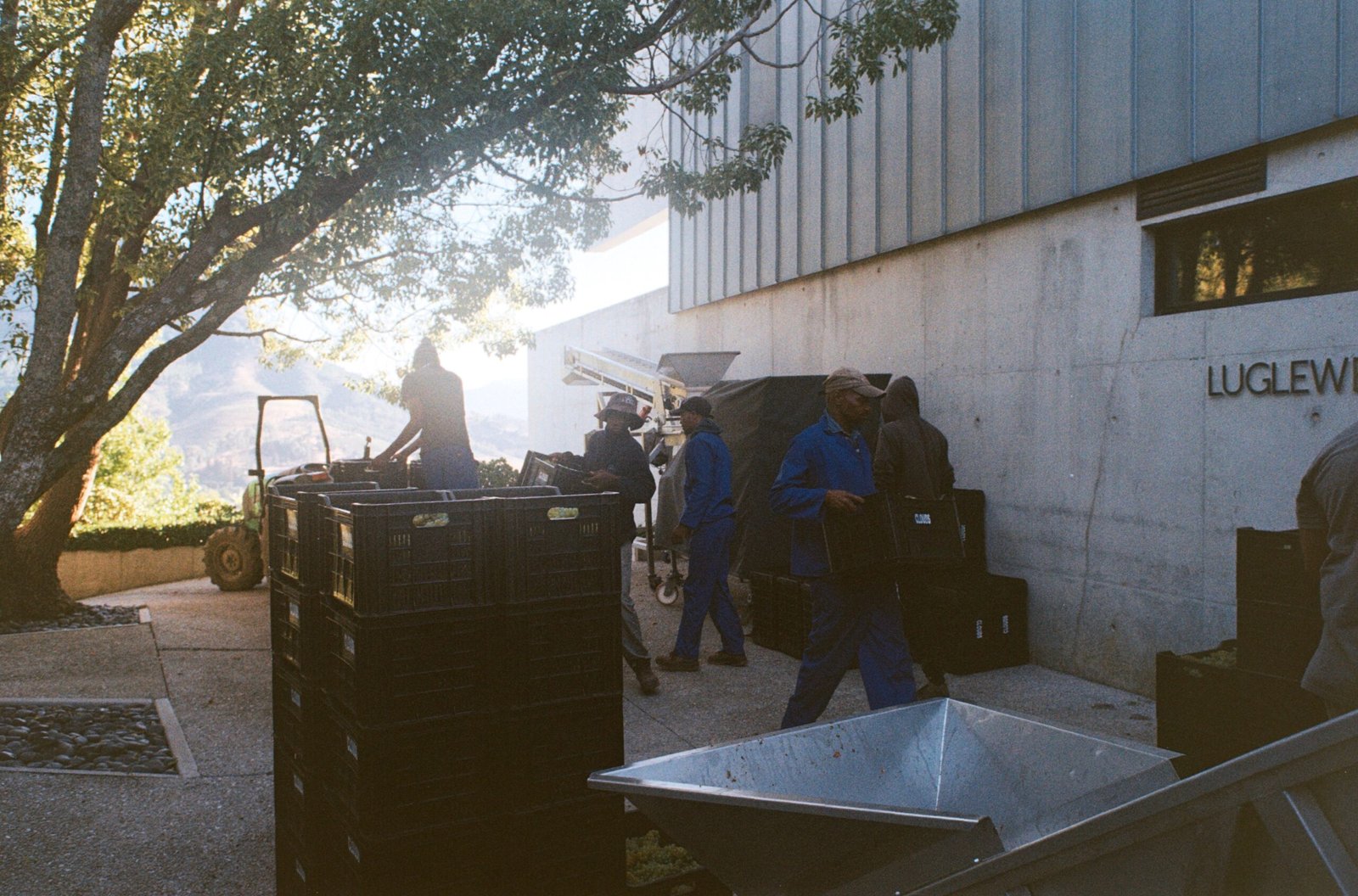
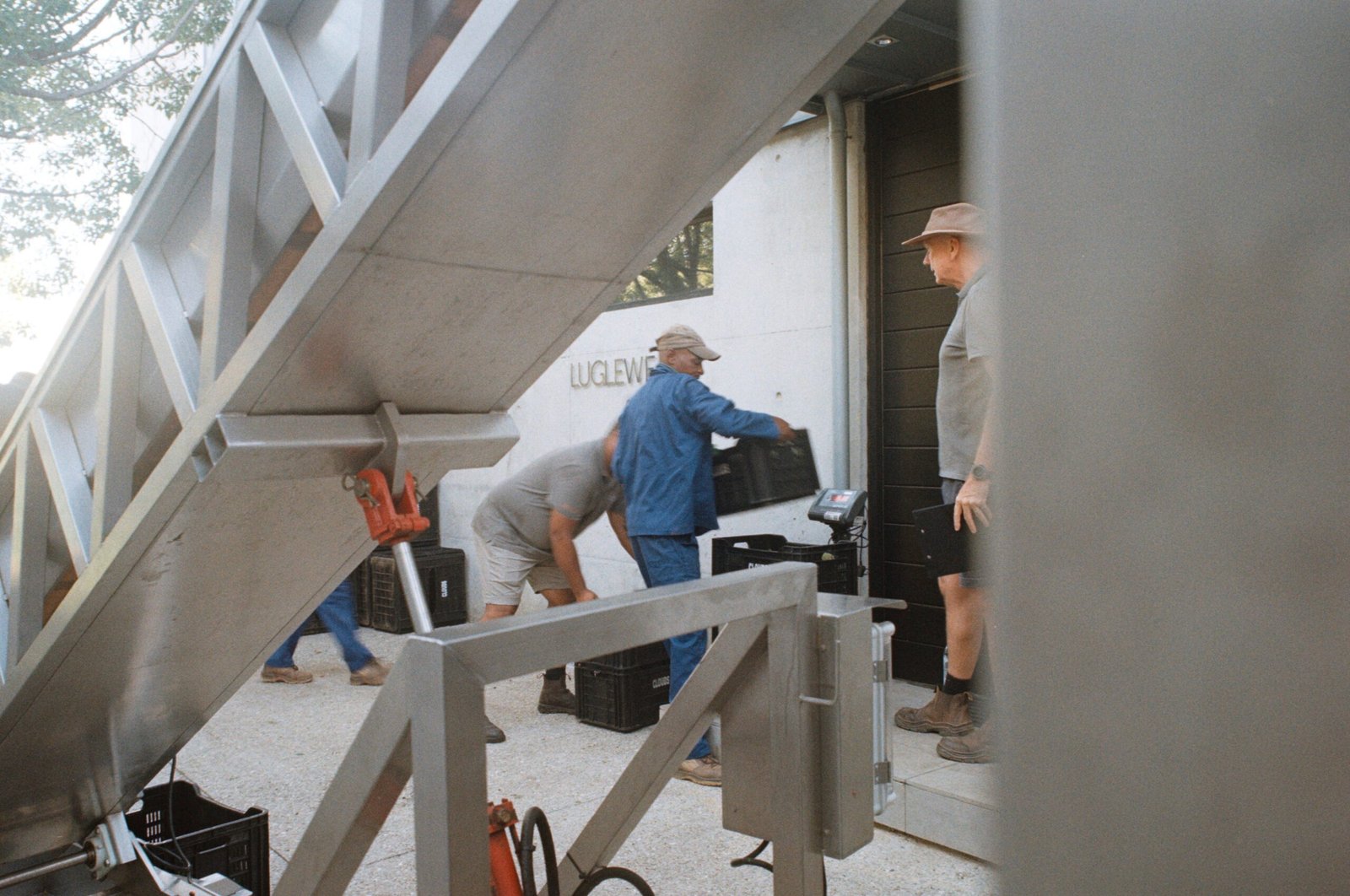
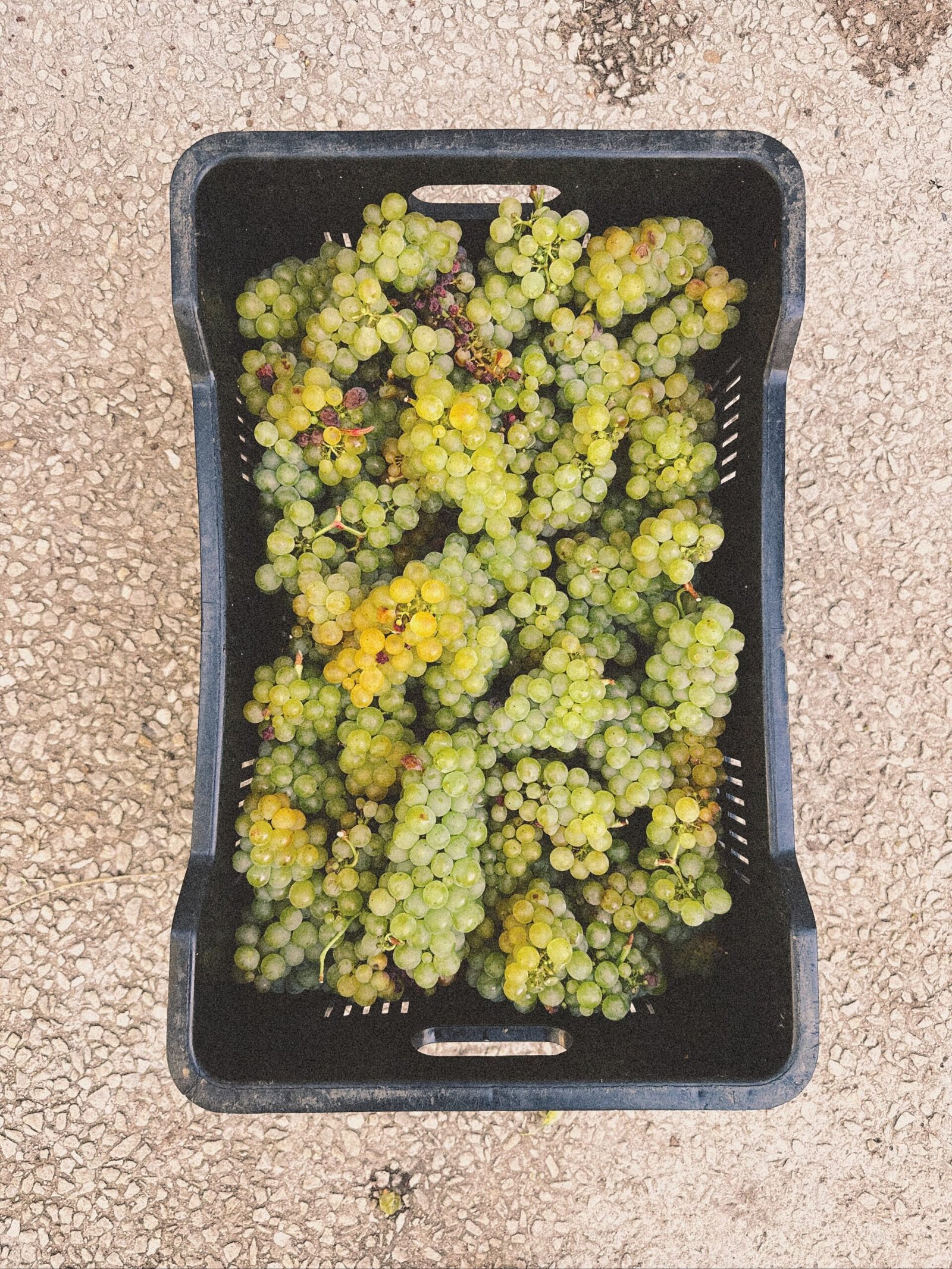
As the crates moved up the hill toward the winery, the next phase began. Each load was weighed, waiting its turn for the press. It took me straight back to last year’s harvest at Fossil & Fawn. I could almost feel the stickiness on my skin. Meanwhile, the thump of the pump felt like a metronome in the background.
The smell of that Chardonnay juice was incredible. While the press ran, I chatted with Affie, the assistant winemaker, and the owners, Paul and Jolanda. Affie has been making wine here for over a decade, yet he told me that even with a dialed-in process, something unexpected always happens. It felt familiar to me, likely because because I felt that way with photography quite often still. Paul and Jolanda shared how they first visited South Africa on vacation from the Netherlands in 2000. They fell in love with the land and eventually made it their second home. Even with a successful career in the fashion industry, Paul is hands-on here, running the show and doing much of the winemaking himself.
Listening to them, I found myself imagining what it would look like to follow a similar path, even if the road isn’t quite clear yet.
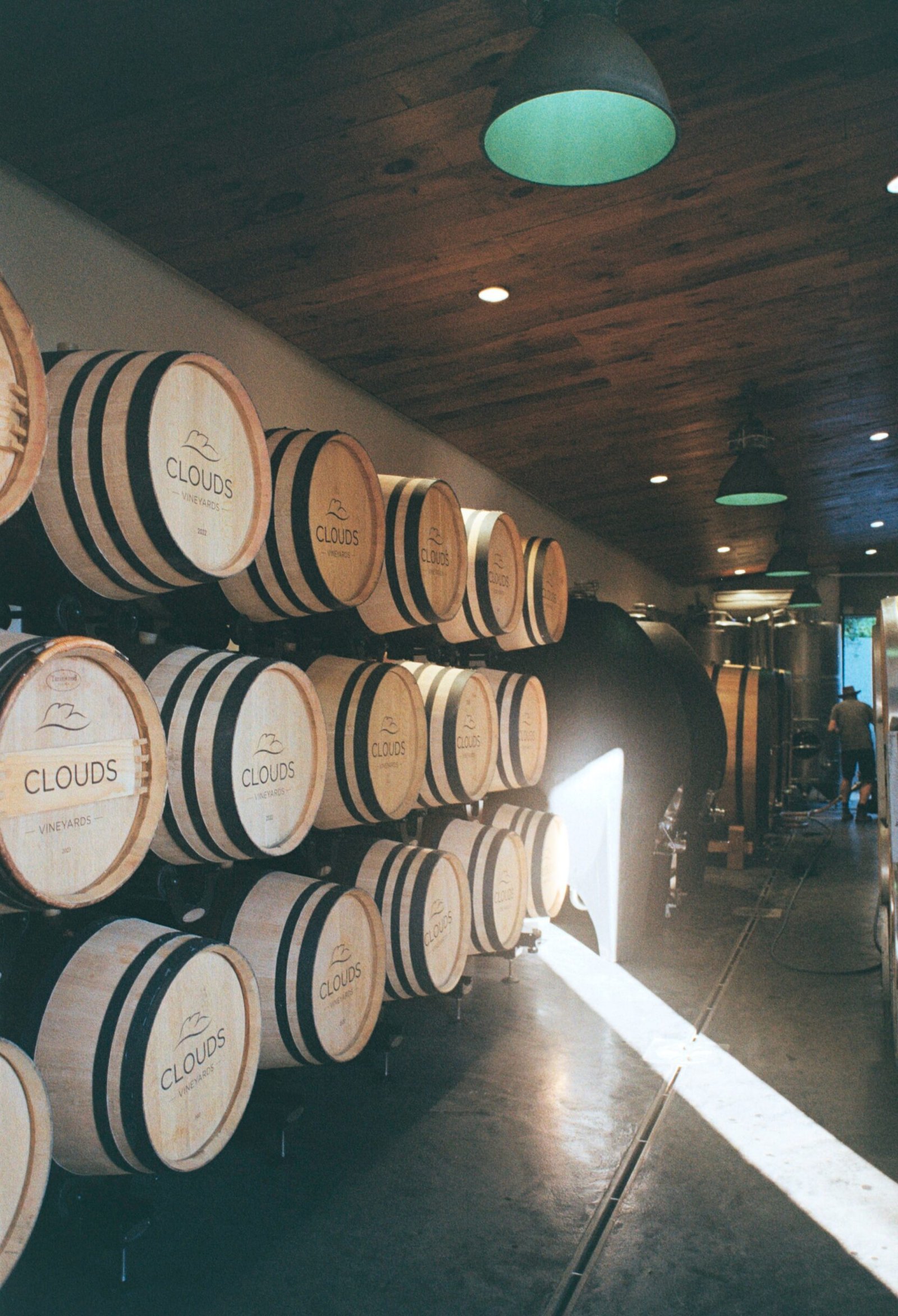
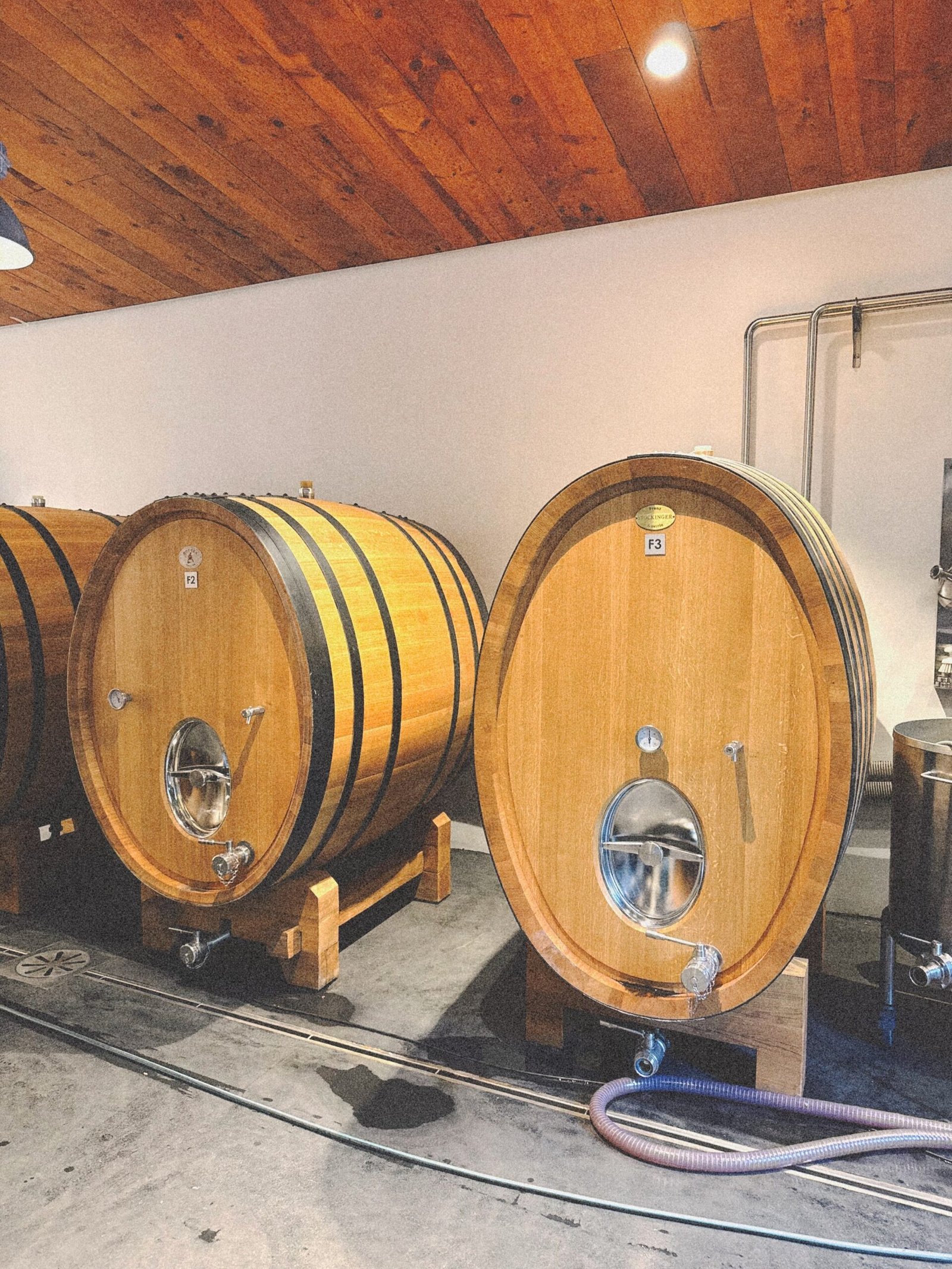
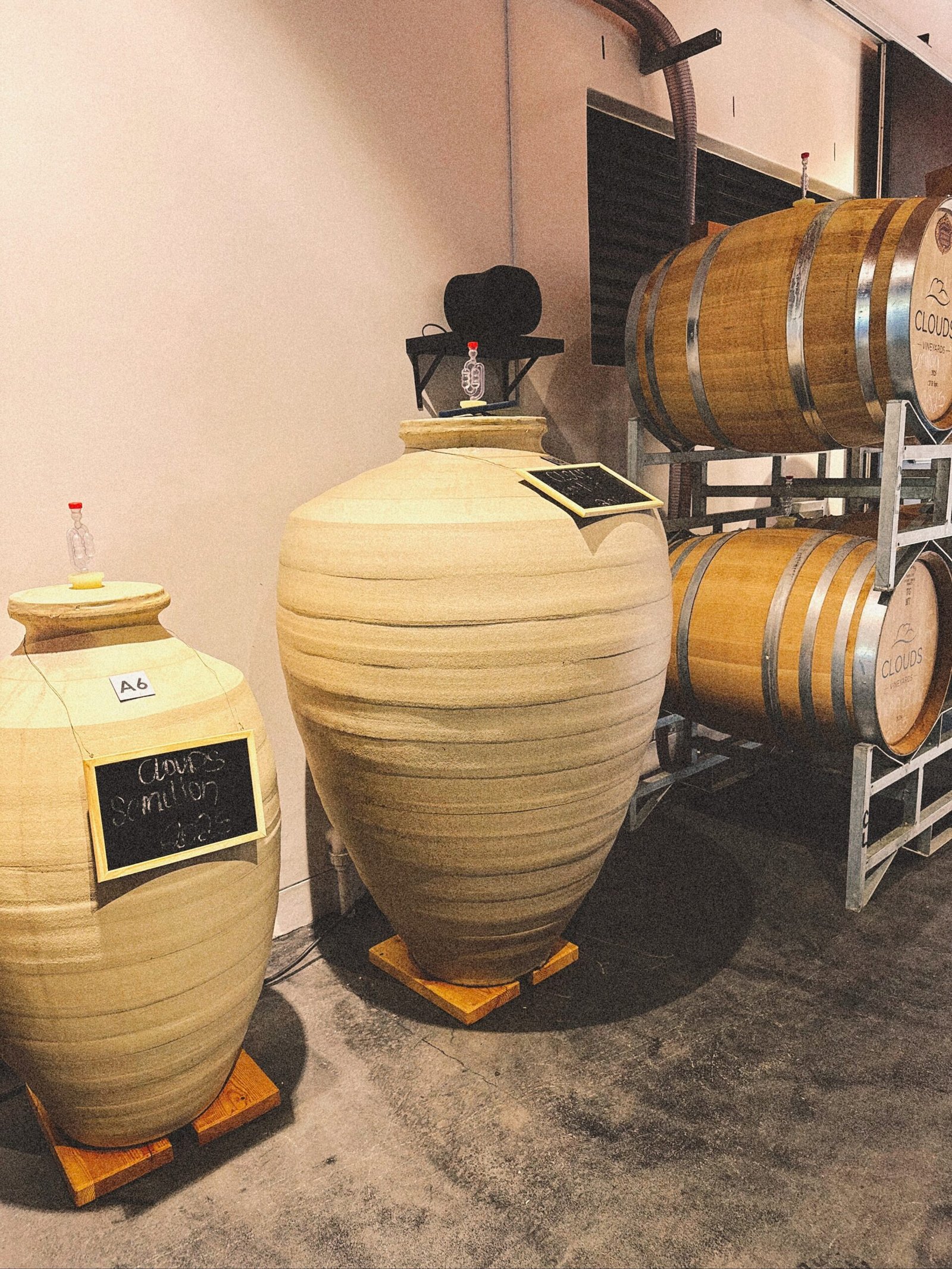
The cellar stayed cool despite the sun streaming through the open doors. The air was heavy with the scent of fermenting fruit and oak. I was struck by how neat and intentional everything was. Walking deeper into the cellar, I passed amphoras marked “Sémillon 2025” and tall foudres filled with last year’s Pinot Noir. The beauty of the space was overwhelming.
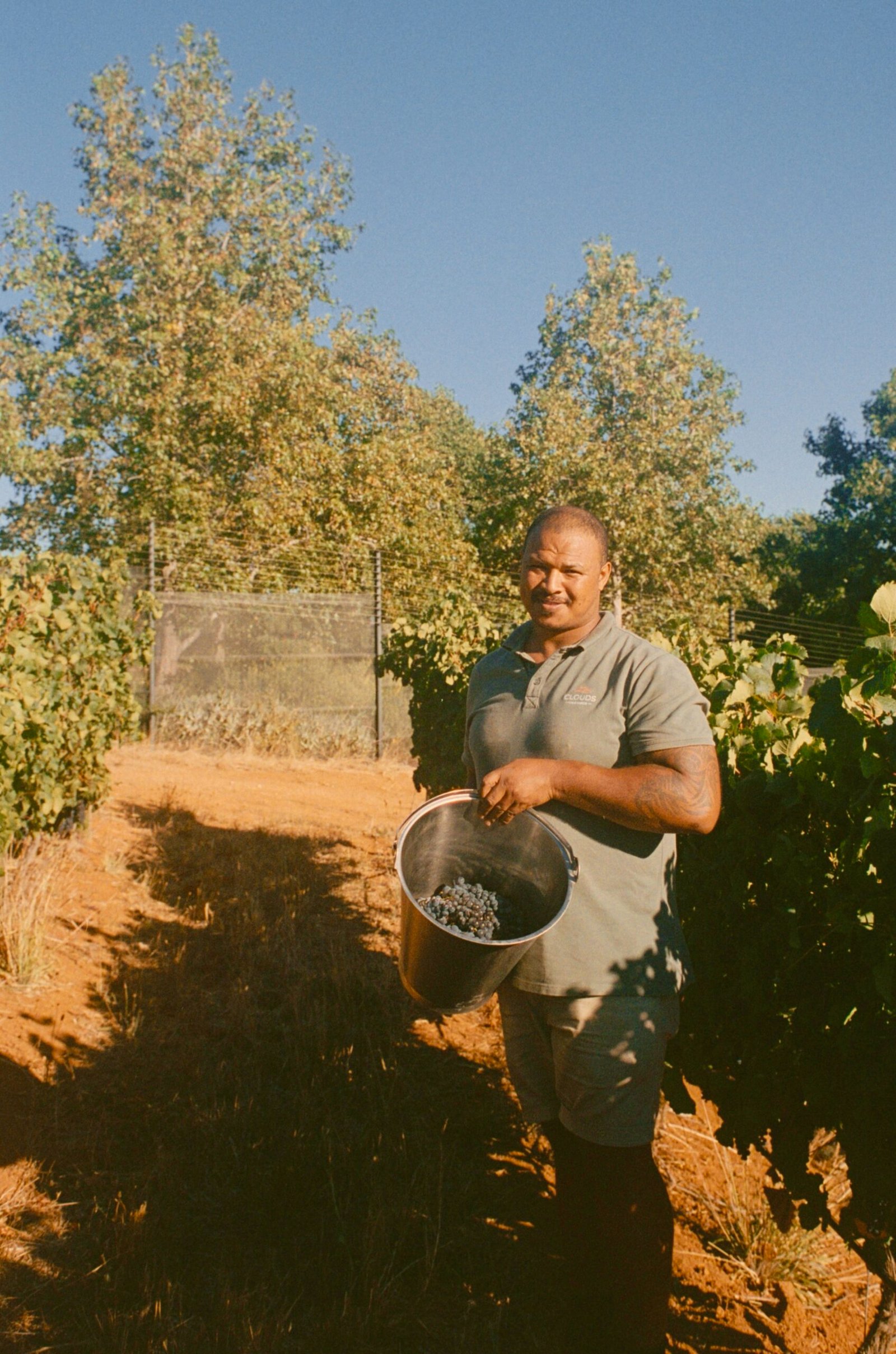
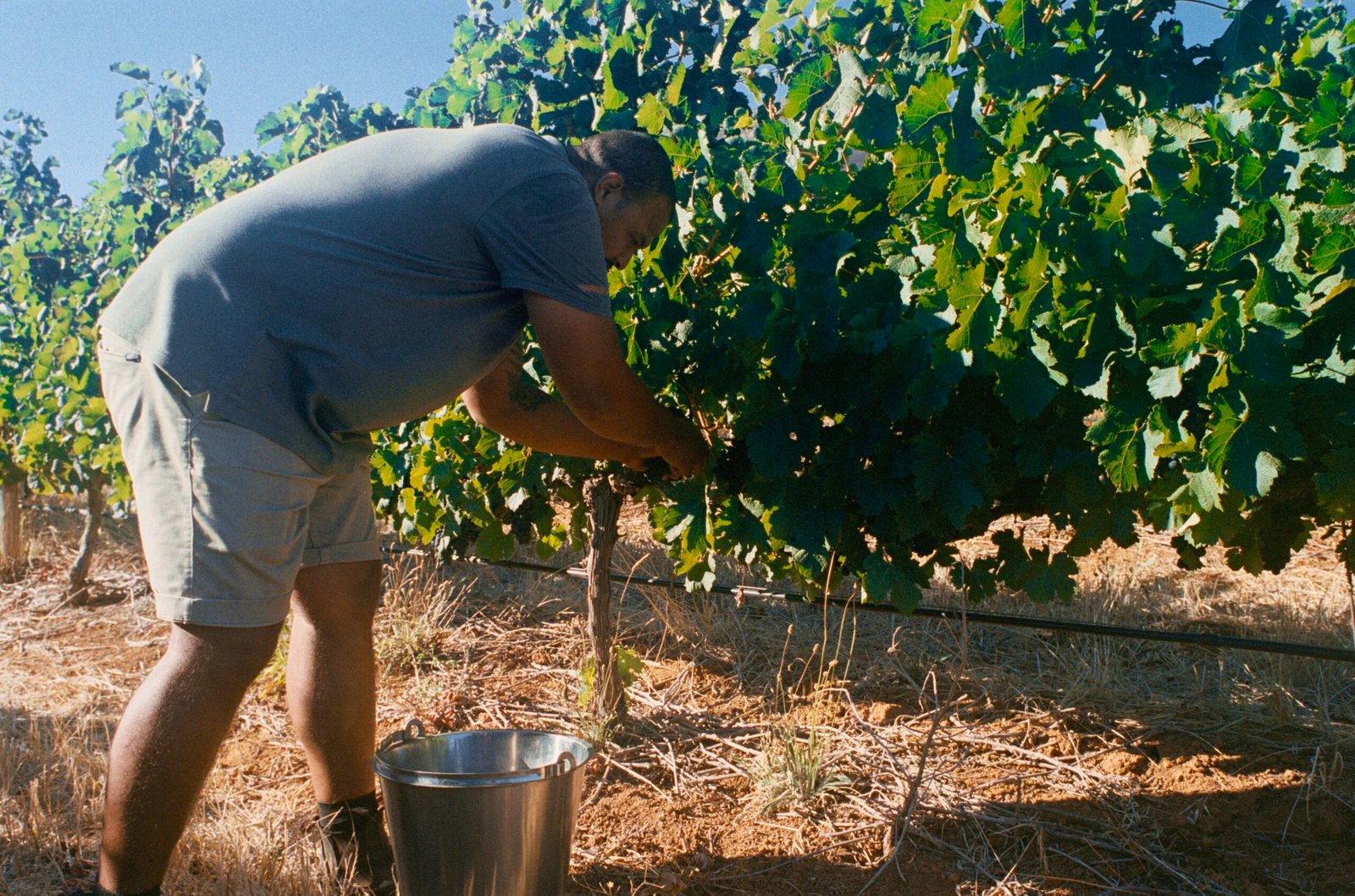
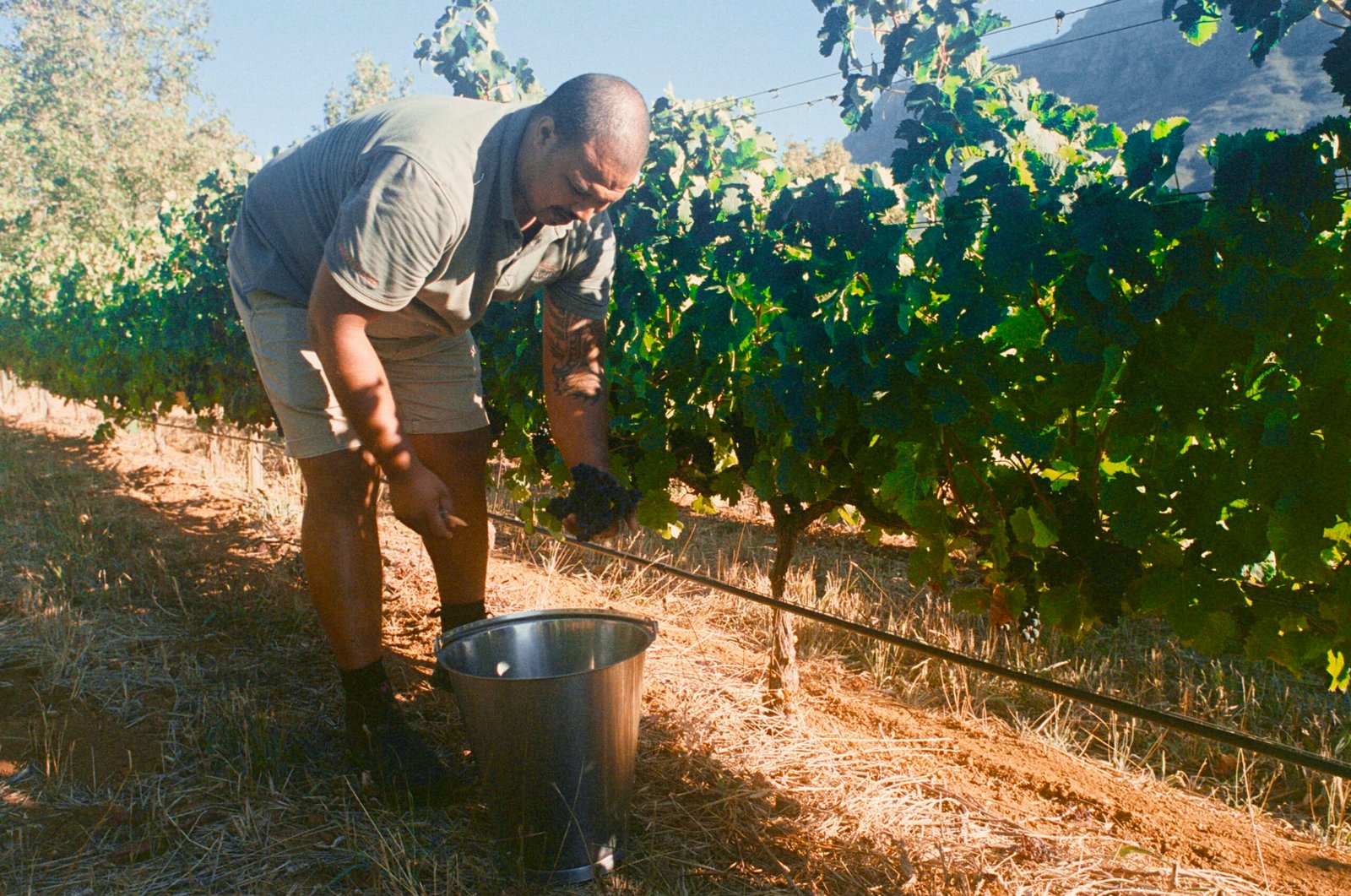
Affie eventually tapped me on the shoulder to see if I wanted to help him sample some Merlot. We walked down to the bottom of the property, talking about his life, the region, and the state of the industry. He gathered a few bunches and we headed back to the cellar so he and Paul could crush them. They tasted the juice and measured the sugar levels while taking notes. Paul looked at Affie and said simply, “It’s ready. Let’s pick on Wednesday.” It was a small exchange, but an important one.
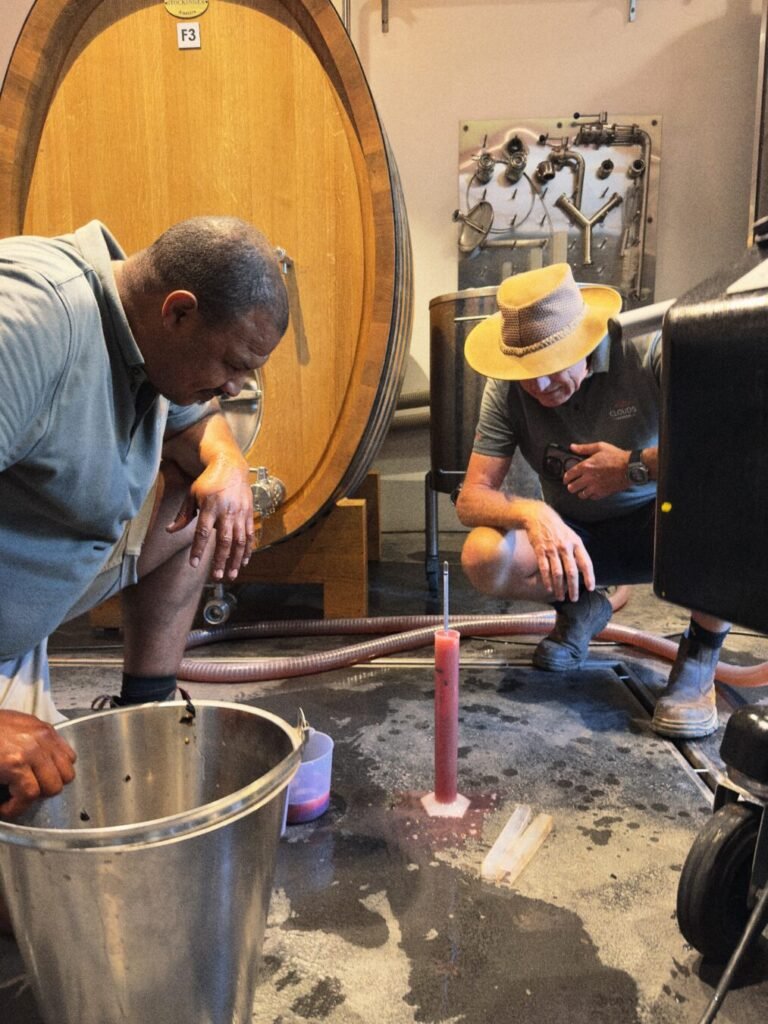
Every decision at this stage shapes the character of the wine. It is a mix of science, instinct, and trust. While picking marks the end of a growing season, it’s the exact moment the wine begins to take its shape.
That moment was a reminder of why I’m drawn to this. Wine isn’t just the liquid in the glass. It is the timing, the terroir, and the thousand tiny decisions made by the people behind the labels. That is what keeps pulling me back in.